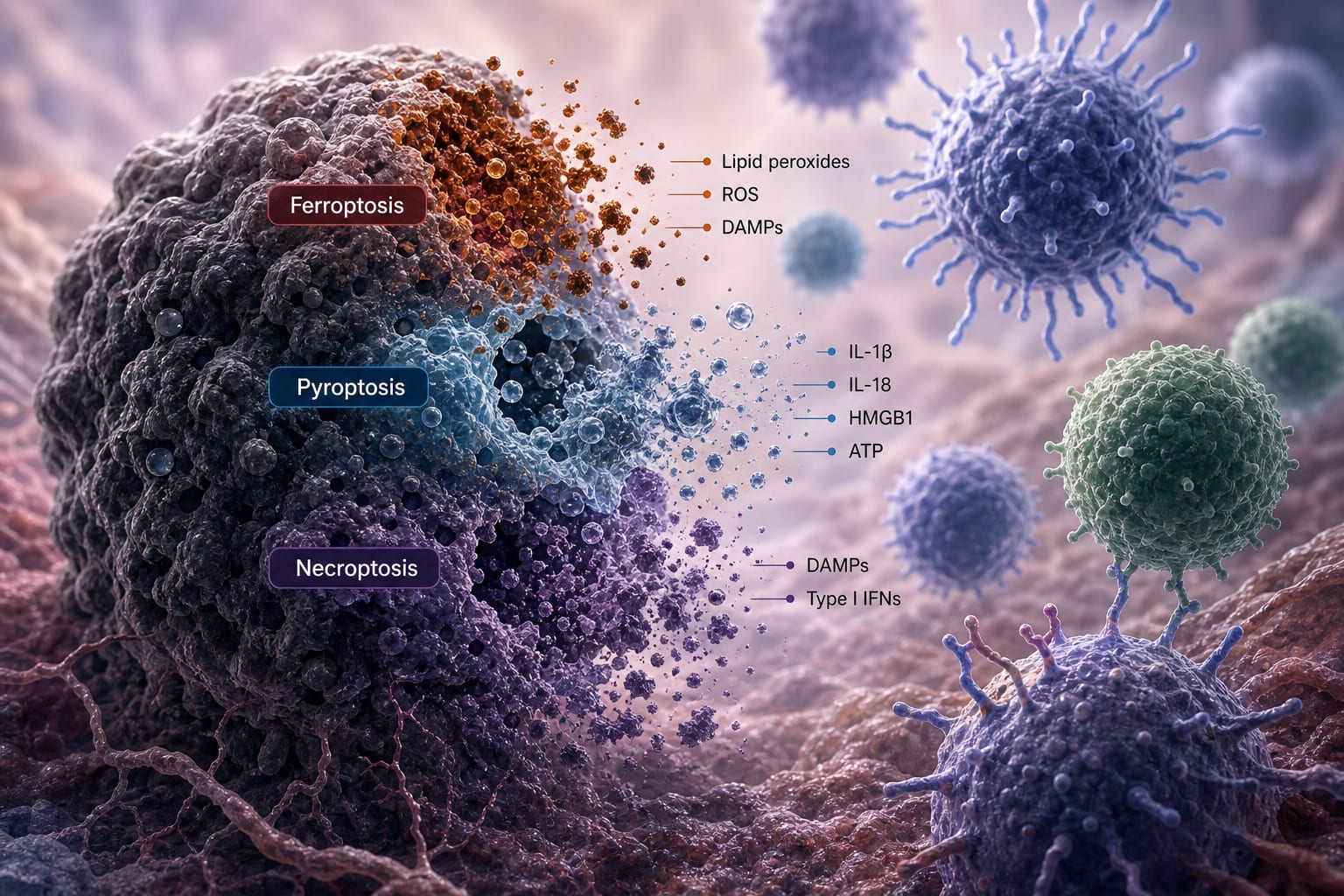
Ferroptosis, Pyroptosis, and Necroptosis in Melanoma: Regulatory Cell Death Pathways and Their Implications for Immunotherapy
-
By
-
Wang, Qingyi
-
Zhu, Jian
-
April 2, 2026
-
Clinical Scorecard: Regulated Cell Death Mechanisms in Melanoma: The Roles of Ferroptosis, Pyroptosis, and Necroptosis in Immunotherapy Strategies
At a Glance
| Category | Detail |
|---|
| Condition | Melanoma |
| Key Mechanisms | Ferroptosis, pyroptosis, necroptosis |
| Target Population | Patients with advanced melanoma |
| Care Setting | Clinical melanoma management |
Key Highlights
- Melanoma has poor prognosis in advanced stages.
- Immune checkpoint inhibitors (ICIs) face challenges like heterogeneous responses and resistance.
- Regulated cell death (RCD) pathways can remodel the tumor immune microenvironment.
- Ferroptosis, pyroptosis, and necroptosis enhance tumor immunogenicity.
- Emerging strategies aim to selectively induce immunogenic cell death.
Guideline-Based Recommendations
Diagnosis
- Assess melanoma stage and characteristics for treatment planning.
Management
- Utilize immune checkpoint inhibitors (ICIs) as first-line therapy.
Monitoring & Follow-up
- Monitor for immune-related toxicities and treatment responses.
Risks
- Consider risks of acquired resistance to ICIs.
Patient & Prescribing Data
Patients with advanced melanoma undergoing immunotherapy.
Targeting RCD pathways may improve responses to ICIs.
Clinical Best Practices
- Incorporate RCD mechanisms into treatment strategies.
- Evaluate the tumor immune microenvironment for personalized therapy.
Related Resources & Content