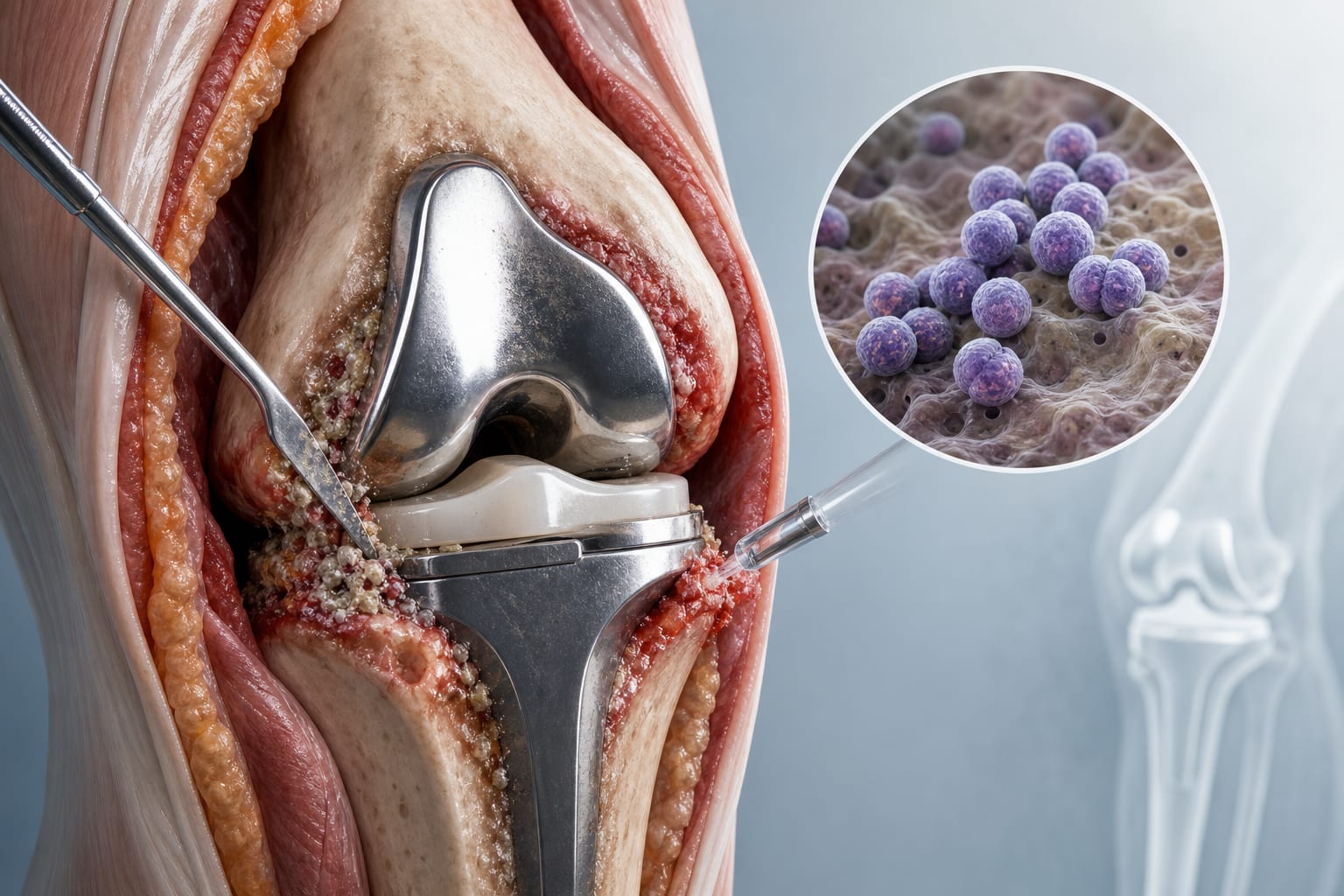
Research progress on debridement, antibiotics, and implant retention (DAIR) for the treatment of periprosthetic joint infection after artificial joint replacement - Scorecard - MDSpire
Conexiant’s news site is now MDSpire News. Learn more
Advertisement
Advancements in Debridement, Antibiotic Therapy, and Implant Preservation (DAIR) for Managing Periprosthetic Joint Infections Following Joint Replacement Surgery
Clinical Scorecard: Advancements in Debridement, Antibiotic Therapy, and Implant Preservation (DAIR) for Managing Periprosthetic Joint Infections Following Joint Replacement Surgery
At a Glance
Category
Detail
Condition
Periprosthetic Joint Infection (PJI)
Key Mechanisms
Debridement and implant retention strategy for acute postoperative and acute hematogenous PJI.
Target Population
Patients undergoing total hip and knee arthroplasty.
Care Setting
Surgical and postoperative care settings.
Key Highlights
DAIR is preferred for acute postoperative PJI with a success rate > 80% when performed within optimal time frames.
Intervention within 90 days post-surgery significantly increases success rates, with a 'golden window' for treatment.
Patient-related factors such as obesity, diabetes, and nutritional status critically influence DAIR outcomes.
The KLIC score may predict DAIR failure but requires further validation across diverse populations.
Timely diagnosis and intervention are essential for maximizing functional implant retention.
Guideline-Based Recommendations
Diagnosis
Consider DAIR for acute postoperative PJI within 90 days of surgery.
Assess patient-related factors preoperatively to optimize outcomes.
Management
Perform DAIR within 3 weeks of symptom onset for higher success rates.
Optimize preoperative glycemic control and nutritional status.
Monitoring & Follow-up
Monitor renal and hepatic function to adjust antibiotic therapy appropriately.
Evaluate the KLIC score for potential treatment strategy adjustments.
Risks
Obesity and diabetes significantly increase the risk of PJI.
Delayed intervention beyond one month reduces DAIR success rates.
Patient & Prescribing Data
Patients with acute postoperative or acute hematogenous PJI.
Individualized treatment strategies based on comorbidities and preoperative assessments are crucial.
Clinical Best Practices
Implement DAIR as a time-sensitive treatment for optimal outcomes.
Conduct comprehensive preoperative evaluations to identify and manage risk factors.
A long-term cohort study found that obesity was not associated with worse patient-reported outcomes or higher reoperation rates following total ankle replacement in optimized surgical candidates.