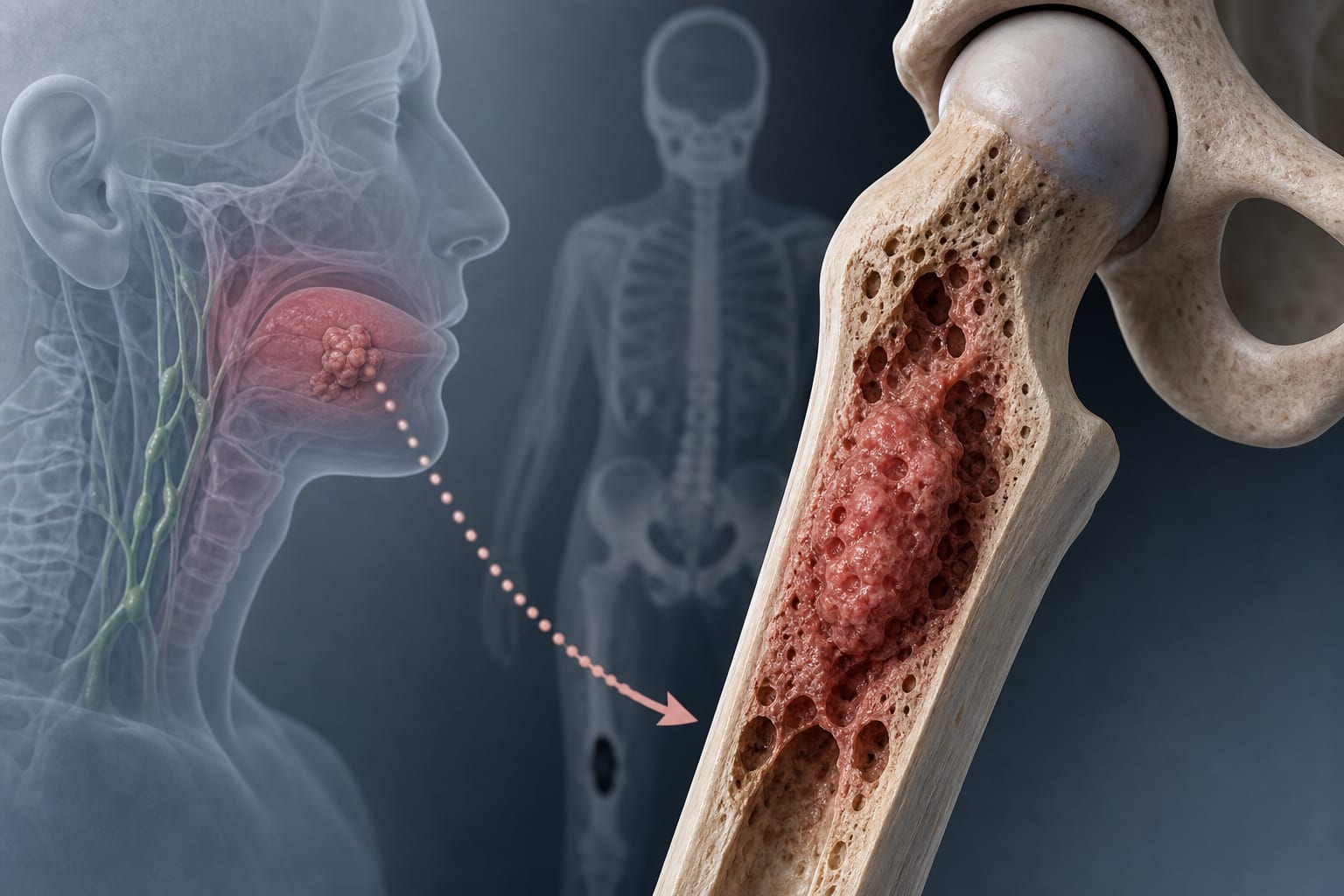
Femoral Metastasis in Head and Neck Squamous Cell Carcinoma: A Case Study and Comprehensive Literature Review
By
Hannah Chahal
Joseph Latham
Finlay Ajayi
Sasan Dehbozorgi
Andrew Miller
Gordon Gillespie
July 6, 2026
Clinical Scorecard: Femoral Metastasis in Head and Neck Squamous Cell Carcinoma: A Case Study and Comprehensive Literature Review
At a Glance
Category Detail
Condition Head and Neck Squamous Cell Carcinoma (HNSCC) Key Mechanisms Predominantly locoregional spread with rare distant metastases, including femoral involvement. Target Population Patients with advanced HNSCC, particularly those with tongue squamous cell carcinoma. Care Setting Oncology and palliative care settings.
Key Highlights
Femoral metastasis from HNSCC is exceptionally rare, with only six documented cases. Mean age at diagnosis of femoral metastasis is 57 years, with a male predominance. Smoking is the most frequently reported risk factor for HNSCC. Management is primarily palliative, including radiotherapy and chemoradiotherapy. Overall prognosis for patients with femoral metastasis is poor, reflecting aggressive tumor biology. Guideline-Based Recommendations
Diagnosis
Histological confirmation of HNSCC is essential for diagnosis. Management
Palliative care strategies should be employed, including radiotherapy and orthopaedic stabilization. Monitoring & Follow-up
Regular imaging and clinical assessments are necessary to monitor for disease progression. Risks
Patients with HNSCC have an increased risk of distant metastases and second primary malignancies. Patient & Prescribing Data
Patients with advanced-stage HNSCC and evidence of femoral metastasis.
Palliative systemic therapy may provide temporary disease stability.
Clinical Best Practices
Early recognition of femoral metastasis is crucial for timely palliative intervention. Multimodal treatment approaches should be considered for advanced HNSCC. Related Resources & Content