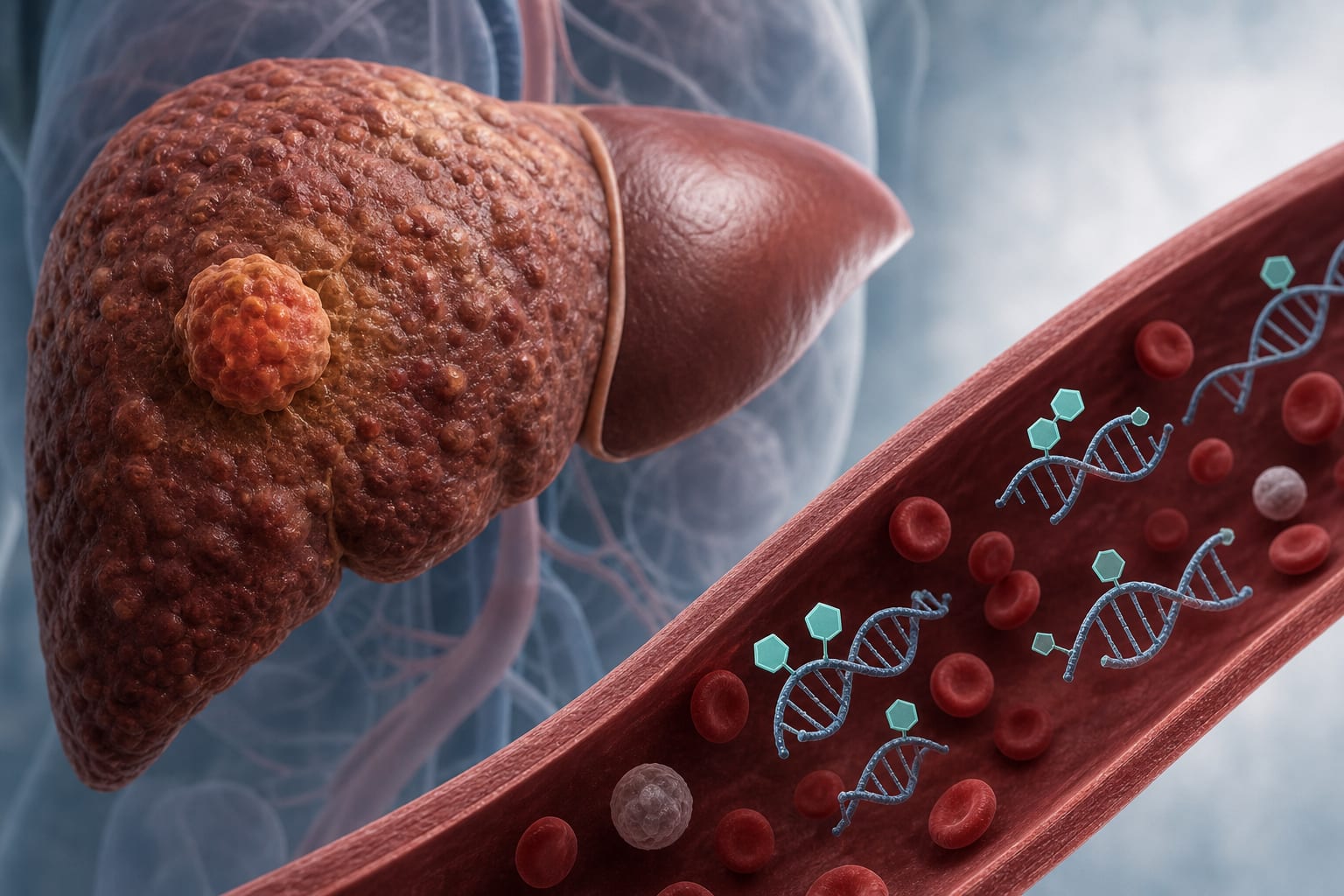
Detection of Hepatocellular Carcinoma in Cirrhotic Patients Using Circulating Methylated SEPT9 Markers
By
Abderrahim Oussalah
Maël Silva Rodriguez
Guillaume Conroy
Mouni Bensenane
Hélène Rousseau
Ahmet Ayav
Jean-Louis Guéant
Houda Camara
Cédric Baumann
Valérie Laurent
Jean-Pierre Bronowicki
SEPT9_CROSS Study Group
Vincent Haghnejad
Claire Geist
Raphaelle Riffault
Abdelbasset Nani
Julien Levy
Jonas Callet
September 1, 2026
Clinical Scorecard: Detection of Hepatocellular Carcinoma in Cirrhotic Patients Using Circulating Methylated SEPT9 Markers
At a Glance
Category Detail
Condition Hepatocellular carcinoma (HCC) Key Mechanisms Epigenetic alteration of the SEPT9 promoter associated with hepatic carcinogenesis. Target Population Patients with cirrhosis Care Setting Prospective, blinded, cross-sectional diagnostic investigation
Key Highlights
HCC is the third most common cause of cancer-related mortality globally. Cirrhosis due to chronic hepatitis, alcohol use, and metabolic dysfunction are key risk factors. Current surveillance methods include abdominal ultrasonography and α-fetoprotein (AFP) measurement. Methylated SEPT9 shows promising diagnostic accuracy for HCC detection. Sensitivity for early-stage disease with current methods is suboptimal. Guideline-Based Recommendations
Diagnosis
Diagnosis of HCC should follow AASLD and EASL criteria. Management
Surveillance for HCC in cirrhotic patients is recommended every 6 months. Monitoring & Follow-up
Monitor using abdominal ultrasonography with or without AFP measurement. Risks
Risk factors include cirrhosis, chronic viral hepatitis, alcohol use, and metabolic dysfunction. Patient & Prescribing Data
Adults with confirmed cirrhosis of any etiology.
Methylated SEPT9 may enhance or complement existing surveillance strategies.
Clinical Best Practices
Utilize both methylated SEPT9 and AFP for improved sensitivity in HCC detection. Conduct imaging follow-up for patients classified as HCC-free to minimize misclassification. Related Resources & Content