Clinical Scorecard: Randomized Evaluation of Roxadustat Therapy Following PCI in Patients With ST-Segment Elevation Myocardial Infarction
At a Glance
Category
Detail
Condition
Clinical topic addressed by the source article: Randomized Evaluation of Roxadustat Therapy Following PCI in Patients With ST-Segment Elevation Myocardial Infarction
Key Mechanisms
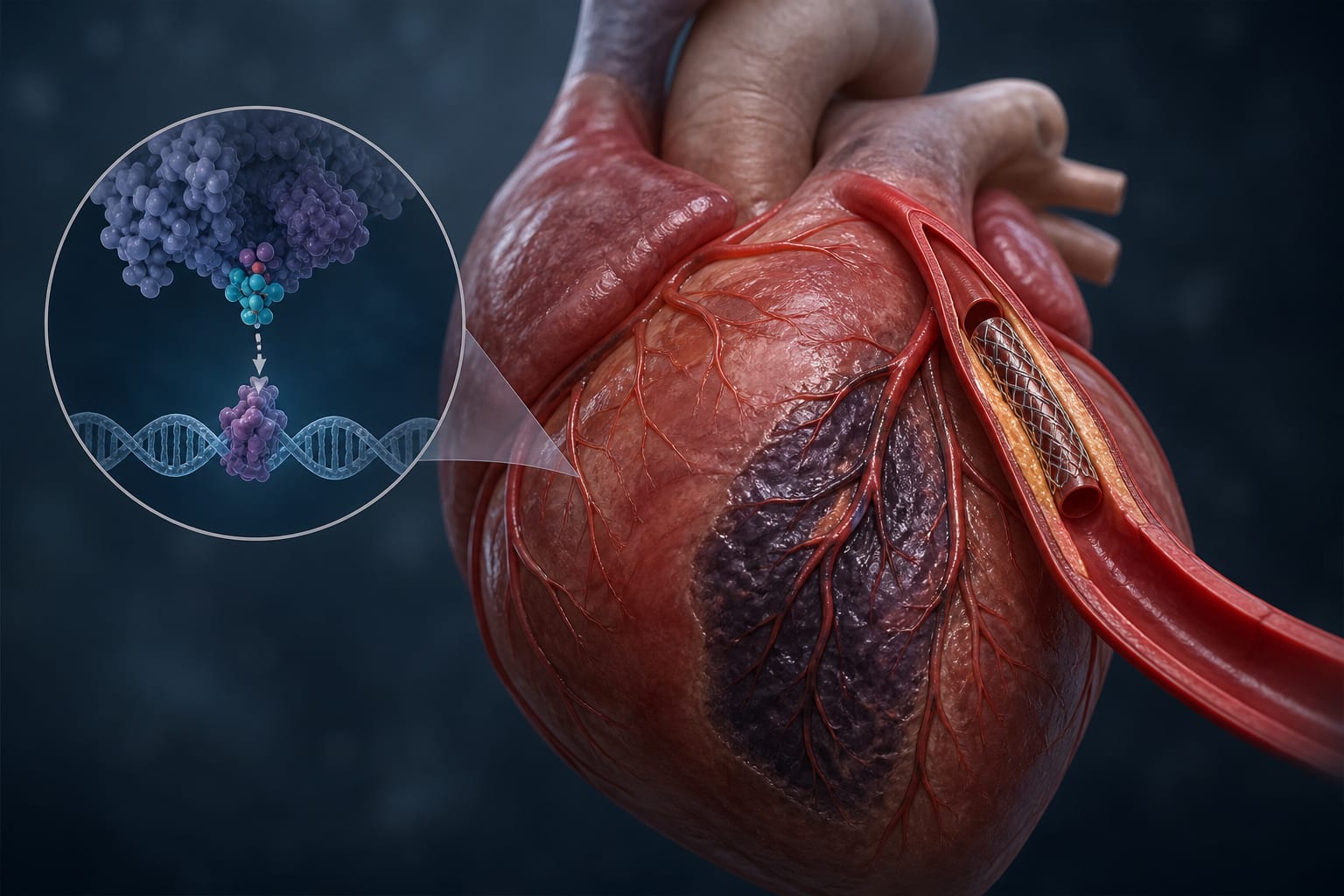
HIF activation is associated with adaptive responses including reduced apoptosis, angiogenesis, and metabolic reprogramming. The source presents PHD inhibition as a preclinical rationale for cardioprotection; it does not establish these effects in trial participants.
Target Population
Adults aged 18 years or older with acute STEMI presenting within 12 hours of symptom onset and undergoing primary PCI; prior myocardial infarction and cardiogenic shock before randomization were exclusion criteria.
ROXAMI was a prospective, investigator-initiated, open-label randomized trial comparing roxadustat plus standard care with standard care alone.
Participants were randomized 1:1 after primary PCI and written informed consent.
Roxadustat was initiated within 2 hours after PCI at 100 mg three times weekly for 2 weeks.
The prespecified primary end point was infarct size as a percentage of left ventricular volume, assessed by PET and MRI at a mean of 30 (SD 7) days.
The provided article excerpt describes the trial rationale and methods but does not report study results.
Guideline-Based Recommendations
Diagnosis
Trial eligibility required age 18 years or older, acute STEMI, presentation within 12 hours after symptom onset, and primary PCI.
The primary end point was assessed using [68Ga]Ga-DOTA-FAPI-04 PET and MRI with late gadolinium enhancement.
Management
The intervention group received roxadustat 100 mg three times weekly for 2 weeks, starting within 2 hours after primary PCI.
The control group received standard care without roxadustat.
Monitoring & Follow-up
Infarct size was assessed at a mean of 30 (SD 7) days after acute presentation.
Prespecified secondary end points included major adverse cardiovascular events, myocardial injury markers, echocardiographic measures, and PET/MRI measures of myocardial fibroblast activation.
Participants were followed for 1 year.
Risks
The study rationale states that the 2-week regimen was intended to target the early postinfarction reparative period while limiting prolonged HIF activation and erythropoiesis exposure, with the aim of averting thrombotic risks; this was a rationale, not a reported safety finding.
Exclusion criteria included cardiogenic shock before randomization, prior myocardial infarction, roxadustat contraindication or prior adverse reaction, and contraindications to PET or MRI.
Patient & Prescribing Data
Adults with acute STEMI presenting within 12 hours of symptom onset and undergoing primary PCI; patients with previous myocardial infarction or cardiogenic shock before randomization were excluded.
Roxadustat was administered orally at 100 mg three times weekly for 2 weeks, beginning within 2 hours after primary PCI. The regimen was adapted from the approved starting dose for anemia associated with chronic kidney disease.
Clinical Best Practices
The trial obtained written informed consent before randomization.
The trial used blinded image reviewers for PET and MRI assessment of infarct size.
The provided excerpt contains no outcome results; it does not establish treatment efficacy or safety.
Federal prosecutors allege that a Florida physician and research staff fabricated clinical trial records that were submitted into database systems used to evaluate investigational drugs.