A review of the pathogenic mechanism and clinical management progress of in-stent calcification restenosis
By
Xiangchen Xia
Fei Luo
Jianchun Li
Quanyi Liu
Jianzhong Pang
Fuyun Jia
Qiang Xu
Chao Peng
May 29, 2026
Clinical Scorecard: An Overview of the Pathophysiology and Advances in the Management of In-Stent Restenosis Due to Calcification
At a Glance
Category Detail
Condition
Key Mechanisms Calcification impairs stent expansion and exacerbates neointimal hyperplasia.
Target Population Patients undergoing coronary PCI with calcified lesions.
Care Setting
Key Highlights
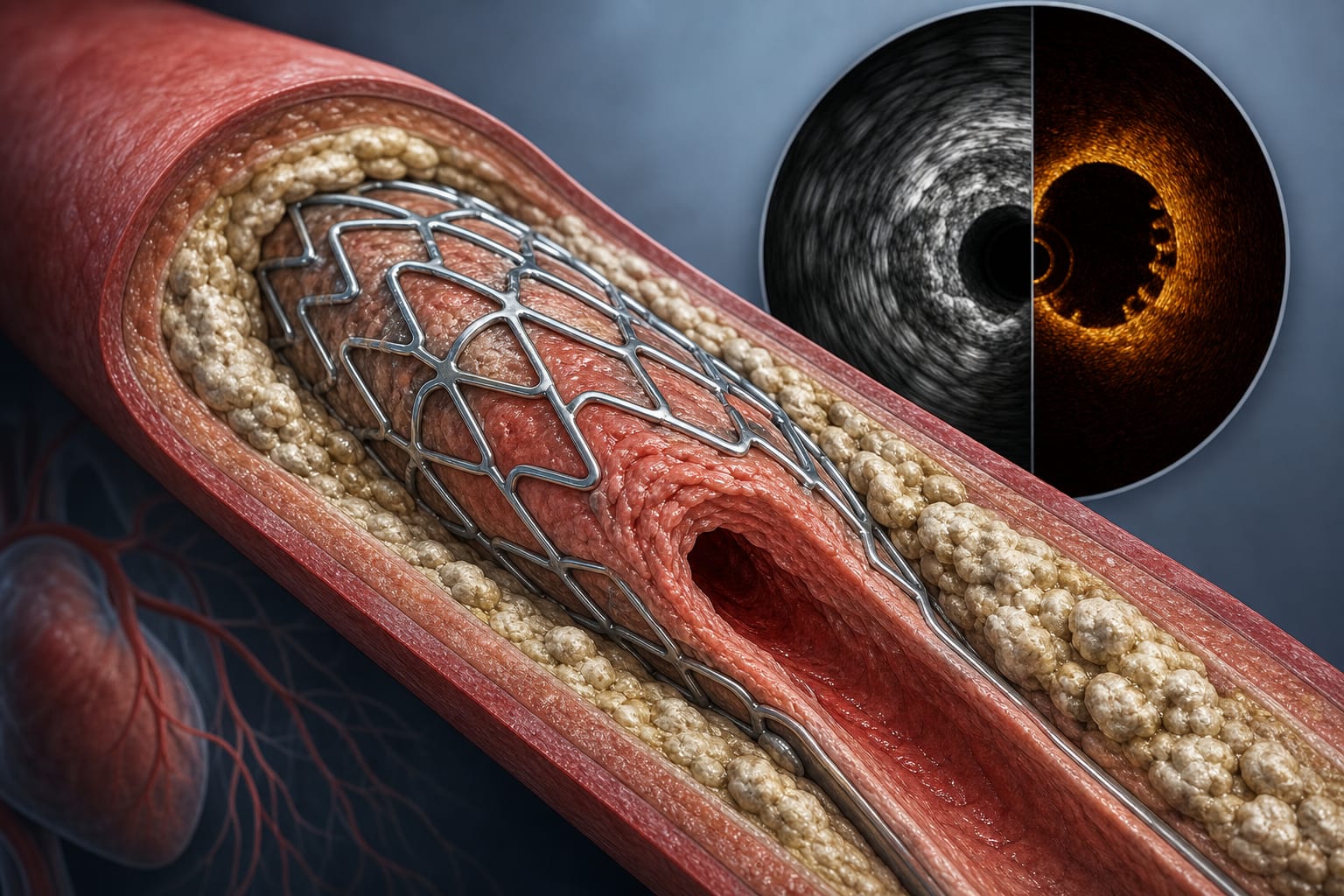
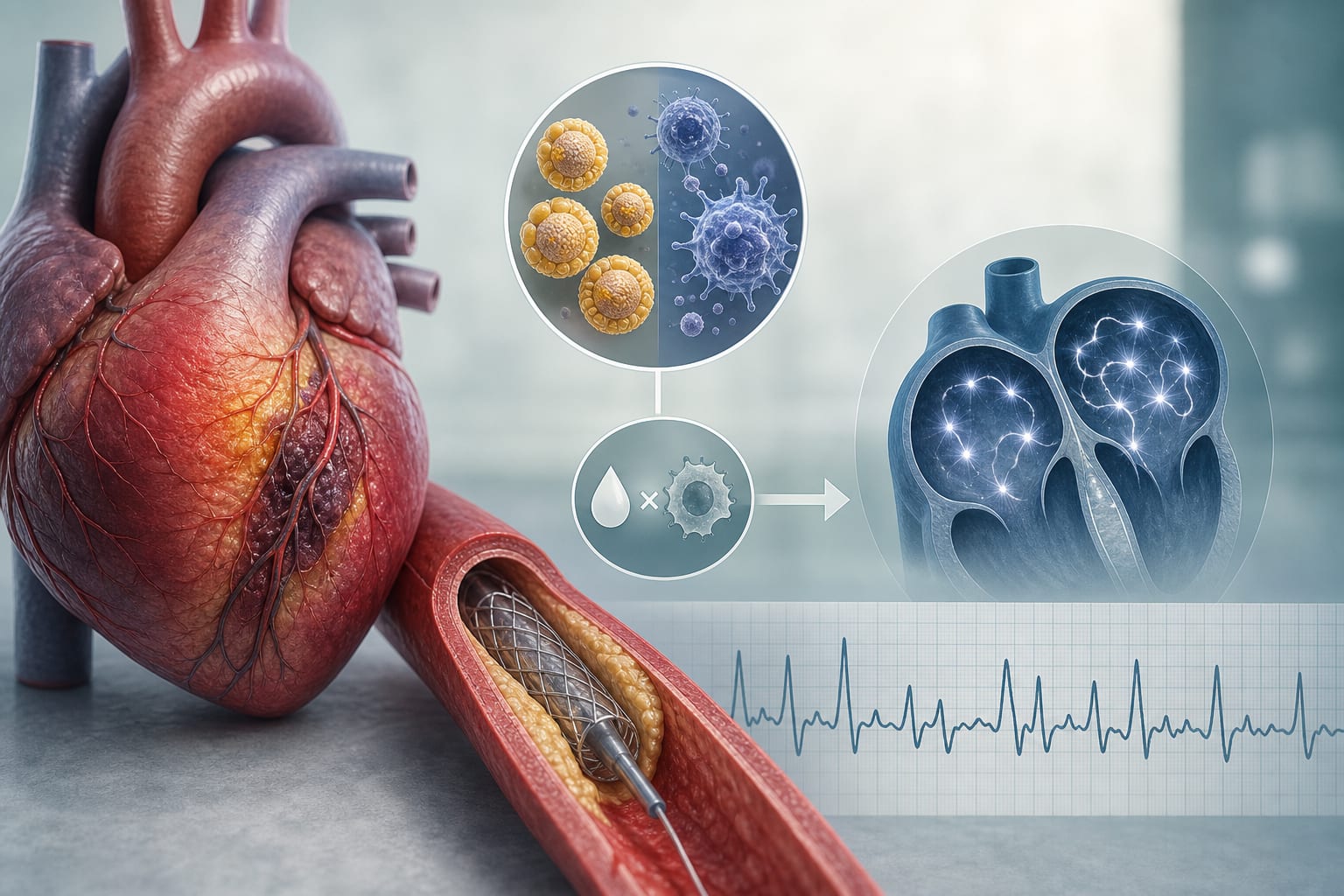
Calcified lesions restrict stent expansion and increase ISR risk. High-resolution imaging (OCT/IVUS) aids in evaluating calcification characteristics. Novel therapies like intravascular lithotripsy and orbital atherectomy improve management of calcific ISR. Conventional treatments face limitations in severe calcification cases.
Guideline-Based Recommendations
Diagnosis
Utilize high-resolution intravascular imaging (OCT/IVUS) for evaluation of calcification.
Management
Consider novel therapies such as intravascular lithotripsy and hybrid ablation strategies for calcific ISR.
Monitoring & Follow-up
Monitor for restenosis risk based on calcification characteristics.
Risks
Calcification can lead to stent underexpansion and malapposition.
Patient & Prescribing Data
Patients with coronary artery disease undergoing PCI with calcified lesions.
Novel technologies enhance procedural safety and lumen gain in calcified ISR.
Clinical Best Practices
Employ high-pressure non-compliant balloon angioplasty with caution in calcified lesions. Utilize drug-coated balloons judiciously, considering impaired drug transfer in calcified settings. Incorporate imaging techniques to guide treatment decisions.
Related Resources & Content