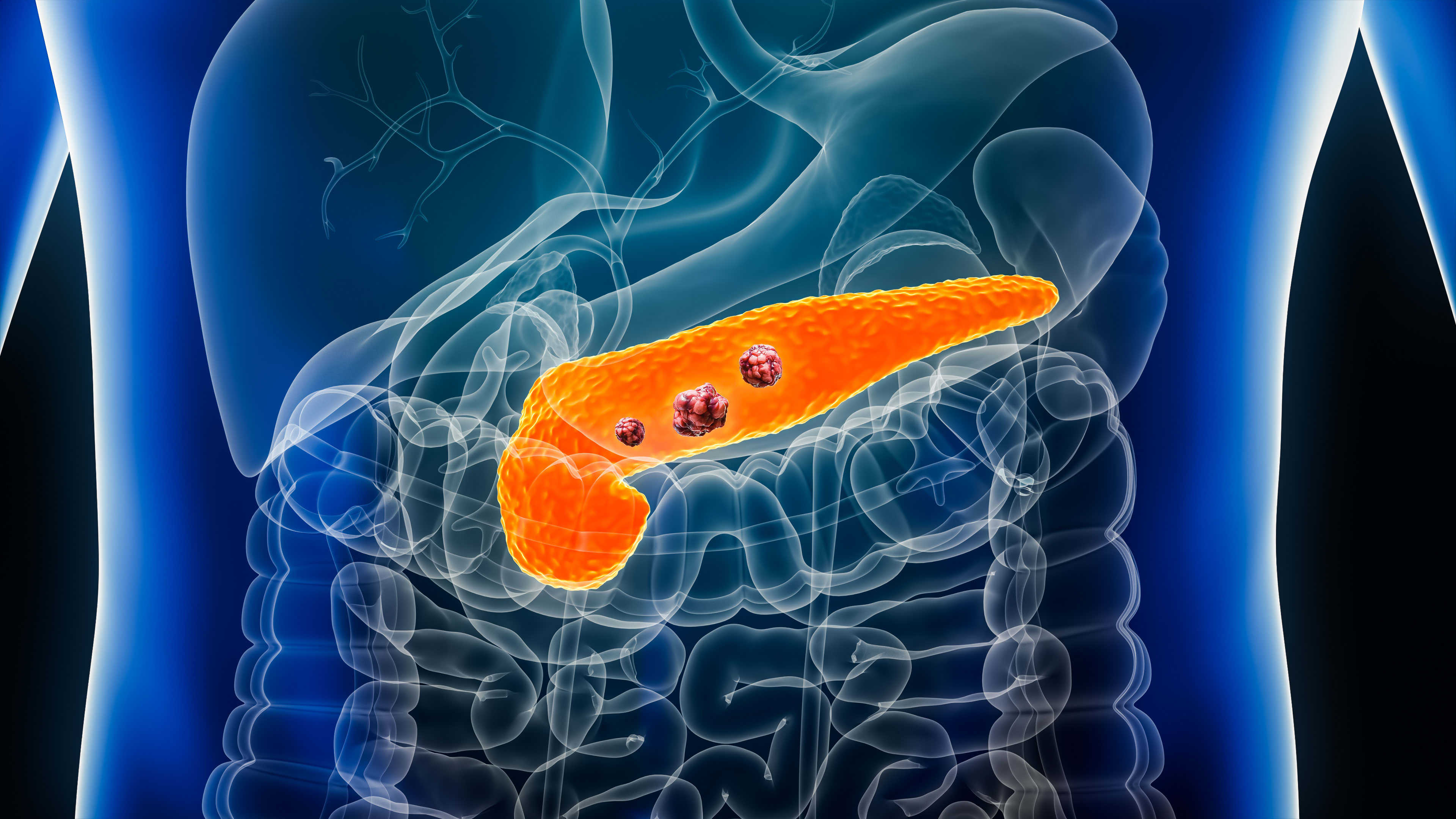
Clinical Scorecard: Evaluation of a 47Sc-labeled PDGFRβ-targeting affibody for SPECT imaging and radiotherapy applications in pancreatic cancer
At a Glance
Category
Detail
Condition
Pancreatic cancer characterized by high invasiveness, recurrence, treatment resistance, and poor prognosis
Key Mechanisms
Targeting cancer-associated fibroblasts (CAFs) via PDGFRβ to image and treat tumour microenvironment; use of 47Sc radionuclide for theranostic SPECT imaging and radiotherapy
Target Population
Patients with pancreatic cancer, especially those with local lesions or metastatic disease involving CAFs
Care Setting
Nuclear medicine and oncology settings involving molecular imaging and radionuclide therapy
Key Highlights
Pancreatic cancer progression is influenced by CAFs modifying the tumour microenvironment via ECM remodeling and secretion of cytokines and growth factors including PDGF.
PDGFRβ is highly expressed on CAFs and can be targeted by affibody proteins for precise molecular imaging and potential therapy.
Scandium-47 (47Sc) is a promising theranostic radionuclide with suitable half-life and emission properties for SPECT imaging and tumour radiotherapy.
Guideline-Based Recommendations
Diagnosis
Utilize PDGFRβ-targeting affibody probes radiolabeled with positron or gamma emitters for noninvasive detection of CAFs in pancreatic cancer.
Employ molecular imaging techniques such as PET and SPECT to assess tumour microenvironment and guide treatment.
Management
Consider theranostic approaches using 47Sc-labeled affibodies to integrate diagnosis and targeted radiotherapy of pancreatic cancer.
Optimize radionuclide selection based on physical properties and complex stability to enhance therapeutic efficacy and safety.
Monitoring & Follow-up
Use imaging data from 47Sc-labeled affibody scans to monitor drug distribution and estimate therapeutic doses during treatment.
Assess changes in tumour microenvironment and CAF activity to evaluate treatment response.
Risks
Be aware of potential treatment resistance due to tumour microenvironment complexity and CAF-mediated fibrosis.
Monitor for off-target radiation effects and ensure stable radionuclide-chelator complexes to minimize toxicity.
Patient & Prescribing Data
Patients with pancreatic cancer exhibiting CAF-rich tumour microenvironment
47Sc-labeled PDGFRβ affibody shows promise for combined SPECT imaging and radiotherapy, enabling personalized theranostic management.
Clinical Best Practices
Target CAF biomarkers such as PDGFRβ for improved specificity in pancreatic cancer imaging and therapy.
Use radionuclides like 47Sc with favorable half-life and emission characteristics for theranostic applications.
Employ molecular biology techniques to optimize affibody affinity and specificity prior to radiolabeling.
Integrate imaging results to tailor and monitor radionuclide therapy dosing and effectiveness.
In the phase 3 PANOVA-3 trial, adding Tumor Treating Fields therapy to gemcitabine and nab-paclitaxel was associated with improved overall survival and delayed pain progression in adults with locally advanced pancreatic cancer.
This twice-monthly newsletter highlights recently published research where Dana-Farber faculty are listed as first or senior authors. The information is pulled from PubMed and this issue notes papers published from February 16 - 28.