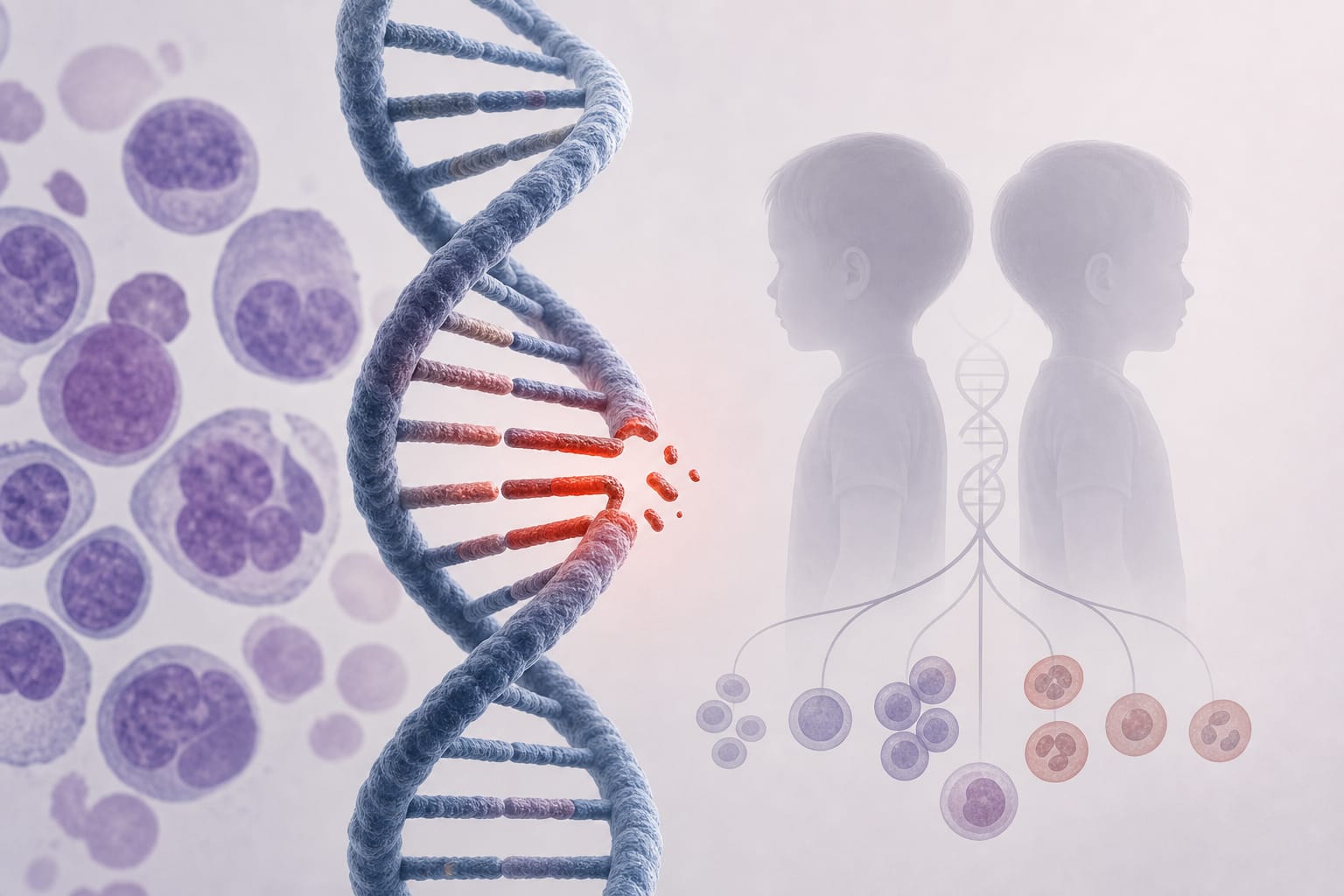
Clinical Scorecard: Clinical Case Study: Acute Lymphoblastic Leukemia Associated with ETV6 c.744del Mutation in Monozygotic Twins
At a Glance
Category
Detail
Condition
Key Mechanisms
Target Population
Pediatric patients, specifically monozygotic twins with familial clustering of leukemia and a family history of hematologic malignancies.
Care Setting
Key Highlights
Both twins diagnosed with B-cell ALL, highlighting the genetic link.
Elder twin achieved complete remission and remained disease-free for 42 months, indicating effective treatment.
Younger twin relapsed during maintenance therapy and underwent allogeneic hematopoietic stem cell transplantation, emphasizing the need for close monitoring.
ETV6 c.744del mutation confirmed in both twins and family members, underscoring its familial significance.
First international report of ETV6:c.744del mutation, marking a milestone in genetic research.
Guideline-Based Recommendations
Diagnosis
Confirm germline mutations using DNA from non-hematopoietic tissue.
Utilize next-generation sequencing for genetic screening, as per current guidelines.
Management
Follow CCCG-ALL 2020 intermediate-risk protocol for chemotherapy, with emphasis on genetic factors.
Monitoring & Follow-up
Monitor for minimal residual disease (MRD) post-induction therapy, as per standard practice.
Risks
Familial clustering of leukemia increases risk of ALL development, necessitating genetic counseling.
Patient & Prescribing Data
Germline genetic testing recommended for early identification of at-risk individuals, influencing treatment strategies.
Clinical Best Practices
Conduct family screening for genetic mutations in cases of familial leukemia to identify at-risk relatives.
Utilize comprehensive genetic testing for pediatric patients with ALL to guide treatment decisions.