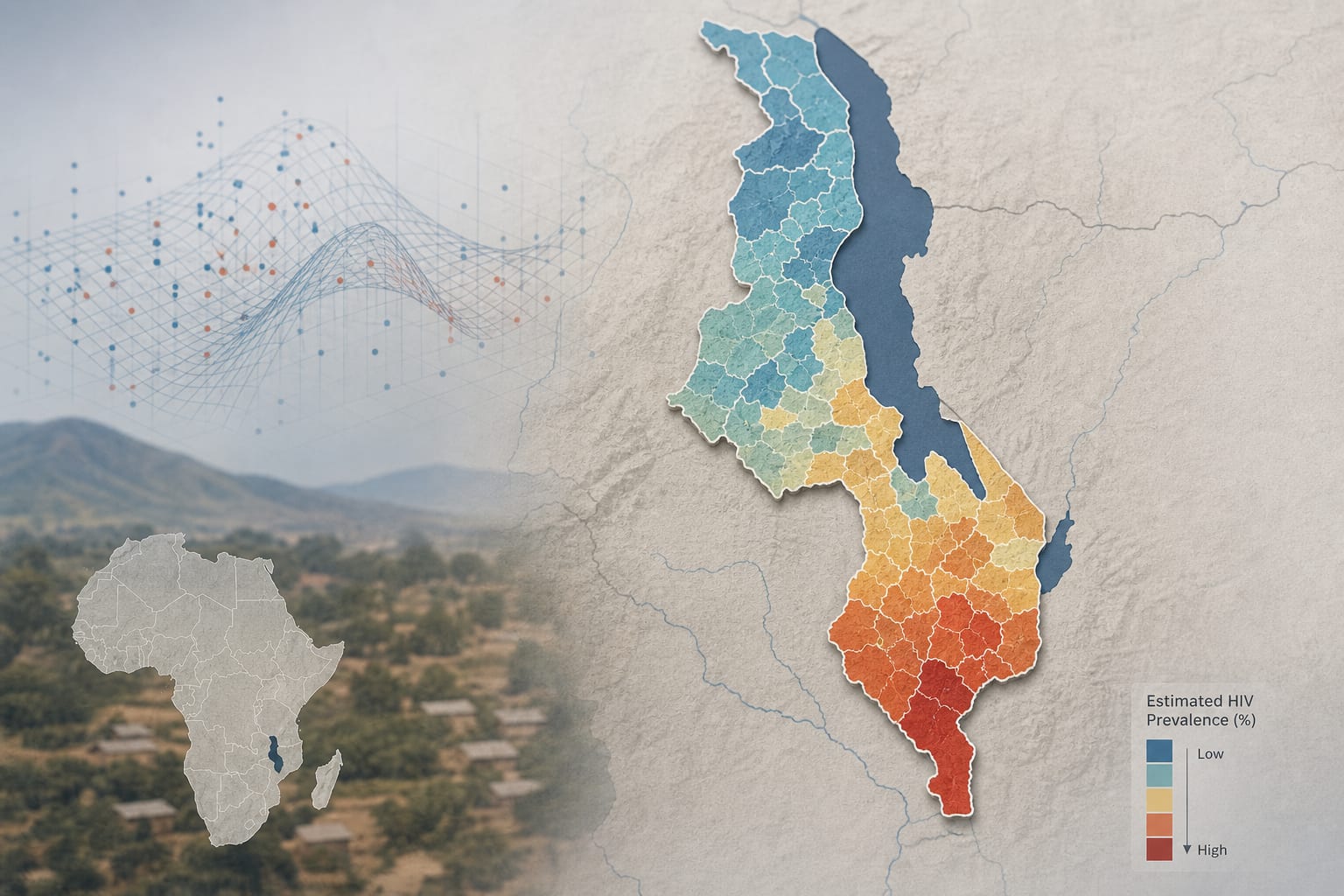
Spatial modeling of HIV prevalence in Malawi using generalized additive models
Clinical Scorecard: Geospatial Analysis of HIV Prevalence in Malawi Utilizing Generalized Additive Models
At a Glance
| Category | Detail |
|---|
| Condition | HIV prevalence in Malawi |
| Key Mechanisms | Geographic and sociodemographic determinants of HIV risk |
| Target Population | Adults aged 15–64 years in Malawi |
| Care Setting | Public health and epidemiological research |
Key Highlights
- HIV prevalence remains above 6% among adults aged 15–64 years in Malawi.
- Geographic disparities in HIV prevalence are significant, particularly in southern Malawi.
- Sociodemographic factors are primary drivers of HIV variation in most districts.
- Generalized additive models (GAMs) were used to analyze HIV risk factors.
- High-resolution maps generated to visualize HIV prevalence across districts.
Guideline-Based Recommendations
Diagnosis
- Utilize individual-level HIV biomarker data for accurate prevalence estimates.
Management
- Target interventions based on geographic and sociodemographic contexts.
Monitoring & Follow-up
- Regularly assess HIV prevalence and sociodemographic factors to inform public health strategies.
Risks
- Consider both individual-level determinants and geographic context in HIV risk assessments.
Patient & Prescribing Data
Individuals living with HIV in Malawi
Focus on tailored interventions to improve access to prevention and treatment services.
Clinical Best Practices
- Integrate geographic and sociodemographic data in HIV intervention planning.
- Employ advanced modeling techniques to capture nonlinear relationships in HIV risk.
Related Resources & Content