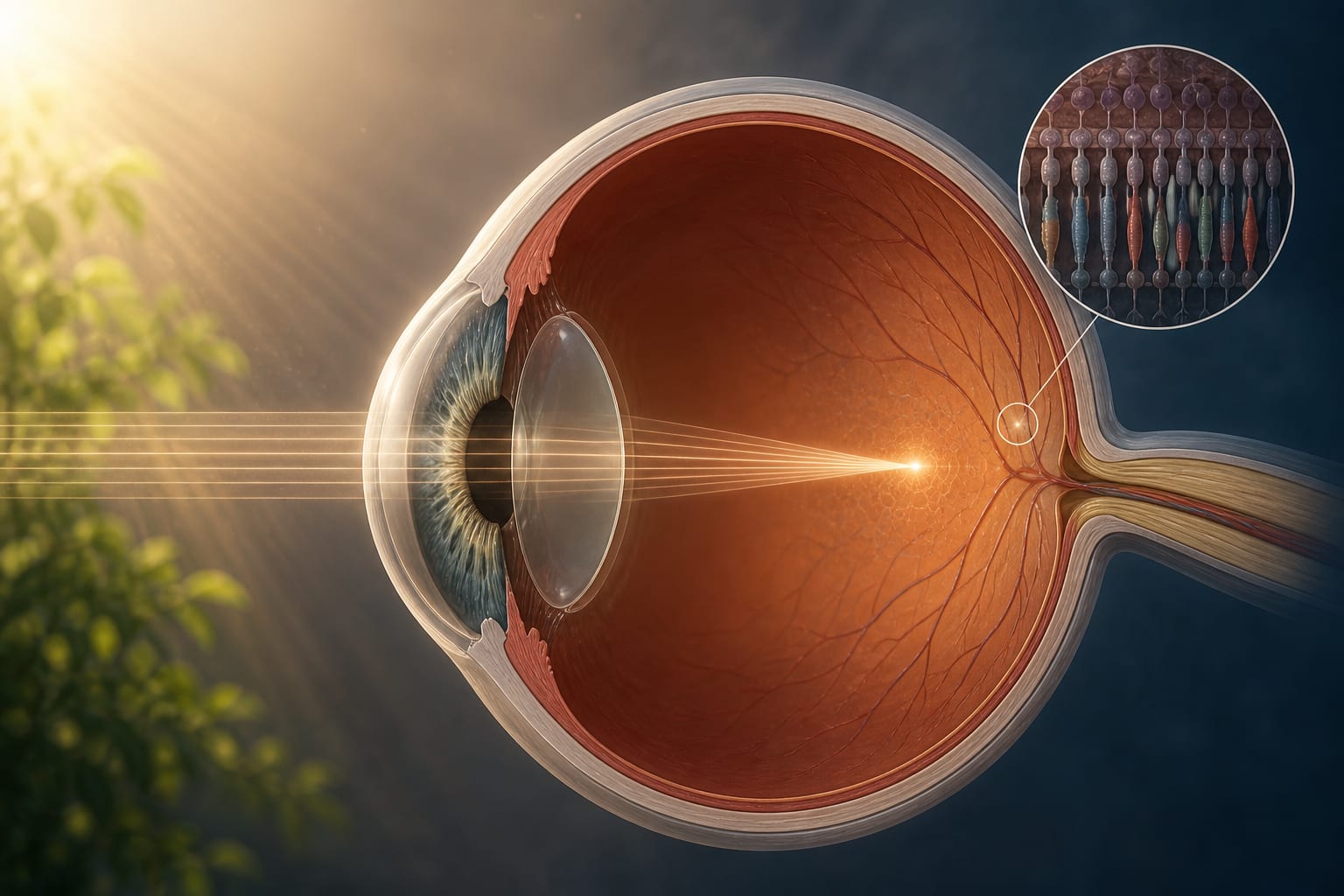
Editorial: The Impact of Light Exposure on Myopia Development
Clinical Scorecard: Editorial: The Impact of Light Exposure on Myopia Development
At a Glance
| Category | Detail |
|---|
| Condition | Myopia |
| Key Mechanisms | Light exposure regulates ocular growth and emmetropization through various physiological and molecular mechanisms. |
| Target Population | Children and adolescents |
| Care Setting | Public health strategies and clinical research |
Key Highlights
- Outdoor exposure duration protects against myopia onset.
- CUVAF is a promising biomarker for assessing ultraviolet exposure and myopia risk.
- Low-level red-light therapy shows potential in reducing myopia progression.
- Environmental factors, including green spaces, play a significant role in myopia prevention.
- Further research is needed to clarify the mechanisms of light's effects on ocular development.
Guideline-Based Recommendations
Diagnosis
- Assess myopia severity using objective measures such as CUVAF.
Management
- Encourage outdoor activities to reduce myopia incidence.
- Consider light-based therapies, particularly low-level red-light therapy.
Monitoring & Follow-up
- Use CUVAF to monitor adherence to preventive interventions.
Risks
- Long-term efficacy and safety of light-based interventions remain uncertain.
Patient & Prescribing Data
Pediatric populations at risk for myopia development.
Light-based interventions, particularly red-light therapy, may offer therapeutic benefits.
Clinical Best Practices
- Incorporate outdoor activity into daily routines for children.
- Utilize CUVAF as a non-invasive measure of light exposure.
- Stay informed on emerging light-based therapies and their clinical outcomes.
Related Resources & Content