Detection of Referable Diabetic Retinopathy using Machine Learning on Routine Clinical Data - Scorecard - MDSpire

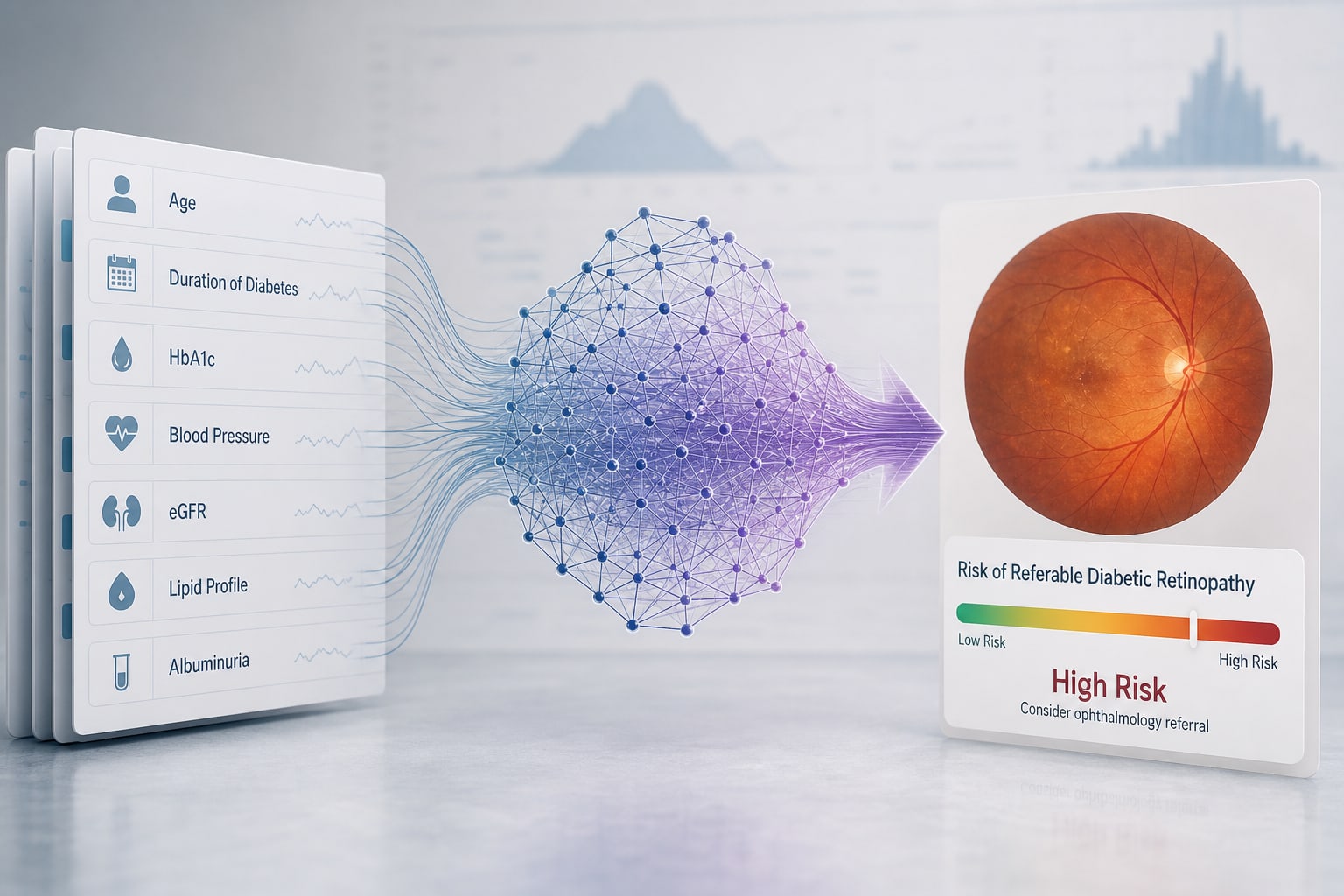
Detection of Referable Diabetic Retinopathy using Machine Learning on Routine Clinical Data

  • By

  • Jeon, Young Joon

  • Song, Jae Shin

  • Borghare, Shubham

  • Lee, Youngju

  • Choi, Young Wook

  • Song, Junghan

  • Lim, Soo

  • Woo, Se Joon

  • April 13, 2026

  • 0 min

Share

Clinical Scorecard: Identifying Referable Diabetic Retinopathy through Machine Learning Analysis of Standard Clinical Data

At a Glance

CategoryDetail
ConditionReferable Diabetic Retinopathy (RDR)
Key MechanismsMachine learning algorithm utilizing clinical and laboratory parameters
Target PopulationAdults diagnosed with diabetes
Care SettingTertiary institution

Key Highlights

  • Machine learning model predicts RDR without ophthalmic imaging
  • Random forest model achieved AUROC of 0.932 in validation cohort
  • 15 significant predictors identified, with age being the most critical
  • Potential for early identification of RDR in resource-limited settings
  • Facilitates timely referrals and integration into clinical decision support

Guideline-Based Recommendations

Diagnosis

  • Utilize machine learning models for predicting RDR based on clinical data

Management

  • Implement early referral protocols for patients identified at risk of RDR

Monitoring & Follow-up

  • Regular assessment of identified predictors such as glycemic control and blood pressure

Risks

  • Inadequate monitoring may lead to vision impairment due to undiagnosed RDR

Patient & Prescribing Data

Adults with diabetes undergoing routine assessments

Focus on managing glycemic levels and cardiovascular risk factors

Clinical Best Practices

  • Incorporate machine learning tools into routine diabetic care
  • Utilize demographic and clinical data for risk stratification
  • Ensure regular follow-up for patients identified as high risk for RDR

Related Resources & Content

Original Source(s)

Related Content