Clinical Scorecard: The Interaction Between Estrogen Receptors and the NRF2 Pathway: Connecting Hormonal Control and Stress Response Mechanisms in the Intestinal System
At a Glance
Category
Detail
Condition
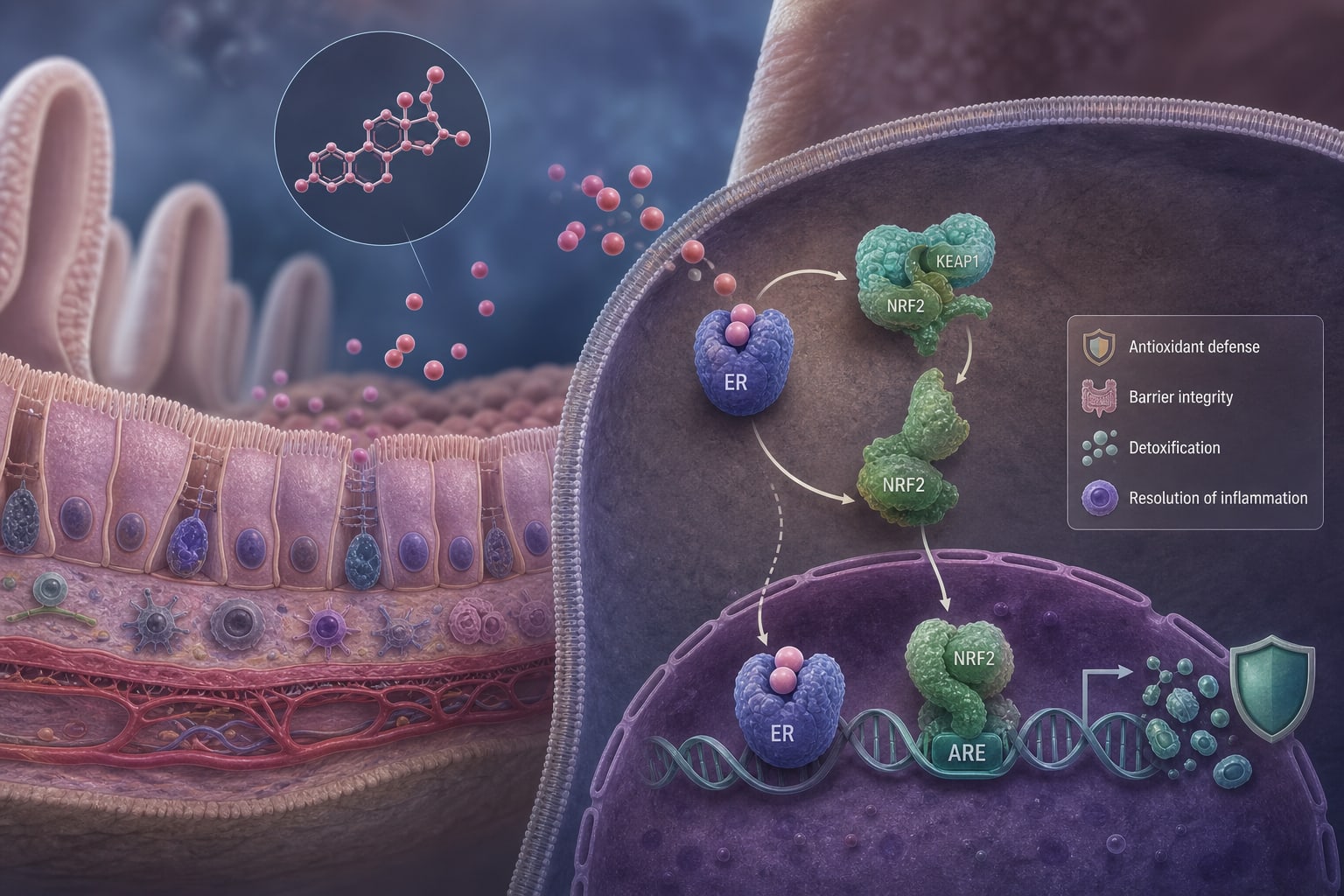
Estrogen signaling and NRF2 interaction in the gastrointestinal system
Key Mechanisms
Estrogen receptors influence intestinal motility, barrier integrity, and nutrient absorption; NRF2 regulates cellular stress responses and detoxification.
Target Population
Individuals with gastrointestinal and metabolic disorders, with a focus on sex differences.
Care Setting
Clinical research and therapeutic strategy development.
Key Highlights
Estrogen signaling intersects with NRF2, suggesting a role in gut homeostasis.
Sex differences influence intestinal physiology and pathology, particularly in IBD.
NRF2 is a master regulator of the oxidative stress response, relevant in IBD.
Mouse models reveal sex-specific actions of NRF2 and estrogen signaling.
The microgenderome may contribute to estrogen–NRF2 crosstalk.
Guideline-Based Recommendations
Diagnosis
Consider sex-related differences in the incidence and presentation of gastrointestinal disorders.
Management
Explore estrogen receptor–NRF2 interactions for potential therapeutic strategies in gastrointestinal disorders.
Monitoring & Follow-up
Monitor oxidative stress levels and estrogen signaling in patients with IBD.
Risks
Inadequate understanding of sex differences may lead to gaps in treatment efficacy.
Patient & Prescribing Data
Patients with inflammatory bowel disease and related gastrointestinal disorders.
Estrogen signaling may modulate gut health and response to therapies.
Clinical Best Practices
Incorporate both male and female models in preclinical research to understand sex differences.
Assess the impact of hormonal fluctuations on gastrointestinal health in clinical settings.