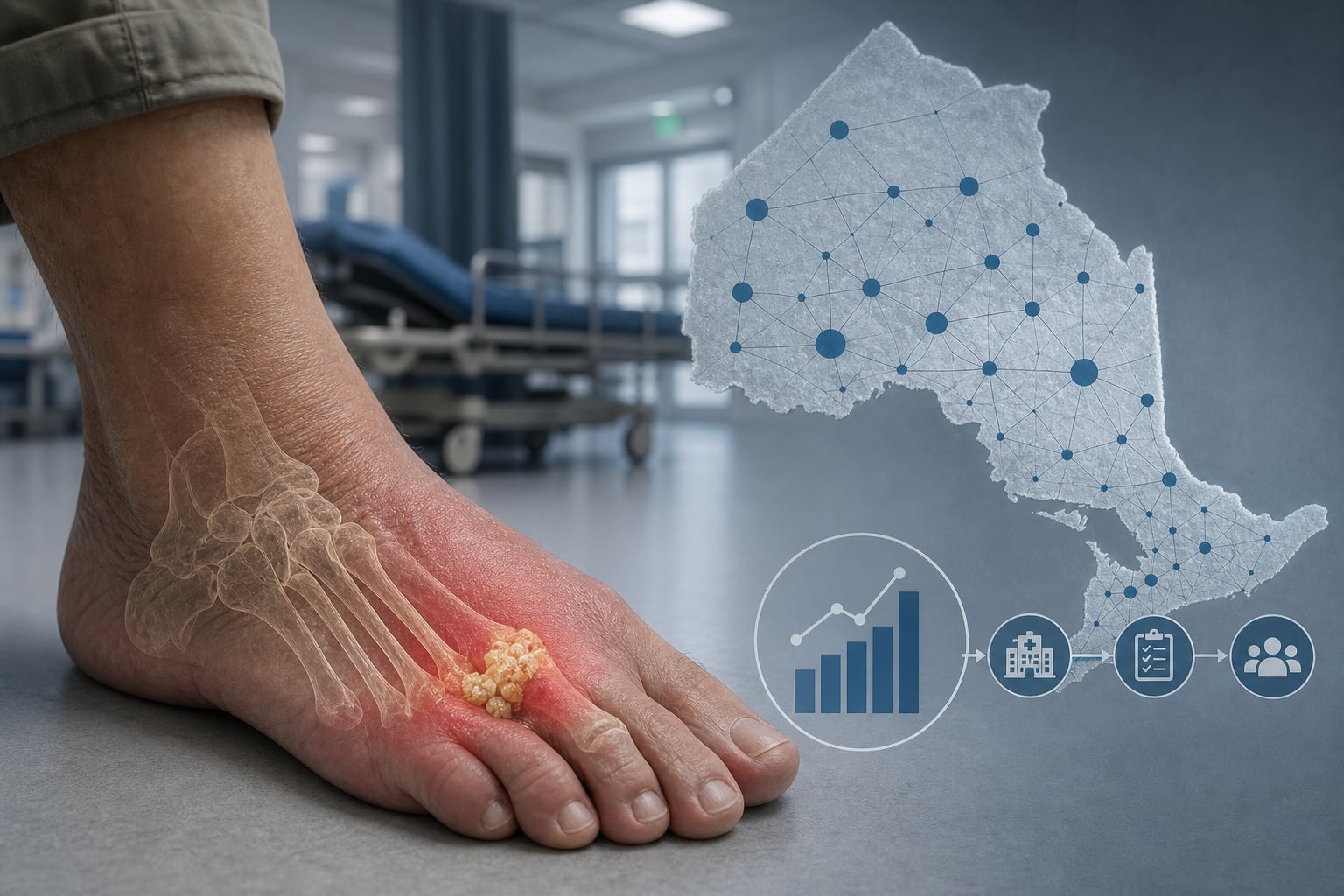
Tophi Formation on Palmar and Plantar Surfaces in Patients with Chronic Gout
By
Linh H. Tran
Josephine Du
Jessie Medina
May 26, 2026
Clinical Scorecard: Tophi Formation on Palmar and Plantar Surfaces in Patients with Chronic Gout
At a Glance
Category Detail
Condition Key Mechanisms Target Population Patients with chronic gout, particularly those with comorbidities such as diabetes and renal disease. Care Setting
Key Highlights
Tophi formation on palmar and plantar surfaces is exceptionally rare. Diagnosis can be confirmed by needle aspiration showing negatively birefringent monosodium urate crystals. Tophi may mimic other skin conditions, delaying diagnosis. Accurate diagnosis is critical to avoid unnecessary procedures. Guideline-Based Recommendations
Diagnosis
Confirm diagnosis through needle aspiration and polarized microscopy. Management
Resume allopurinol, titrated to maintain serum urate < 6 mg/dL. Monitoring & Follow-up
Monitor serum uric acid levels to assess treatment efficacy. Risks
Misdiagnosis can lead to unnecessary procedures due to mimicry of infections or malignancies. Patient & Prescribing Data
Colchicine may be used for acute flares; allopurinol is essential for long-term management.
Clinical Best Practices
Educate patients on the importance of maintaining target uric acid levels. Consider differential diagnoses when encountering atypical tophi presentations. Utilize imaging and laboratory confirmation to guide diagnosis. Related Resources & Content