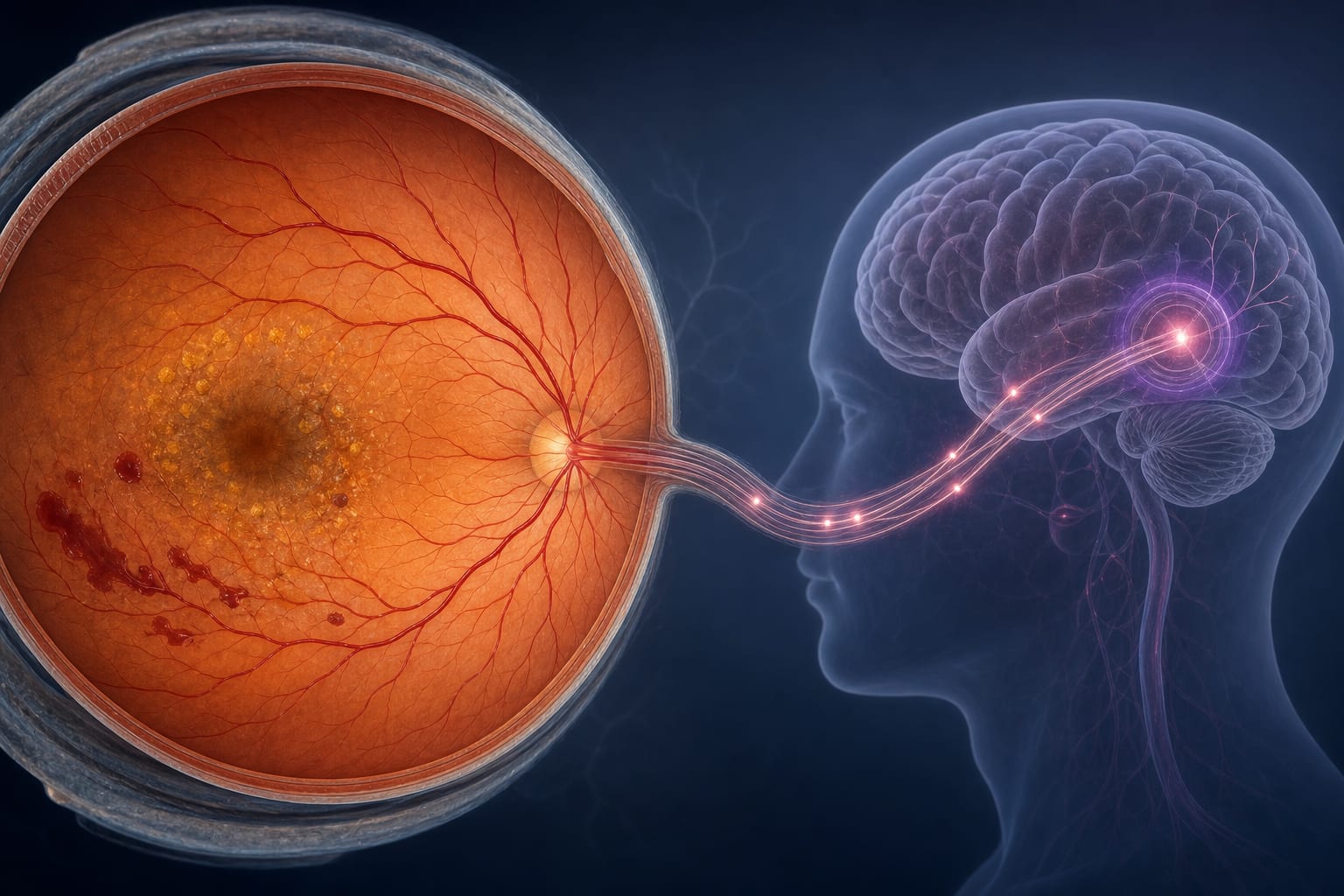
Can NSAIDs Aid DME Treatment?
Meta-analysis states that topical NSAIDs – alone or combined with anti-VEGF therapy – show significant BCVA improvements for DME
Clinical Scorecard: Can NSAIDs Aid DME Treatment?
At a Glance
| Category | Detail |
|---|
| Condition | Diabetic Macular Edema (DME) |
| Key Mechanisms | NSAIDs inhibit cyclooxygenase enzymes and reduce prostaglandin production, potentially decreasing vascular permeability and retinal inflammation. |
| Target Population | Patients with diabetic macular edema |
| Care Setting | Ophthalmology clinics |
Key Highlights
- Topical NSAIDs may offer modest visual benefits as adjunctive therapy for DME.
- Statistically significant improvement in best-corrected visual acuity (BCVA) with a mean difference of 1.82 ETDRS letters.
- Anatomical outcomes showed no statistically significant benefit for central macular thickness or macular volume reduction.
- Current evidence is insufficient to establish a clear anatomical advantage for NSAIDs in DME management.
- Further exploration and larger-scale studies are warranted.
Guideline-Based Recommendations
Diagnosis
- Assess diabetic macular edema through best-corrected visual acuity and imaging studies.
Management
- Consider topical NSAIDs as adjunctive therapy alongside standard anti-VEGF treatments.
Monitoring & Follow-up
- Monitor visual acuity and anatomical changes in response to treatment.
Risks
- Caution against overinterpreting the functional benefits of topical NSAIDs.
Patient & Prescribing Data
Patients receiving treatment for diabetic macular edema.
Topical NSAIDs such as bromfenac, ketorolac, and nepafenac may be used in conjunction with intravitreal anti-VEGF therapy.
Clinical Best Practices
- Evaluate the role of inflammation in DME management.
- Incorporate individualized treatment approaches based on patient response.
Related Resources & Content