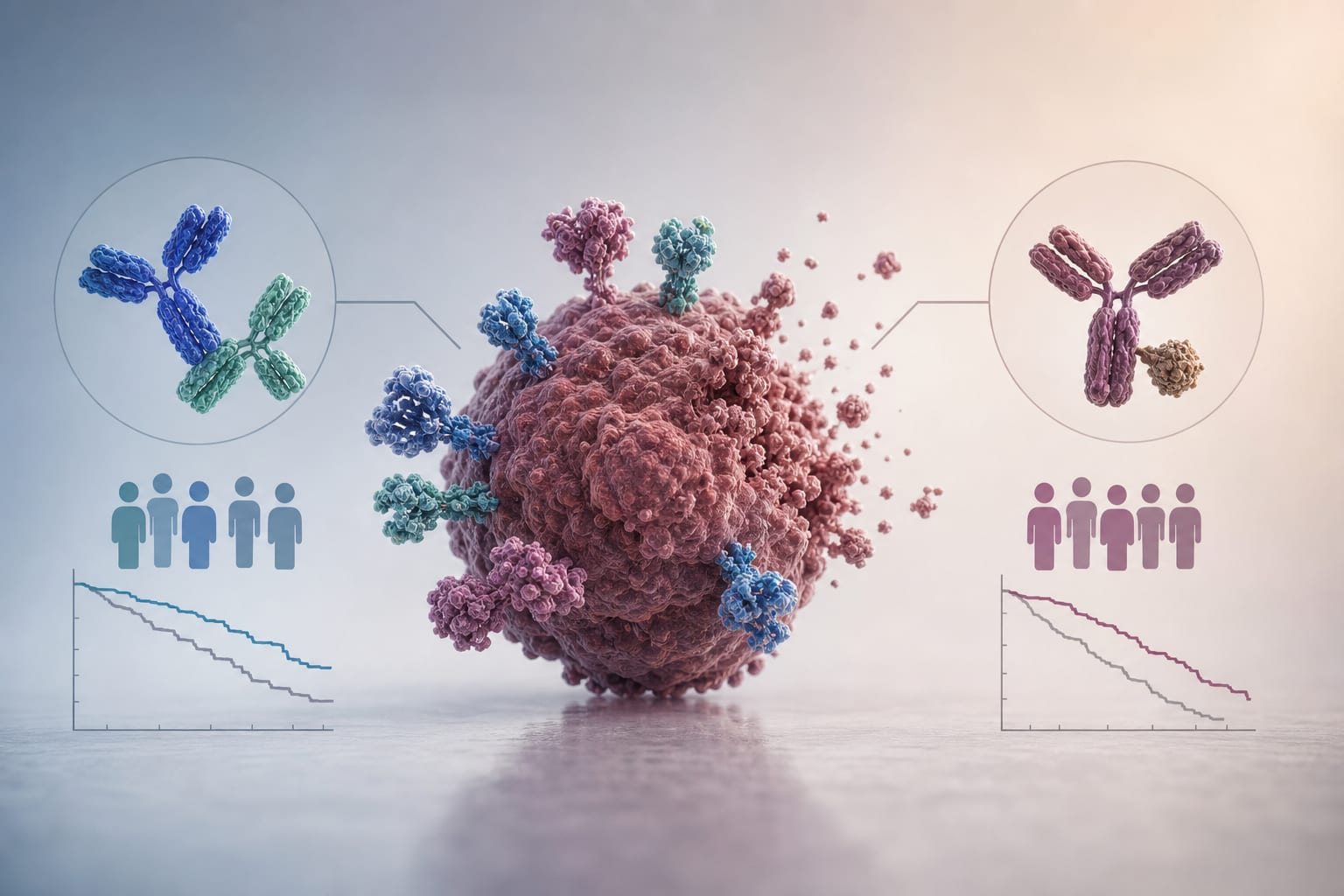
Clinical Scorecard: Combining Radiotherapy and Immunotherapy for Locally Advanced Gastric Cancer: Emerging Strategies and Future Perspectives
At a Glance
Category
Detail
Condition
Locally advanced gastric cancer and gastroesophageal junction adenocarcinoma
Key Mechanisms
Synergistic mechanisms of radiotherapy and immune checkpoint inhibitors enhance anti-tumor immunity through immunogenic cell death and cGAS-STING pathway activation.
Target Population
Patients with locally advanced or unresectable gastric cancer and gastroesophageal junction adenocarcinoma.
Care Setting
Oncology clinical settings focusing on multimodal treatment approaches.
Key Highlights
Radiotherapy (RT) enhances anti-tumor immunity when combined with immune checkpoint inhibitors (ICIs).
Neoadjuvant chemoradiotherapy (NCRT) with ICIs shows promising pathological complete response rates (pCR) of 22.6% to 38.2%.
Predictive biomarkers like PD-L1 expression and tumor mutational burden (TMB) require further validation for patient stratification.
Optimal integration of RT and immunotherapy remains controversial, necessitating careful consideration of treatment sequencing and techniques.
Large-scale randomized controlled trials are needed to confirm survival benefits and standardize treatment protocols.
Guideline-Based Recommendations
Diagnosis
Utilize biomarkers such as PD-L1 expression and TMB for patient stratification.
Management
Consider neoadjuvant chemoradiotherapy combined with ICIs for locally advanced gastric cancer.
Monitoring & Follow-up
Monitor treatment response and toxicity profiles during combined therapy.
Risks
Be aware of the potential for short-term recurrence due to hidden tumor cells or circulating tumor DNA.
Patient & Prescribing Data
Patients diagnosed with locally advanced gastric cancer or gastroesophageal junction adenocarcinoma.
Combination of RT and ICIs may improve treatment outcomes, but requires careful patient selection based on biomarkers.
Clinical Best Practices
Prioritize validation of predictive biomarkers for effective patient stratification.
Optimize radiotherapy techniques and sequencing with immunotherapy to maximize efficacy and minimize adverse events.
Conduct large-scale trials to establish standardized treatment protocols.
Harold Burstein, MD, PhD; Sara Tolaney, MD, MPH; Erica L. Mayer, MD, MPH; Nancy Lin, MD; and Ana C. Garrido-Castro, MD discuss important breast cancer research presented at the 2026 ESMO Breast Cancer Congress.