Targeted therapy in thyroid cancer: molecular alterations and clinical management
-
By
-
YiHeng Yang
-
YeSheng Zhang
-
YongCan Xu
-
XiaoXin Gu
-
Neng Lou
-
GuoChao Ye
-
June 5, 2026
-
Clinical Scorecard: Molecular Changes and Clinical Approaches in Targeted Treatment of Thyroid Cancer
At a Glance
| Category | Detail |
|---|
| Condition | Thyroid Cancer |
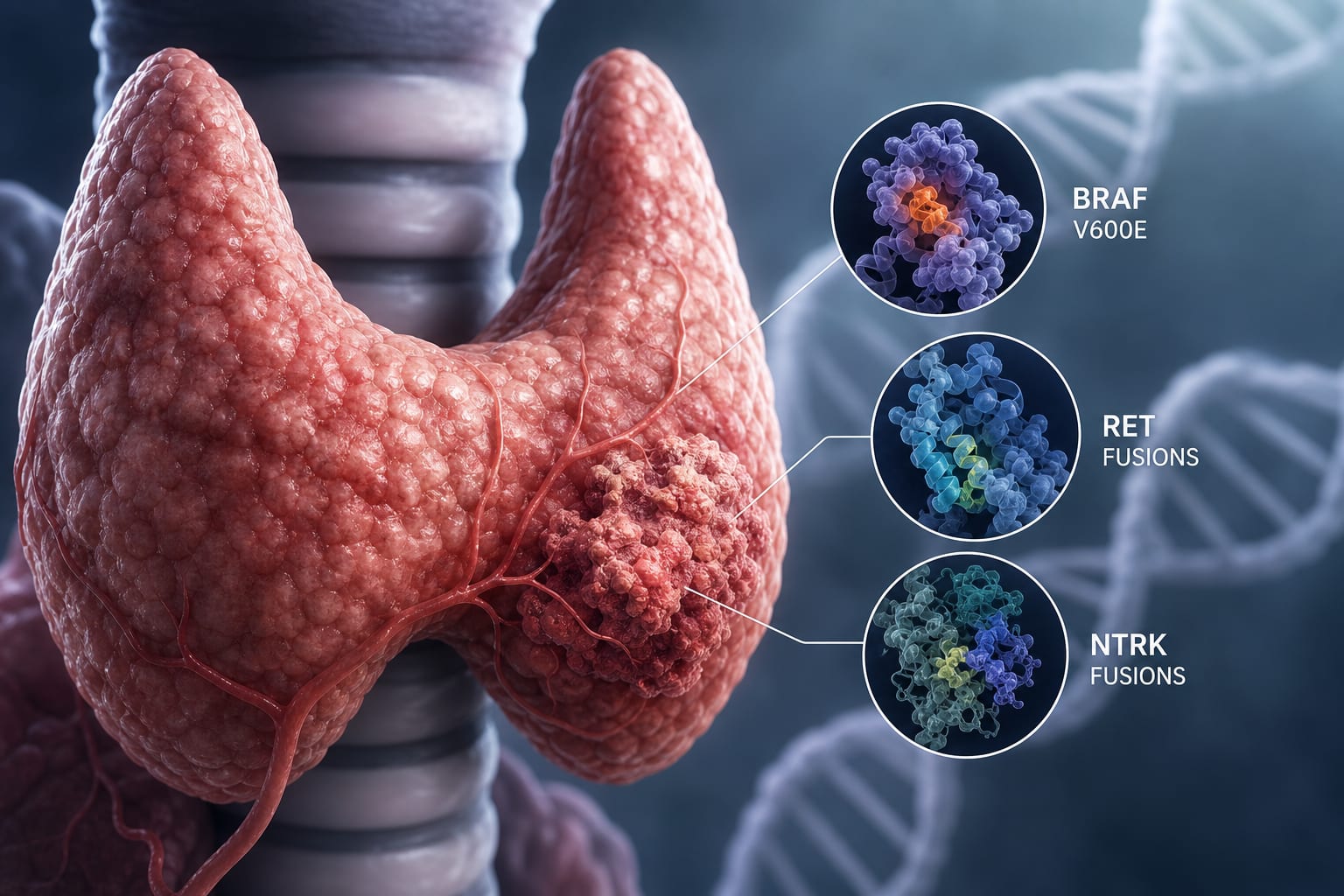
| Key Mechanisms | Molecular profiling of genomic drivers such as BRAF V600E, RET mutations/fusions, and NTRK fusions. |
| Target Population | Patients with advanced, recurrent, or radioiodine-refractory thyroid cancer. |
| Care Setting | Oncology clinics and specialized thyroid cancer treatment centers. |
Key Highlights
- Identification of specific genomic drivers has revolutionized thyroid cancer management.
- BRAF/MEK inhibitors are used for BRAF-mutant anaplastic thyroid carcinoma (ATC).
- VEGFR-targeted multikinase inhibitors like lenvatinib are standard for RAIR-DTC.
- Redifferentiation therapies show promise in restoring radioiodine sensitivity.
- Emerging pathways like PI3K/AKT/mTOR and immune checkpoints offer new combination therapy options.
Guideline-Based Recommendations
Diagnosis
- Early and comprehensive genomic profiling is essential for treatment optimization.
Management
- Utilize targeted therapies based on specific molecular alterations.
Monitoring & Follow-up
- Monitor for treatment resistance and adjust therapy accordingly.
Risks
- Consider potential adverse effects of multikinase inhibitors and other targeted therapies.
Patient & Prescribing Data
Patients with differentiated thyroid cancer (DTC), medullary thyroid carcinoma (MTC), and anaplastic thyroid carcinoma (ATC).
Molecularly matched therapies are preferred for advanced cases, with a focus on precision medicine.
Clinical Best Practices
- Implement molecular profiling to guide treatment decisions.
- Consider combination therapies to overcome resistance.
- Stay updated on emerging therapeutic strategies and clinical trials.
Related Resources & Content