Clinical Scorecard: Case Study: Systemic Belzutifan Induces Regression of Retinal Capillary Hemangioblastoma in a Patient with von Hippel–Lindau Disease
At a Glance
Category
Detail
Condition
Retinal Capillary Hemangioblastoma
Key Mechanisms
Inhibition of hypoxia-inducible factor 2 alpha (HIF-2α) leading to reduced cellular proliferation and angiogenesis.
Target Population
Patients with von Hippel–Lindau disease and retinal capillary hemangioblastoma.
Care Setting
Ophthalmic evaluation and monitoring in a clinical setting.
Key Highlights
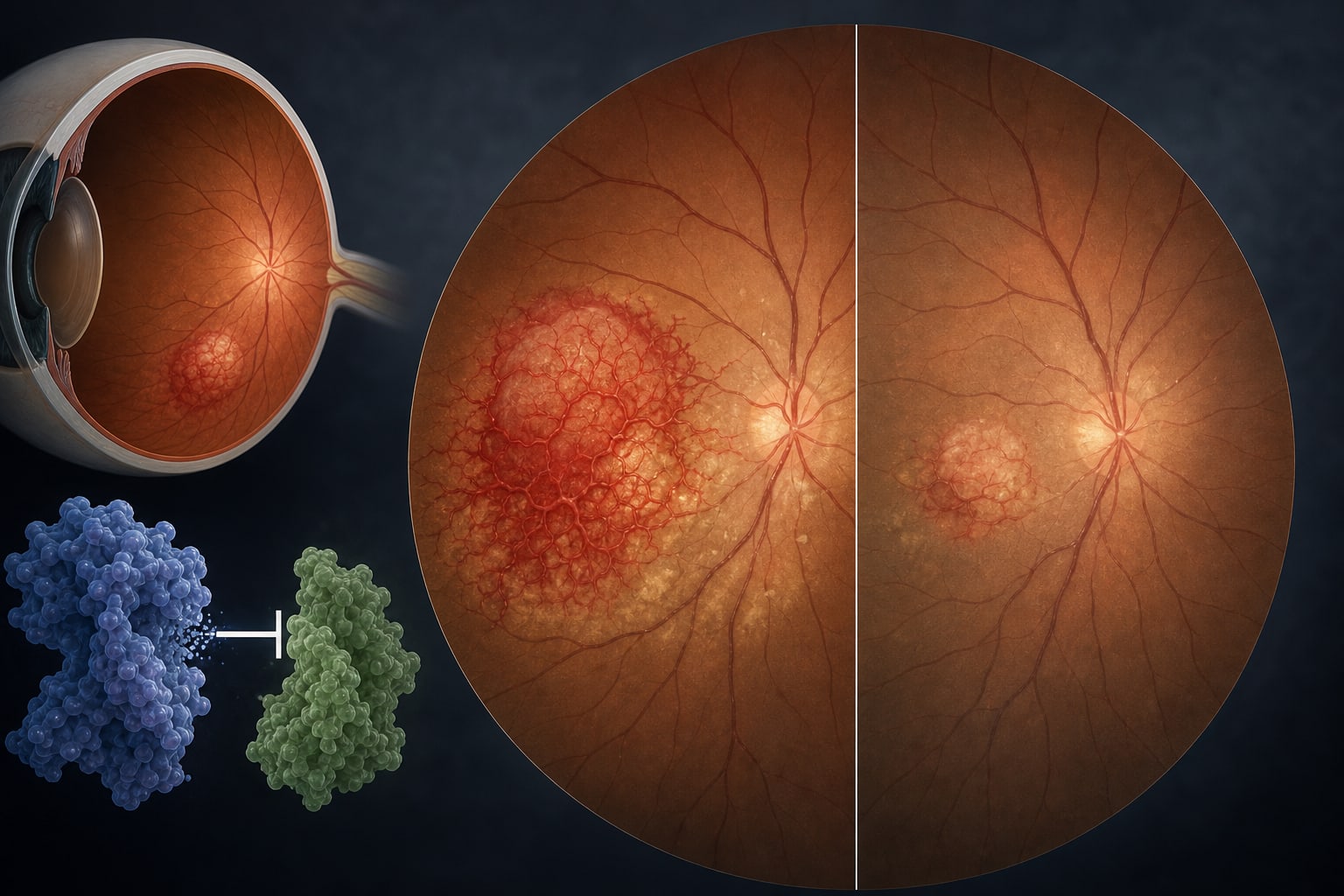
Systemic belzutifan therapy resulted in regression of retinal capillary hemangioblastomas.
The patient showed a reduction in lesion size and improved visual acuity after treatment.
Belzutifan was administered at a dosage of 120 mg daily, later adjusted due to elevated liver function tests.
Guideline-Based Recommendations
Diagnosis
Utilize imaging techniques such as optical coherence tomography and fluorescein angiography for diagnosis.
Management
Consider systemic belzutifan as a treatment option for retinal capillary hemangioblastoma in VHL disease.
Monitoring & Follow-up
Regular follow-up examinations to assess visual acuity and lesion size.
Risks
Monitor for potential liver function abnormalities during belzutifan therapy.
Patient & Prescribing Data
Adult patients with von Hippel–Lindau disease and retinal capillary hemangioblastoma.
Belzutifan may be effective as a primary or adjunctive treatment modality.
Clinical Best Practices
Close observation may be appropriate after initiating belzutifan, reserving local therapies for potential progression.
Evaluate liver function tests regularly during treatment with belzutifan.