The 51st Annual Conference of the European Society for Blood and Marrow Transplantation: Physicians – Poster Presentations (P001-P909)
-
November 5, 2025
Clinical Scorecard: Safety, Efficacy and CAR T-Cell Persistence of Obecabtagene Autoleucel (OBE-CEL) in Patients ≥ 55 Years Old with Relapsed or Refractory B-Cell Acute Lymphoblastic Leukaemia (R/R B-ALL)
At a Glance
| Category | Detail |
|---|---|
| Condition | Relapsed or refractory B-cell acute lymphoblastic leukaemia (R/R B-ALL) |
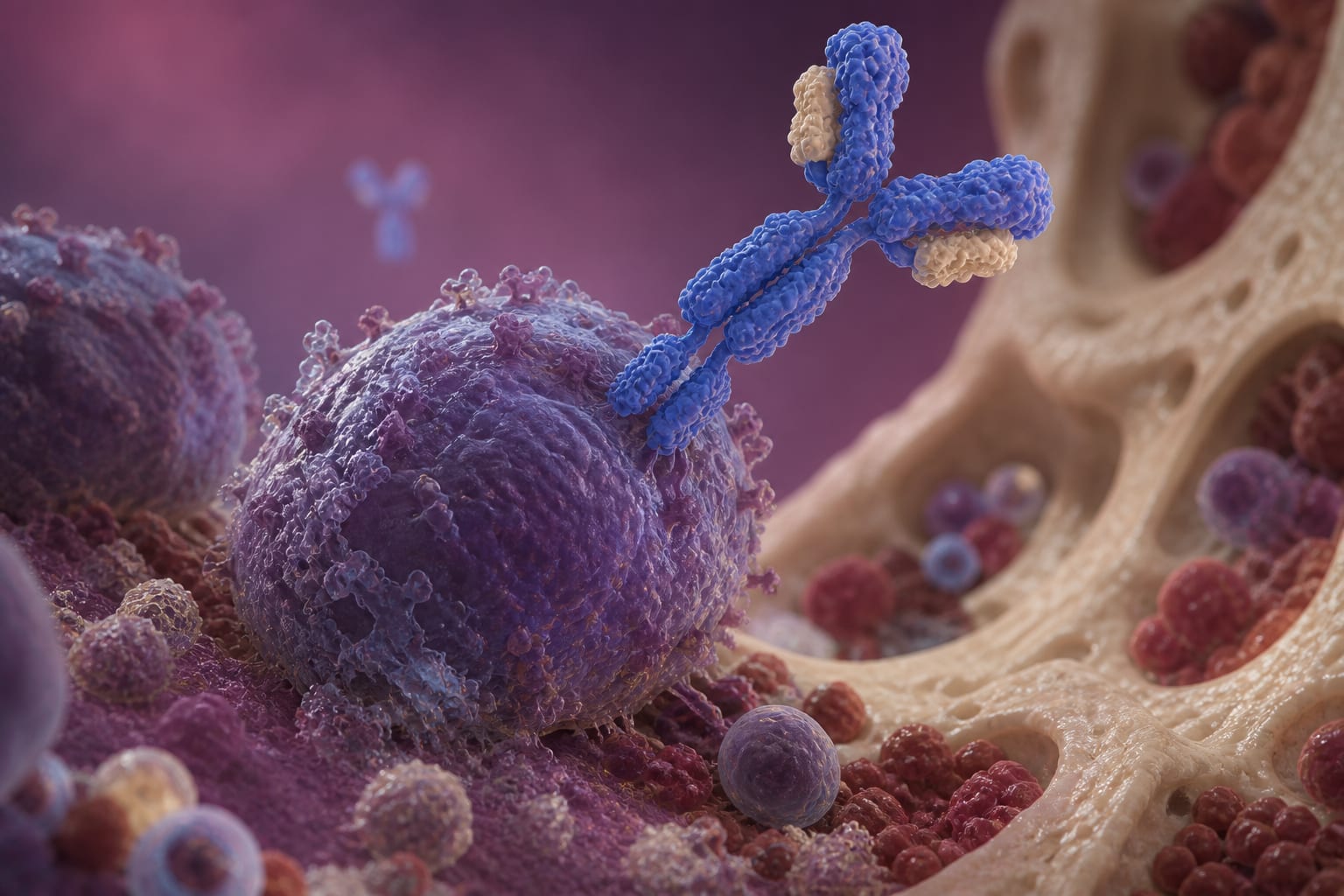
| Key Mechanisms | CD19 chimeric antigen receptor (CAR) T-cell therapy targeting B-ALL cells |
| Target Population | Patients aged 55 years and older with R/R B-ALL |
| Care Setting | Specialist hematology/oncology centers administering CAR T-cell therapy |
Key Highlights
- Obe-cel demonstrated a high overall remission rate (87.5%) in patients ≥55 years with R/R B-ALL.
- Low incidence of severe cytokine release syndrome (2.1%) and neurotoxicity (10.4%) was observed.
- Median duration of remission was 21.2 months with durable CAR T-cell persistence.
Guideline-Based Recommendations
Diagnosis
- Confirm diagnosis of R/R B-ALL in adult patients aged ≥55 years.
- Assess Philadelphia chromosome status and prior treatment history including SCT.
Management
- Administer obe-cel using tumour burden-guided dosing following lymphodepletion.
- Infuse obe-cel on Days 1 and 10 targeting a total dose of 4x10^8 CAR T-cells.
- Consider obe-cel as a treatment option for patients ineligible for stem cell transplantation.
Monitoring & Follow-up
- Monitor for cytokine release syndrome and immune effector cell-associated neurotoxicity syndrome, especially within first 3 weeks post-infusion.
- Assess hematological recovery and manage unresolved neutropenia or thrombocytopenia at 3 months.
- Surveillance for severe infections throughout treatment and follow-up.
Risks
- Potential for Grade ≥3 cytokine release syndrome and neurotoxicity, though incidence is low.
- Risk of severe infections in over half of treated patients.
- Treatment-related mortality within 3 months post-infusion approximately 4.2%.
Patient & Prescribing Data
Adults aged ≥55 years with relapsed or refractory B-ALL, including those with prior therapies and SCT.
Obe-cel offers a durable remission with manageable safety profile, suitable for patients with limited treatment options and high-risk disease features.
Clinical Best Practices
- Use tumour burden-guided dosing to minimize toxicity in older patients.
- Early identification and management of CRS and ICANS to reduce severe adverse events.
- Close monitoring of hematologic parameters and infection signs post-infusion.
- Consider patient’s prior treatment history including SCT and Philadelphia chromosome status when planning therapy.
References
- FELIX Trial Clinical Trial Registry
- Roddie et al. NEJM 2024
- European Society for Blood and Marrow Transplantation Annual Meeting 2025
Based on findings from:
The 51st Annual Meeting of the European Society for Blood and Marrow Transplantation: Physicians – Poster Session (P001-P909)
Bone Marrow Transplantation, 2025.
https://www.nature.com/articles/s41409-025-02651-w
This content is an AI-generated, fully rewritten summary based on a published scholarly article. It does not reproduce the original text and is not a substitute for the original publication. Readers are encouraged to consult the source for full context, data, and methodology.