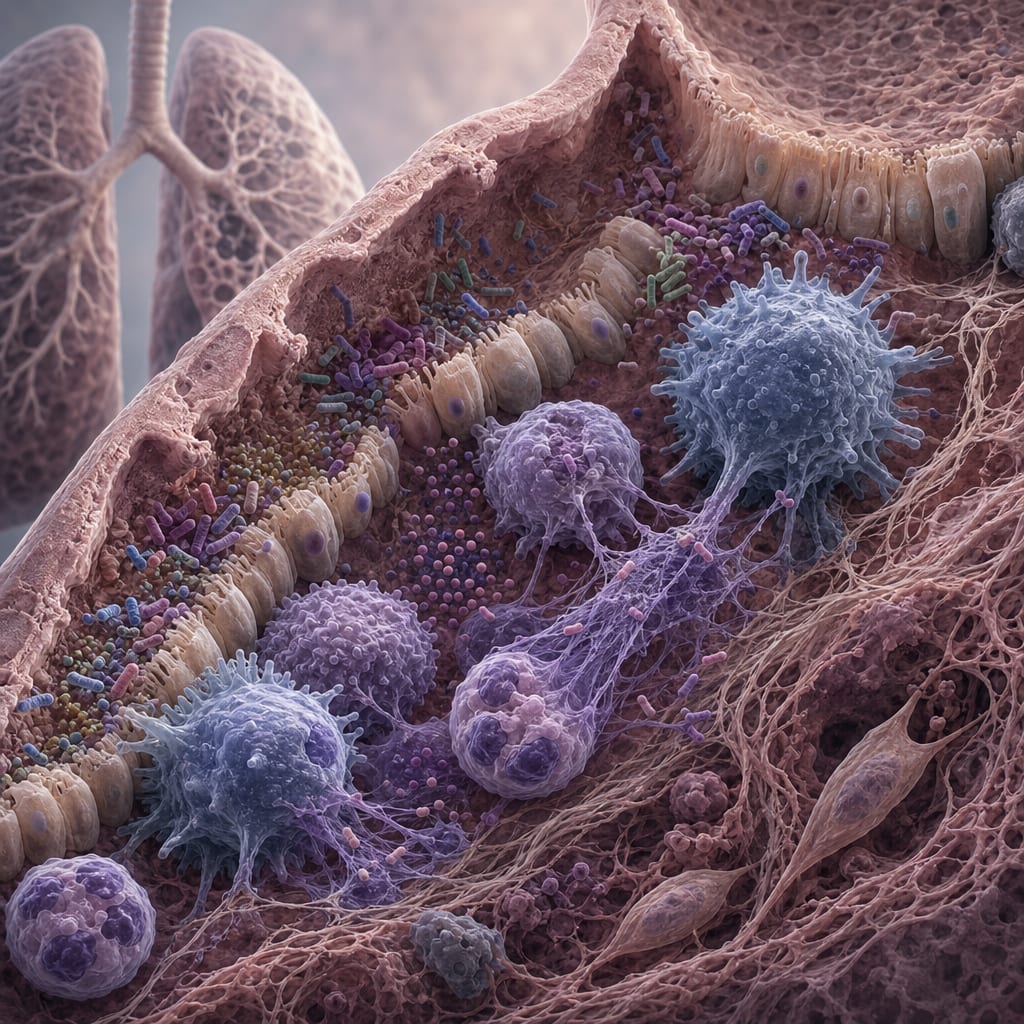
Clinical Scorecard: Interactions Between the Microbiome and Innate Immunity During Acute Exacerbations of Idiopathic Pulmonary Fibrosis: A Proposed Amplification Model
At a Glance
Category
Detail
Condition
Key Mechanisms
Microbial dysbiosis, immune activation, and epithelial damage interactions leading to fibroinflammatory remodeling, emphasizing microbial load and immune responses.
Target Population
Care Setting
Key Highlights
AE-IPF is a significant factor in short-term mortality.
Pulmonary dysbiosis correlates with poorer clinical outcomes in IPF.
Ongoing microbial stimulation may enhance immune responses and contribute to disease progression.
Antimicrobial resistance and biofilm formation complicate treatment and microbial clearance.
A multi-cellular amplification model is proposed to explain interactions between microbiome and immune responses.
Antimicrobial stewardship is essential for managing microbial resistance.
Guideline-Based Recommendations
Diagnosis
Consider microbial load and ecological balance in the assessment of AE-IPF.
Management
Utilize corticosteroids and immunomodulatory approaches despite limited efficacy.
Monitoring & Follow-up
Monitor for microbial load and immune responses during acute exacerbations.
Further research into microbiome-host interactions is needed.
Risks
Infectious complications may arise from immunomodulatory treatments.
Patient & Prescribing Data
Antifibrotic medications have limited effectiveness during AE-IPF episodes; examples include nintedanib and pirfenidone.
Clinical Best Practices
Implement antimicrobial stewardship to manage microbial resistance.
Focus on understanding microbiome-host interactions to inform treatment strategies.
Consider the role of macrophage and neutrophil responses in disease progression.
Ongoing monitoring of microbial load and immune responses is crucial.