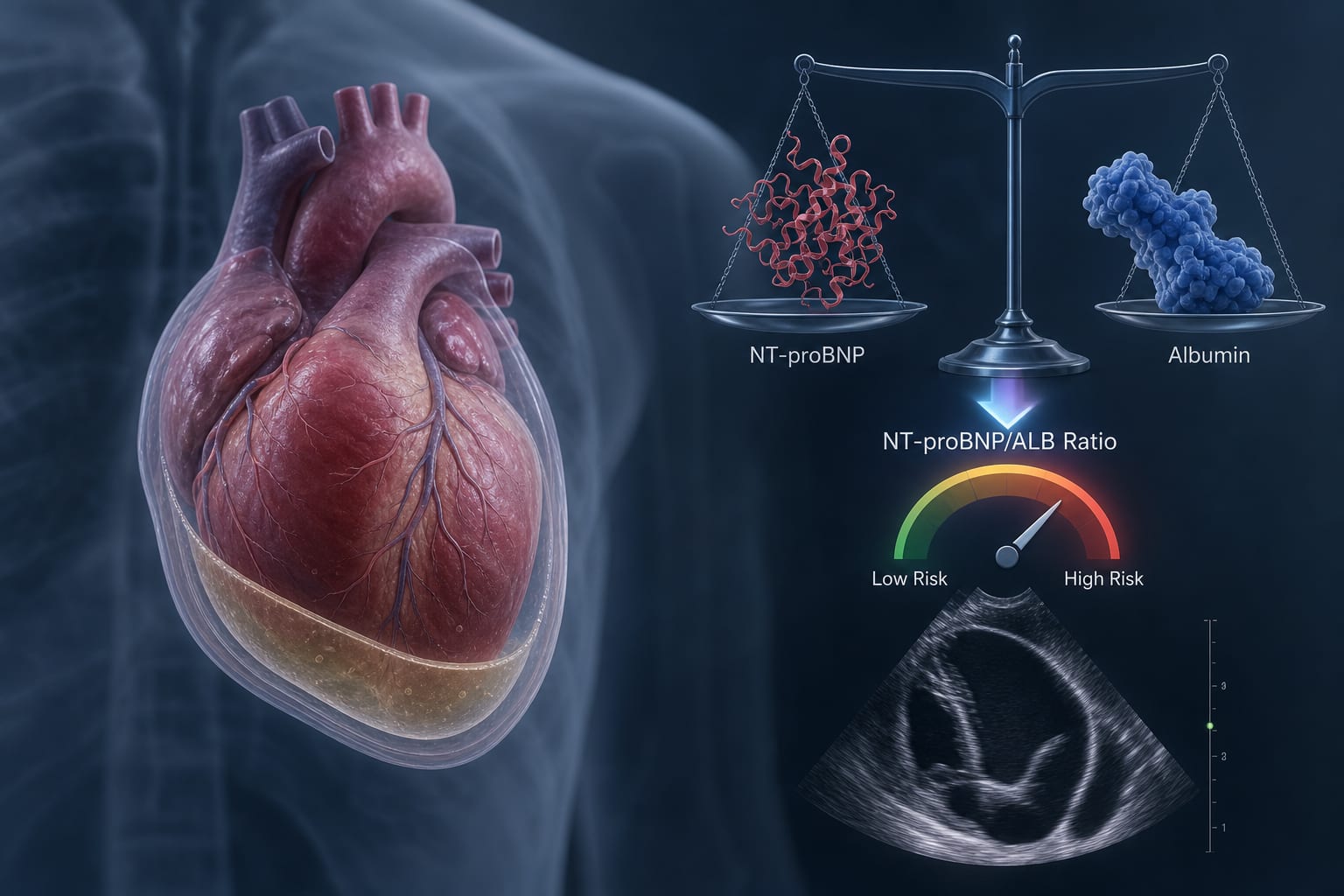
Clinical Scorecard: Evaluating the NT-proBNP/ALB Ratio as a Predictor of In-Hospital Pericardial Effusion in Young Adults with Acute Myocardial Infarction
At a Glance
Category
Detail
Condition
Acute Myocardial Infarction
Key Mechanisms
NT-proBNP/ALB ratio integrates hemodynamic load with inflammatory-nutritional status.
Target Population
Young adults (<45 years) with acute myocardial infarction.
Care Setting
Retrospective observational study in a hospital setting.
Key Highlights
In-hospital pericardial effusion occurred in 7.1% of young AMI patients.
NT-proBNP/ALB ratio and Plateletcrit identified as independent risk factors for PE.
Incorporation of NT-proBNP/ALB and PCT improved predictive accuracy significantly.
Guideline-Based Recommendations
Diagnosis
Utilize echocardiographic findings to categorize patients into PE and non-PE groups.
Management
Consider NT-proBNP/ALB ratio for early risk stratification in young AMI patients.
Monitoring & Follow-up
Monitor NT-proBNP/ALB ratio and Plateletcrit levels in young AMI patients.
Risks
Medium to very large pericardial effusion is associated with increased risk of life-threatening events.
Patient & Prescribing Data
Young adults (<45 years) with acute myocardial infarction.
Early identification of patients at high risk for pericardial effusion can optimize clinical management.
Clinical Best Practices
Incorporate NT-proBNP/ALB ratio into clinical assessments for young AMI patients.
Utilize multivariate logistic regression for identifying independent predictors of PE.