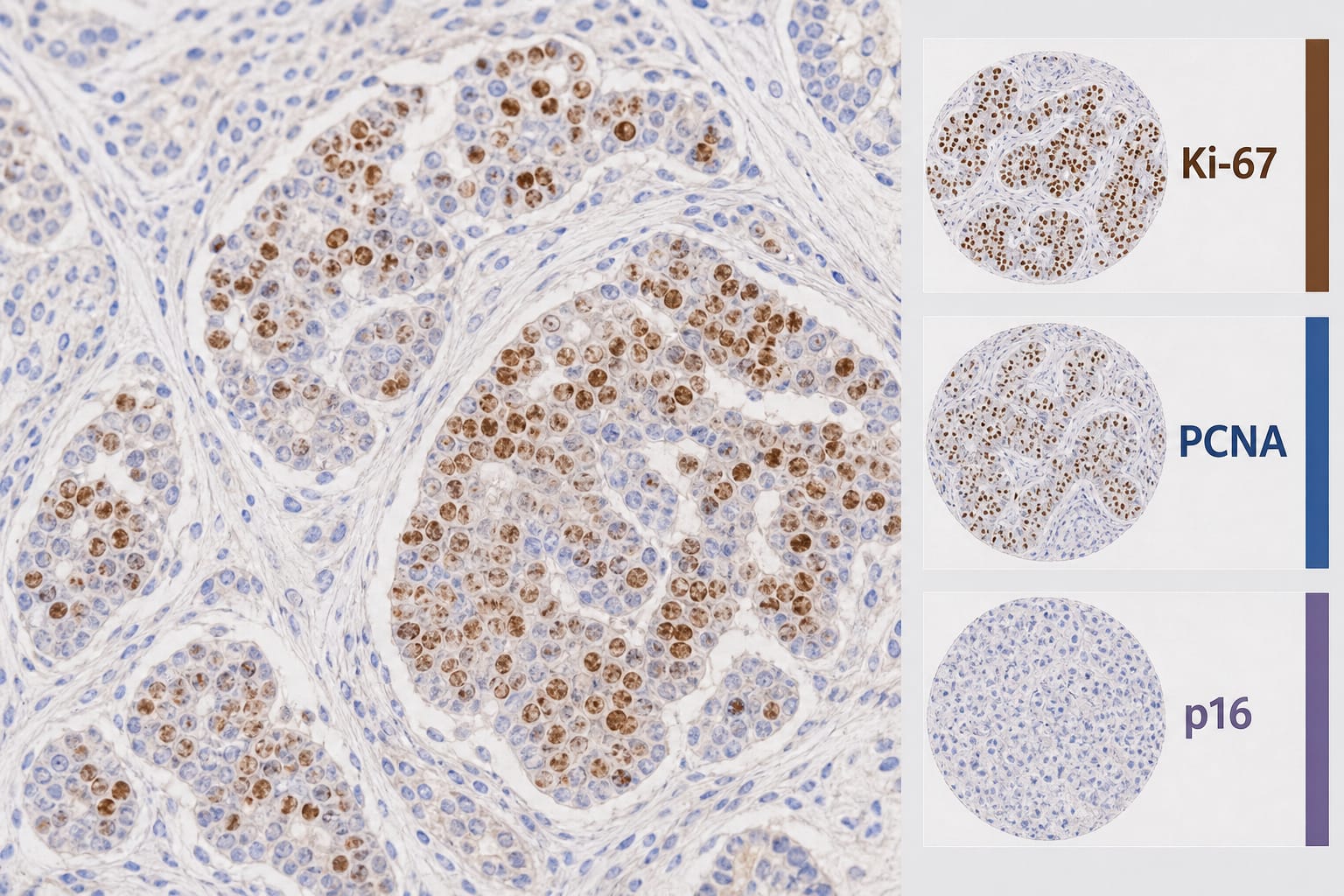
The prognostic significance of immunohistochemical expressions of proliferating cell nuclear antigen, P16 and Ki-67 in breast cancer
By
Ali Duran
Hüseyin Pulat
Özlem Gübür
Eren Altun
Burak Yavuz
Ugur Topal
Alev Çetin Duran
July 16, 2026
Clinical Scorecard: Prognostic Implications of Immunohistochemical Markers PCNA, p16, and Ki-67 in Breast Cancer Patients
At a Glance
Category Detail
Condition Breast Cancer Key Mechanisms Proliferation markers (PCNA, p16, Ki-67) and their correlation with histopathological factors. Target Population Female breast cancer patients who underwent surgery. Care Setting Oncology and pathology departments in hospitals.
Key Highlights
Ki-67 index is significantly associated with hormone receptor status and overall survival. PCNA and p16 showed inter-correlation but lacked independent prognostic significance. Higher Ki-67 index correlates with decreased ER and PR expression. Guideline-Based Recommendations
Diagnosis
Use of Ki-67, PCNA, and p16 in pathological reporting and prognostic classification. Management
Ki-67 cut-offs of <5% and ≥30% recommended for guiding adjuvant therapy decisions. Monitoring & Follow-up
Regular assessment of hormone receptor status and proliferation markers. Risks
Higher Ki-67 index indicates a risk of decreased survival. Patient & Prescribing Data
Female patients with surgically treated breast cancer.
Neoadjuvant and surgical treatments were analyzed alongside tumor characteristics.
Clinical Best Practices
Standardized scoring protocols for Ki-67 are emphasized. Further prospective studies are warranted to clarify the prognostic value of PCNA and p16. Related Resources & Content