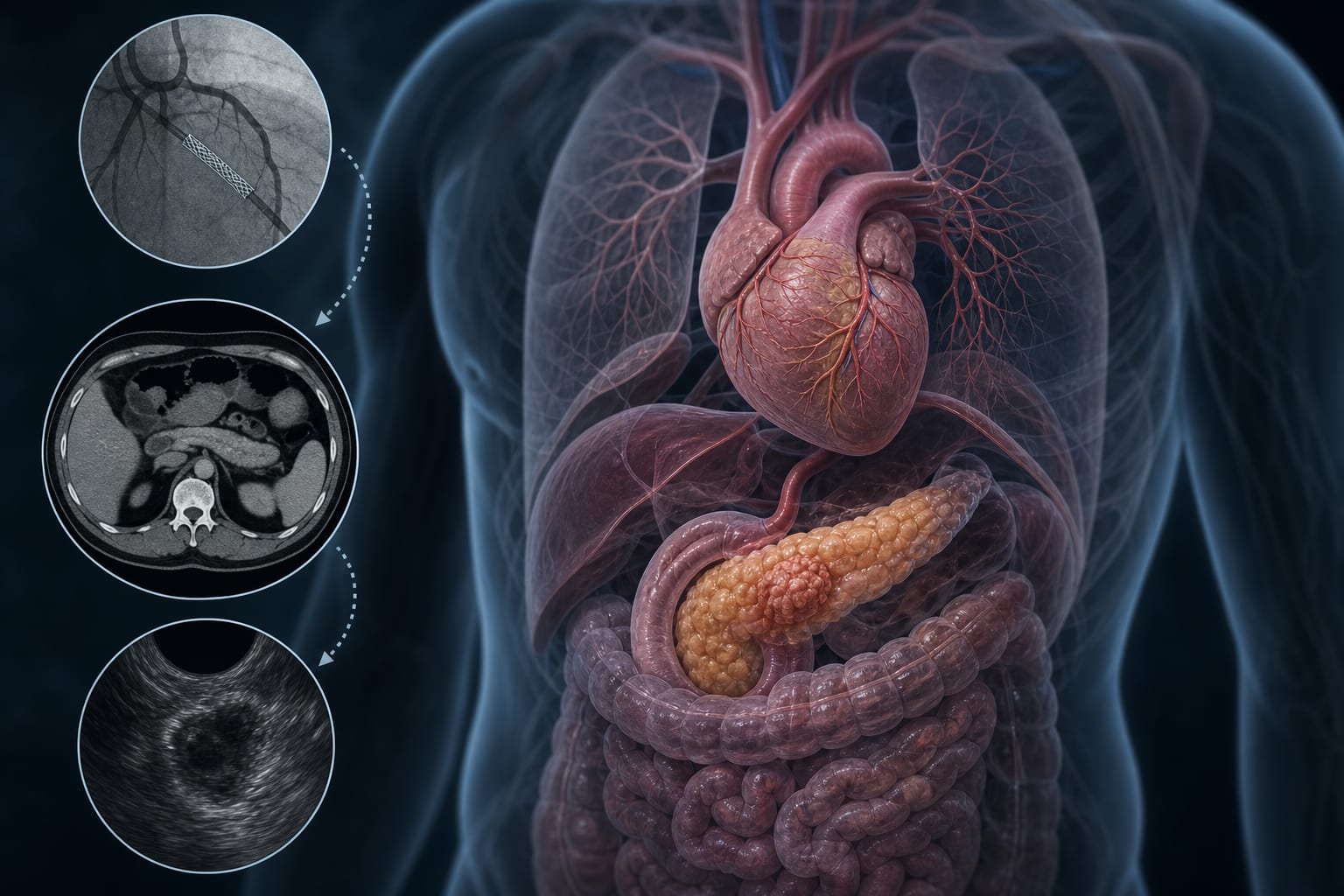
Clinical Scorecard: Case Study: A Four-Step Diagnostic Journey from Coronary Stenting to Pancreatic Cancer in a Patient Experiencing Recurrent Chest Pain
At a Glance
Category
Detail
Condition
Chest Pain with Non-Cardiac Causes
Key Mechanisms
Misdiagnosis due to overlapping symptoms of cardiac and abdominal pathologies.
Target Population
Patients presenting with recurrent chest pain, particularly those with a history of coronary artery disease.
Care Setting
Emergency and cardiology departments.
Key Highlights
Chest pain can mimic non-cardiac conditions, leading to misdiagnosis.
Acute pancreatitis may indicate underlying malignancy.
Cognitive anchoring can hinder accurate diagnosis in complex cases.
CA19-9 levels can be significant in diagnosing pancreatic conditions.
A staged diagnostic approach is crucial in ambiguous cases.
Guideline-Based Recommendations
Diagnosis
Consider non-cardiac causes in patients with recurrent chest pain.
Utilize laboratory tests such as CA19-9 for potential pancreatic conditions.
Management
Perform coronary angiography in patients with suspected coronary artery disease.
Monitor for signs of acute pancreatitis in patients with a history of abdominal issues.
Monitoring & Follow-up
Regular follow-up for patients post-stenting to assess for persistent symptoms.
Re-evaluate laboratory findings if symptoms persist despite initial interventions.
Risks
Misdiagnosis can lead to delayed treatment of serious conditions like pancreatic cancer.
Invasive procedures may be performed unnecessarily if non-cardiac causes are overlooked.
Patient & Prescribing Data
Adults with a history of coronary artery disease and recurrent chest pain.
Management should include careful assessment of symptoms and potential non-cardiac causes.
Clinical Best Practices
Adopt a multidisciplinary approach when diagnosing complex cases.
Educate clinicians on the potential for abdominal conditions to mimic cardiac symptoms.
Ensure thorough history-taking and physical examination to guide diagnostic testing.