Clinical Scorecard: Assessment of Perioperative Comfort Strategies in Pediatric Anesthesia Across China: Findings from a National Cross-Sectional Study
At a Glance
Category
Detail
Condition
Pediatric Perioperative Comfort Therapy
Key Mechanisms
Management of physiological pain and mitigation of psychological anxiety and fear.
Target Population
Children undergoing surgical procedures in China.
Care Setting
Pediatric anesthesia in tertiary A-grade hospitals.
Key Highlights
100% of hospitals implemented preoperative visits.
59.3% of hospitals reported using non-routine premedication as an anxiolytic strategy.
Parental presence during anesthesia induction was permitted in only 30.0% of hospitals.
Only 34.0% of hospitals used standardized scales to assess emergence delirium.
Propofol was the most commonly used intervention for emergence delirium (48.0%).
Guideline-Based Recommendations
Diagnosis
Use standardized assessment scales for preoperative anxiety and emergence delirium.
Management
Implement a variety of pharmacological and non-pharmacological interventions to reduce perioperative anxiety.
Monitoring & Follow-up
Assess children's anxiety and comfort levels throughout the perioperative process.
Risks
Inadequate management of psychological well-being may prolong recovery and affect long-term mental health.
Patient & Prescribing Data
Children undergoing surgical procedures in China.
Dexmedetomidine, midazolam, and ketamine or esketamine are commonly used for premedication.
Clinical Best Practices
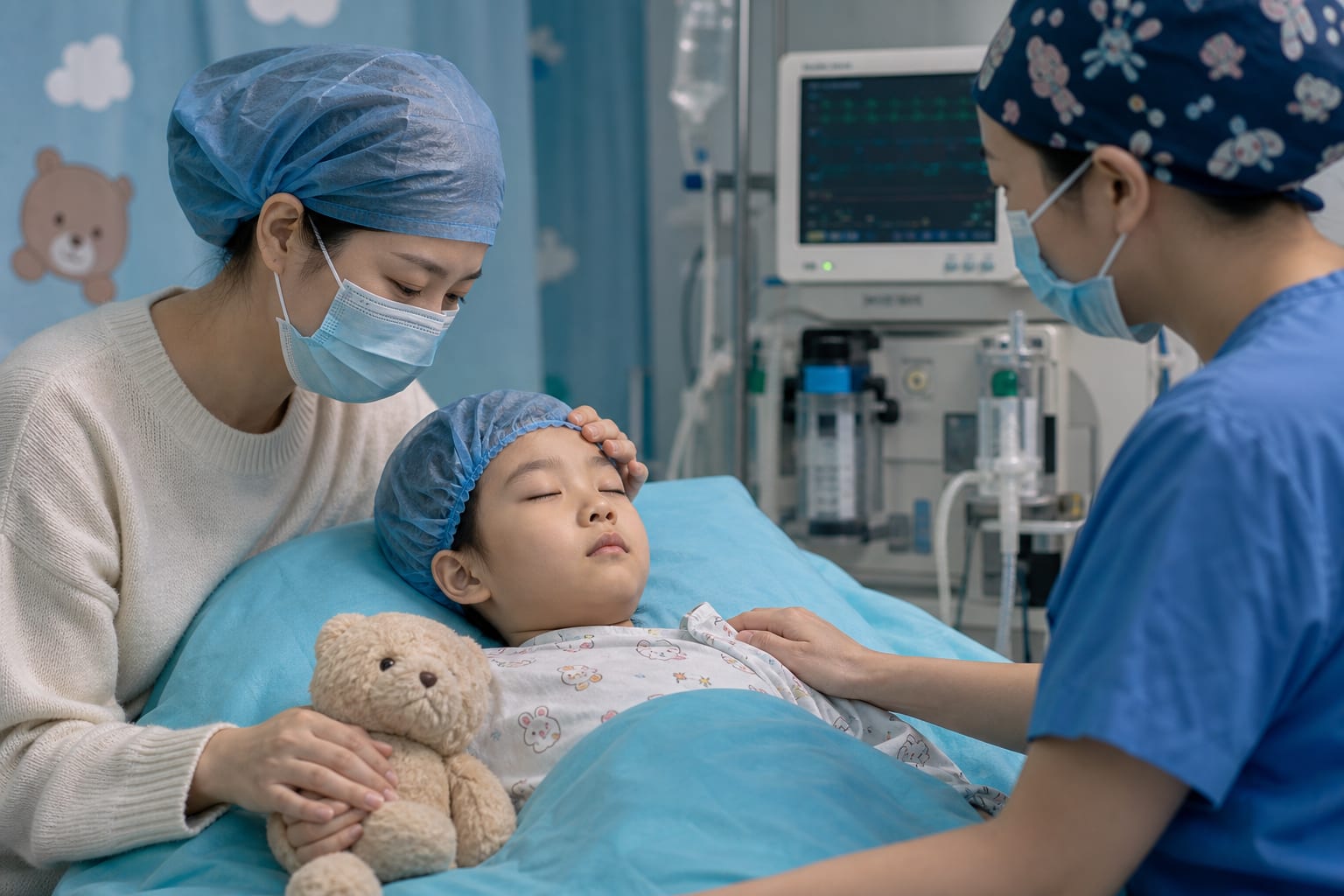
Encourage parental presence during anesthesia induction and recovery.
Utilize comfort toys, play therapy, and educational videos to ease anxiety.
Standardize the use of assessment tools for emergence delirium.