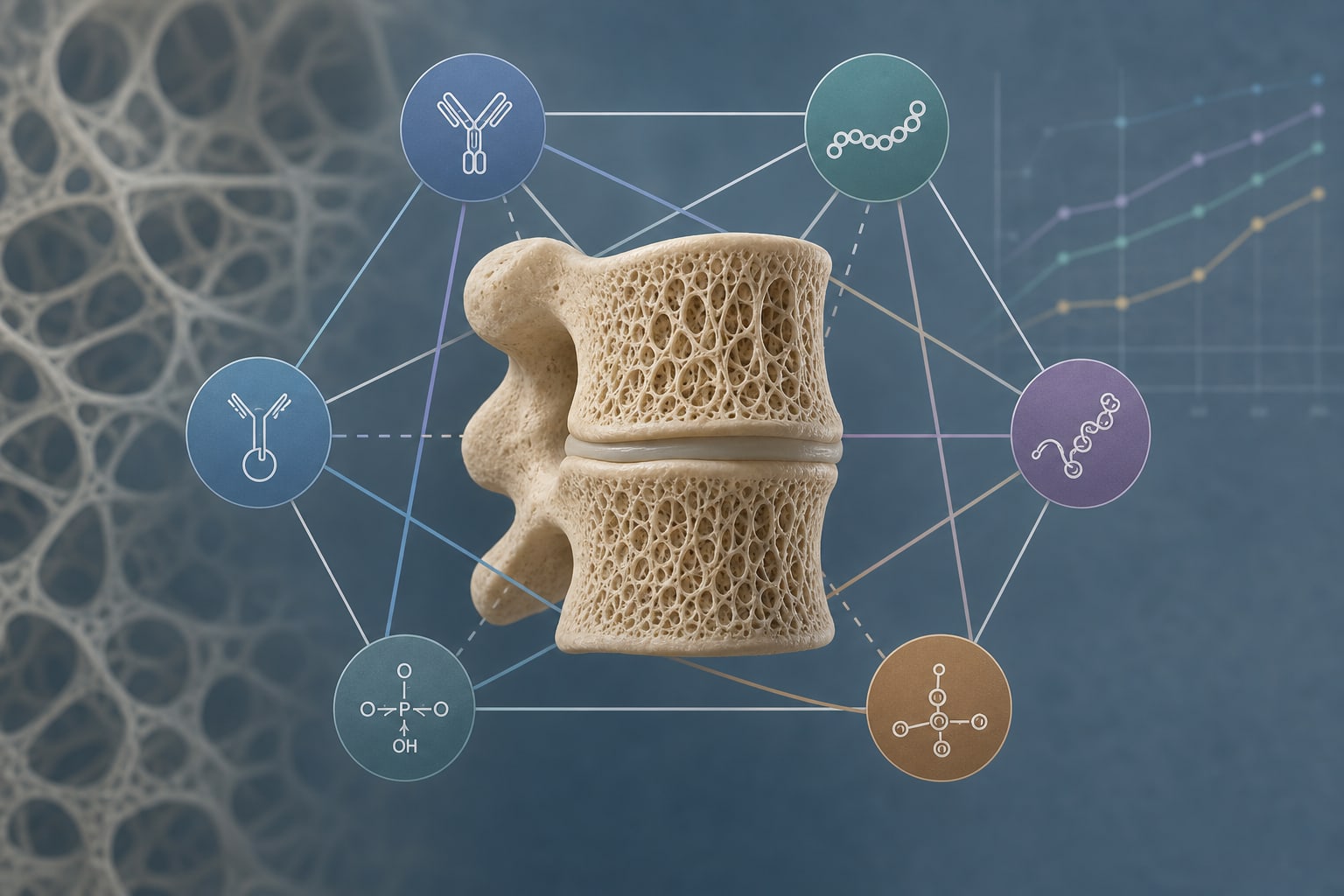
Clinical Scorecard: Evaluating the Combined Impact of Mitochondrial DNA Variants and Lifestyle Factors on Heel Bone Mineral Density
At a Glance
Category
Detail
Condition
Osteoporosis characterized by low bone mineral density (BMD) and increased fracture risk
Key Mechanisms
Interaction between mitochondrial DNA (mtDNA) variants and lifestyle factors affecting mitochondrial function and BMD
Target Population
White adults from the UK Biobank cohort (N=119,120; 65,949 females and 53,171 males)
Care Setting
Clinical research and potential personalized bone health interventions
Key Highlights
Identification of 4 mtDNA loci (e.g., m.16356T>C in MT-DLOOP) associated with heel BMD
Detection of multiple mtDNA × lifestyle interactions influencing heel BMD, including MT-ND2 × physical activity and MT-ND1 × smoking
Mendelian randomization analysis indicating a causal effect of physical activity on heel BMD when considering mtDNA copy number
Guideline-Based Recommendations
Diagnosis
Use bone mineral density measurement, including heel BMD, combined with clinical risk factors to diagnose osteoporosis
Management
Promote lifestyle modifications such as increased physical activity and smoking cessation to improve BMD
Consider the role of mitochondrial function and genetic factors in personalized osteoporosis prevention strategies
Monitoring & Follow-up
Monitor BMD changes over time, especially in populations with known mtDNA variants or adverse lifestyle factors
Assess vitamin D status and nutritional intake as part of bone health evaluation
Risks
Smoking and excessive alcohol consumption increase fracture risk and negatively impact mitochondrial function and BMD
Mitochondrial dysfunction and mtDNA mutations may contribute to accelerated bone loss and osteoporosis
Patient & Prescribing Data
Adults at risk of osteoporosis with consideration of genetic and lifestyle factors
Physical activity has a causal beneficial effect on heel BMD, particularly when mitochondrial DNA copy number is accounted for
Clinical Best Practices
Incorporate assessment of lifestyle factors such as smoking, alcohol use, physical activity, dietary diversity, and vitamin D levels in osteoporosis risk evaluation
Consider genetic testing for mtDNA variants in research or specialized clinical settings to understand individual BMD risk
Encourage interventions targeting mitochondrial health alongside lifestyle modifications to prevent or manage osteoporosis