Long-Term Efficacy of Lutonix in a Real-World Femoropopliteal Patients With Peripheral Arterial Disease: Insights From the SAFE-DCB US Registry - Scorecard - MDSpire
Clinical Scorecard: Long-Term Effectiveness of Lutonix in Real-World Patients with Femoropopliteal Peripheral Arterial Disease: Findings from the SAFE-DCB US Registry
At a Glance
Category
Detail
Condition
Femoropopliteal Peripheral Arterial Disease
Key Mechanisms
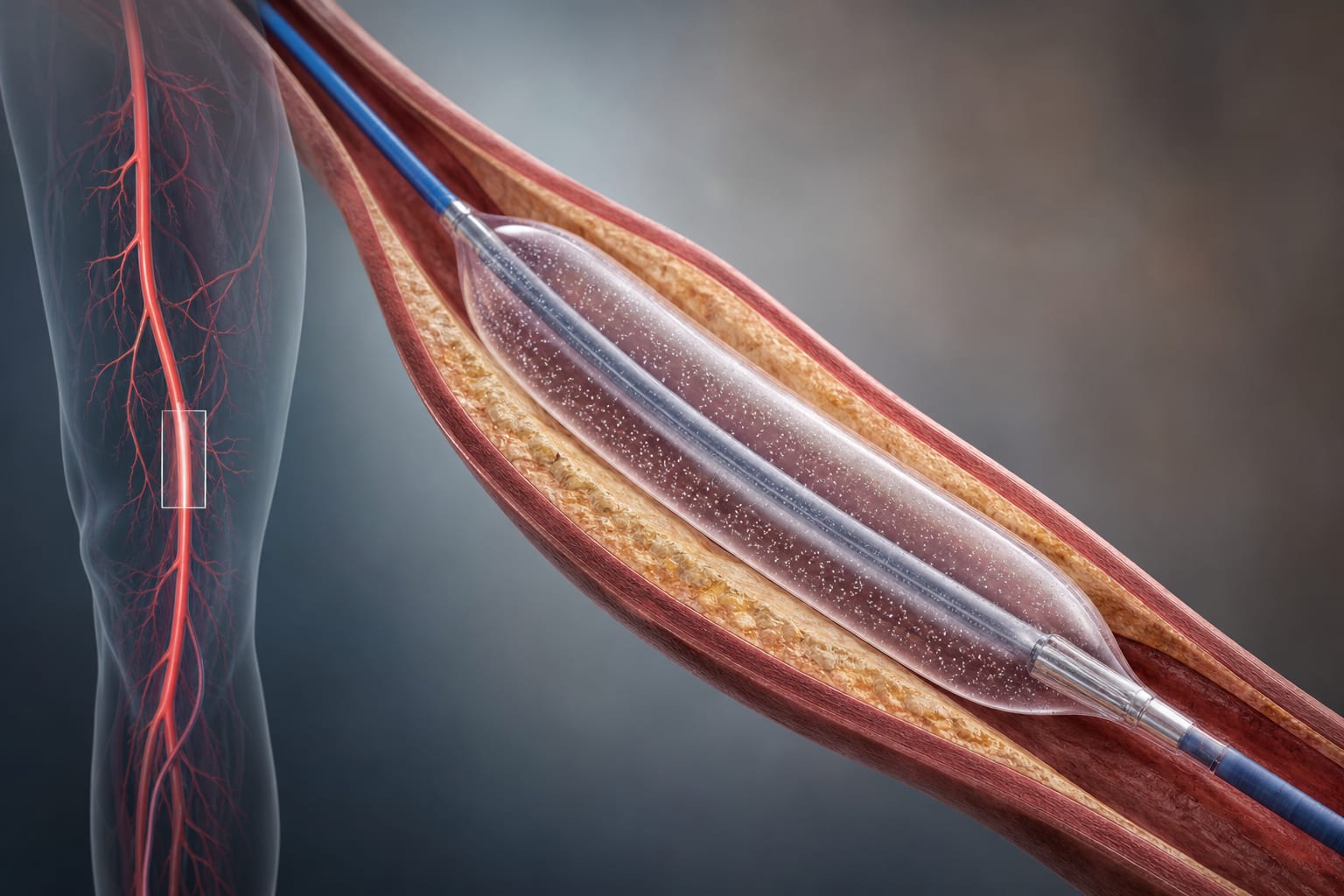
Drug-coated balloons (DCBs) deliver anti-proliferative drugs to reduce restenosis.
Target Population
Heterogeneous patient population with stenotic or obstructive vascular lesions in the superficial femoral artery and/or popliteal artery.
Care Setting
Prospective, multicenter real-world registry in the U.S.
Key Highlights
Lutonix DCB demonstrated long-term effectiveness and safety in a real-world setting.
Primary effectiveness endpoint was freedom from target lesion revascularization (TLR) at 12 months.
Registry included broad inclusion criteria to reflect current clinical practice.
Guideline-Based Recommendations
Diagnosis
Patients with stenotic or obstructive vascular lesions in the SFA and/or PA.
Management
Use of Lutonix DCB after pre-dilation for PTA.
Monitoring & Follow-up
Follow-up for 36 months post-index procedure.
Risks
Potential for perioperative complications including death, major amputation, and revascularization.
Patient & Prescribing Data
Male or nonpregnant female subjects ≥21 years of age.
Dual antiplatelet therapy should be administered per current medical standards for a minimum of 4 weeks post-intervention.
Clinical Best Practices
Adhere to the instruction for use (IFU) for Lutonix DCB.
Ensure proper vessel preparation prior to DCB use.
Patients with lower nonischemic resting full-cycle ratio values had more repeat revascularizations despite similar 2-year major cardiovascular event rates.
A prospective cohort study suggests that clinically meaningful quality‐of‐life changes continue well beyond the first postoperative year, with one‐year complications emerging as the strongest potentially modifiable predictor of later decline.