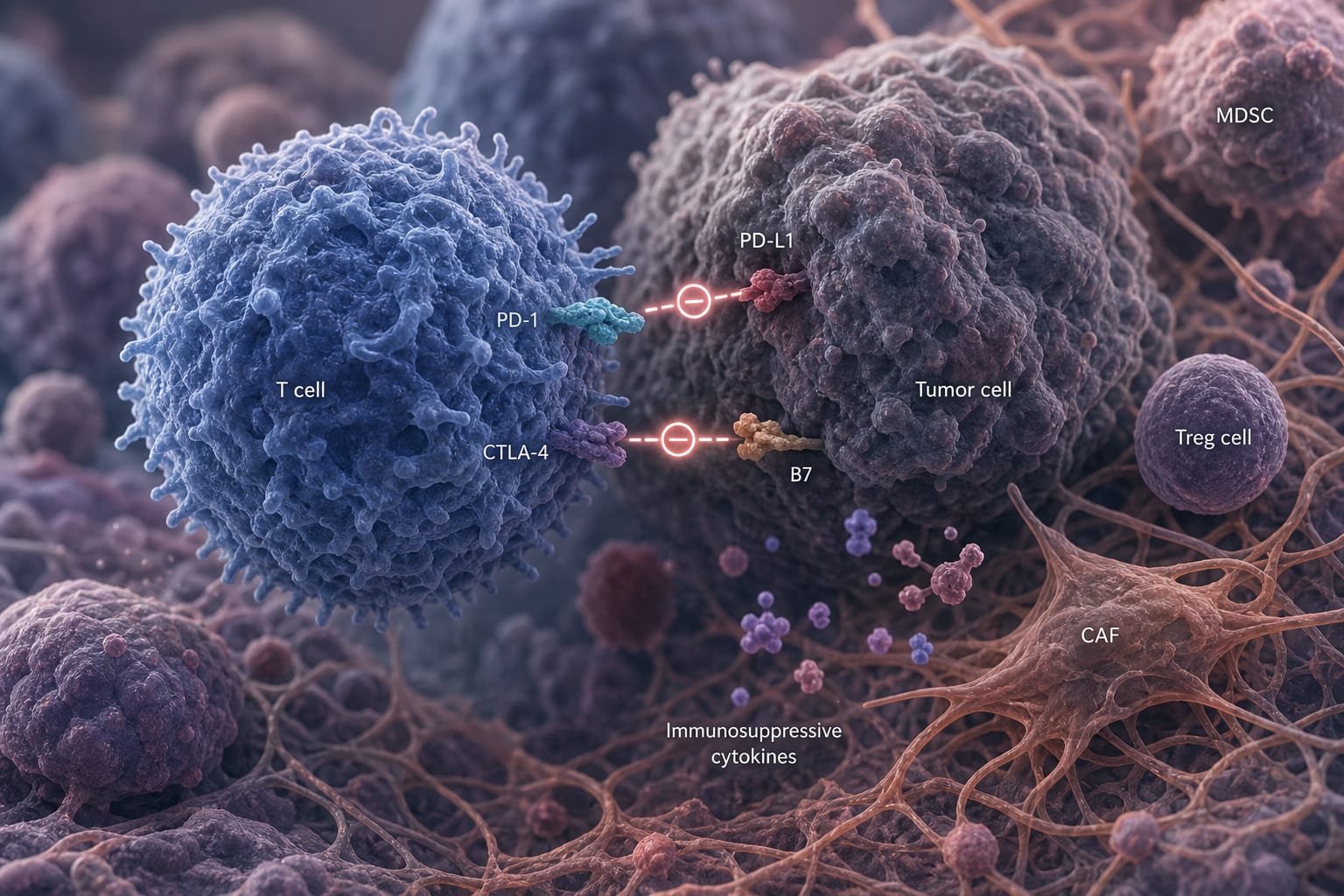
Clinical Scorecard: Biomarkers for Assessing Response and Resistance to Immunotherapy in Glioblastoma
At a Glance
Category
Detail
Condition
Key Mechanisms
Tumor-associated immunosuppression, intra- and inter-tumoral heterogeneity, corruption of the blood-brain barrier, and specific biomarkers like PD-1/PD-L1 enrichment.
Target Population
Care Setting
Key Highlights
Biomarkers for immunotherapy response in glioblastoma are critical for patient selection.
Current standard of care remains unchanged for over two decades.
Emerging biomarkers include interferon signaling and immune cell population studies.
Machine learning and liquid biopsy are enhancing biomarker discovery.
Standardization of biomarkers is essential for clinical trial implementation.
Guideline-Based Recommendations
Diagnosis
Management
Incorporate biomarker-driven endpoints in clinical trial designs, such as PD-1/PD-L1 enrichment and tumor mutational burden.
Monitoring & Follow-up
Risks
Patient & Prescribing Data
Biomarkers can inform treatment combinations and predict responses, such as through tumor mutational burden.
Clinical Best Practices
Standardize biomarker evaluation in clinical workflows.
Focus on context-dependent biomarker signals for immunotherapy.
Ensure systematic validation of biomarkers for clinical utility.
Colorectal cancer (CRC) impacts about 1 in 13,000 pregnancies in the United States. This article follows the case of a 36-year-old woman diagnosed with CRC while pregnant and highlights considerations around CRC diagnosis and cancer treatment during pregnancy.
Patients with gliomas face significant challenges in daily life due to rapidly progressing neurological and cognitive symptoms. This study evaluated referral processes for specialized palliative care and interdisciplinary services used by patients with gliomas and their caregivers in Denmark.