Incidence, prevalence, and prognostic impact of sarcopenia on hepatic and cardiovascular outcomes in non-cirrhotic metabolic dysfunction–associated steatotic liver disease - Scorecard - MDSpire
Advertisement
Incidence, prevalence, and prognostic impact of sarcopenia on hepatic and cardiovascular outcomes in non-cirrhotic metabolic dysfunction–associated steatotic liver disease
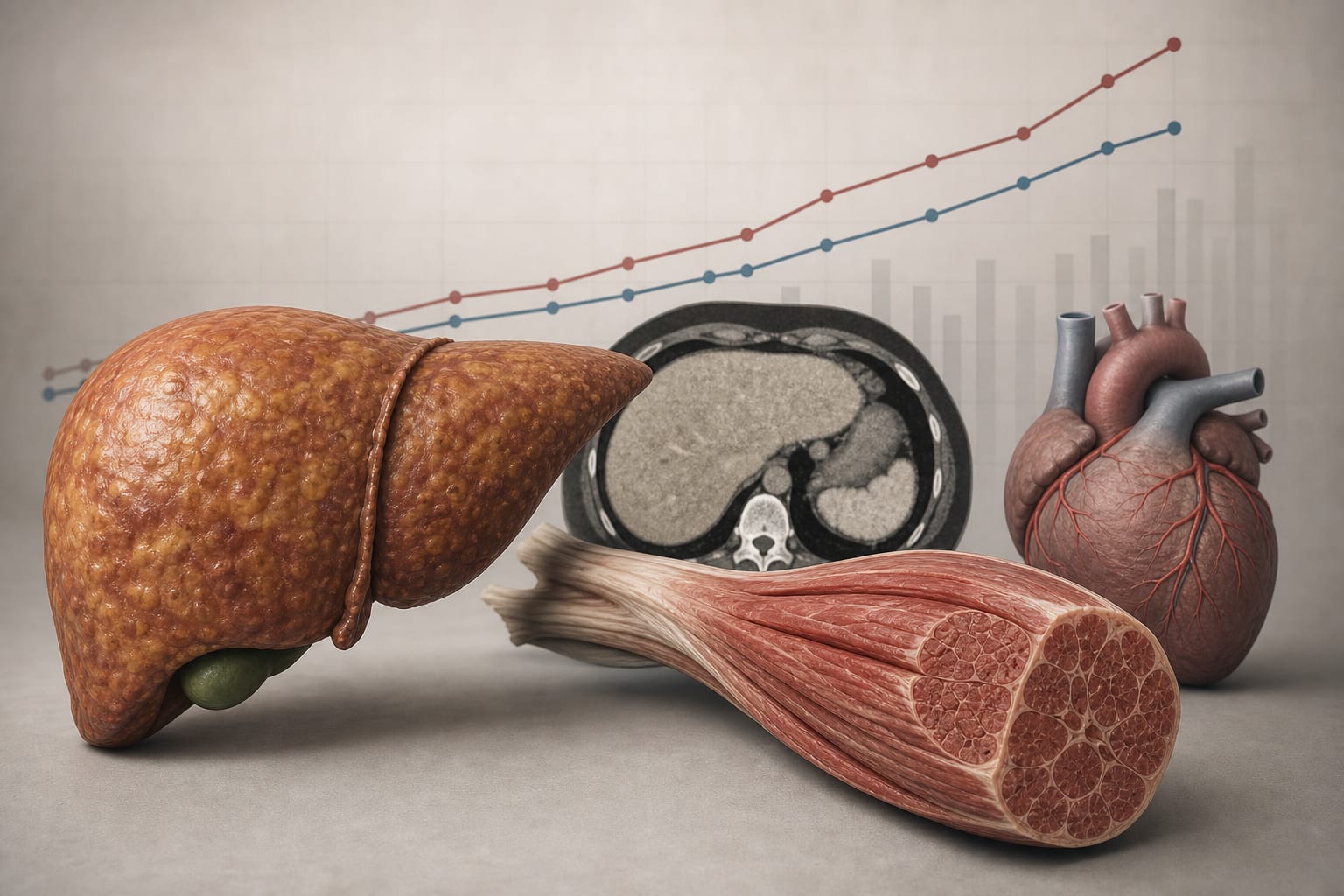
Clinical Scorecard: Epidemiology, prevalence, and prognostic significance of sarcopenia in relation to hepatic and cardiovascular outcomes in non-cirrhotic metabolic dysfunction-associated steatotic liver disease
At a Glance
Category
Detail
Condition
Sarcopenia in metabolic dysfunction-associated steatotic liver disease (MASLD)
Key Mechanisms
Sarcopenia exacerbates insulin resistance, lipotoxicity, and systemic inflammation, while hepatic steatosis impairs protein metabolism and increases myokine dysregulation.
Target Population
Adults with non-cirrhotic MASLD
Care Setting
Clinical settings utilizing electronic health records
Key Highlights
Sarcopenia prevalence increased over time among MASLD patients.
Sarcopenia is associated with higher odds of cirrhosis, hepatic decompensation, and all-cause mortality.
Sarcopenic MASLD patients have increased risk of major adverse cardiovascular events.
Sarcopenia independently predicts hepatic and cardiovascular outcomes.
Guideline-Based Recommendations
Diagnosis
Routine assessment of muscle health in MASLD patients.
Management
Integration of exercise and nutritional interventions to improve outcomes.
Monitoring & Follow-up
Longitudinal tracking of sarcopenia prevalence and its impact on health outcomes.
Risks
Increased risk of hepatic decompensation and cardiovascular events in sarcopenic patients.
Patient & Prescribing Data
Adults diagnosed with non-cirrhotic MASLD.
Targeted management of sarcopenia may improve long-term outcomes.
Clinical Best Practices
Early identification of sarcopenia in MASLD patients.
Utilization of structured exercise and nutritional strategies.