Contact Lens Dropout? Start With the Lids
Pam Theriot, OD, FAAO, explains how Demodex and meibomian gland dysfunction could be causing your patients to drop out of contact lens wear
-
By
-
Pamela E. Theriot, OD
-
September 1, 2026
-
Clinical Scorecard: Contact Lens Dropout? Start With the Lids
At a Glance
| Category | Detail |
|---|
| Condition | Contact Lens Intolerance |
| Key Mechanisms | Demodex infestation and Meibomian Gland Dysfunction (MGD) |
| Target Population | Contact lens wearers experiencing discomfort or dropout |
| Care Setting | Ophthalmology clinics |
Key Highlights
- 93% of soft contact lens dropout patients have Demodex mites.
- MGD is present in about 60% of contact lens wearers.
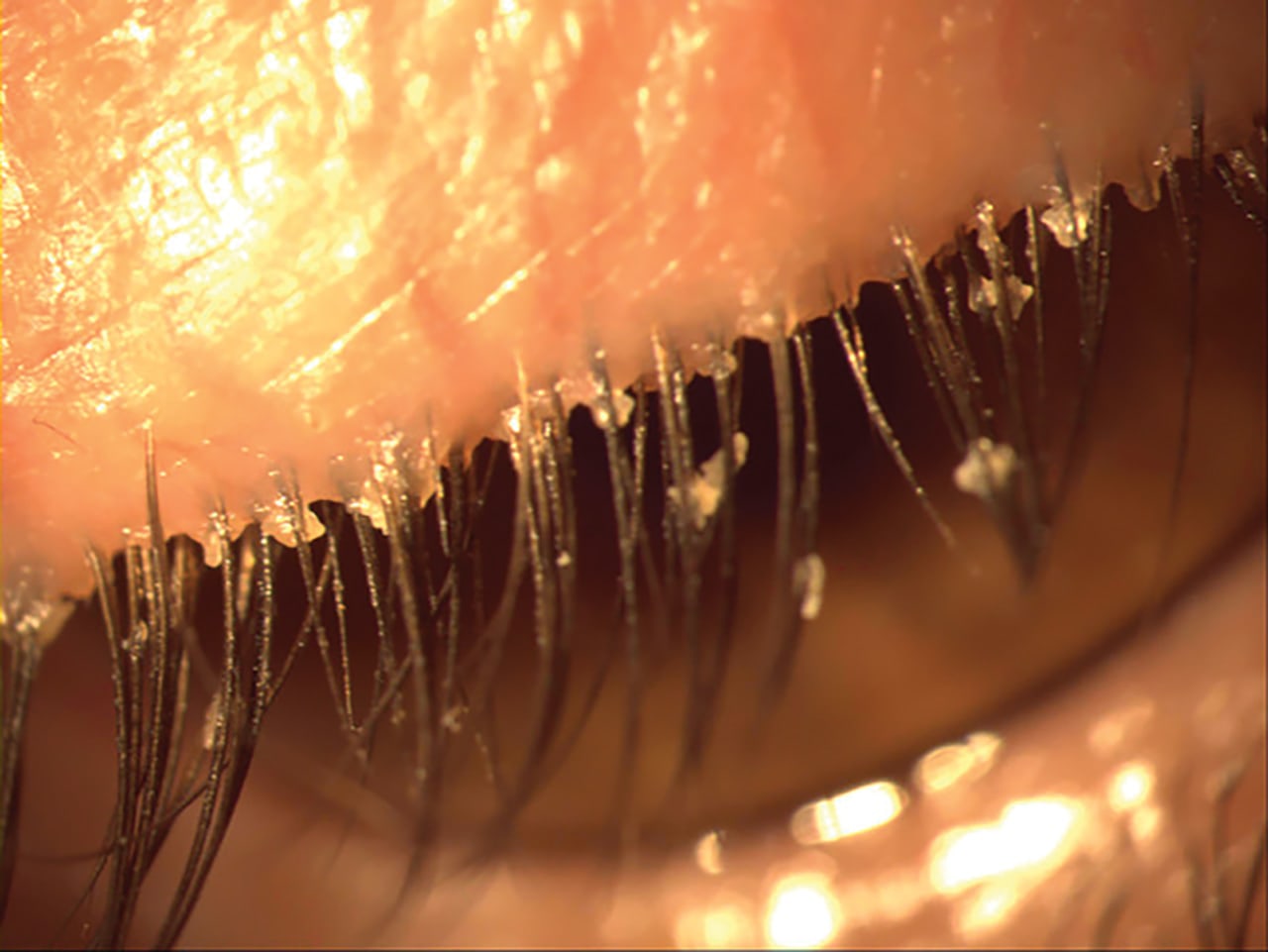
- Collarettes at the base of eyelashes confirm Demodex blepharitis.
- Lotilaner 0.25% is FDA-approved for treating Demodex blepharitis.
- Ivermectin 1% cream can significantly improve symptoms of Demodex blepharitis.
Guideline-Based Recommendations
Diagnosis
- Examine lid margins for collarettes to diagnose Demodex blepharitis.
Management
- Treat with lotilaner 0.25% ophthalmic solution or ivermectin 1% cream.
Monitoring & Follow-up
- Assess improvement in symptoms and meibomian gland function after treatment.
Risks
- Increased discomfort and dropout due to untreated Demodex and MGD.
Patient & Prescribing Data
Patients with contact lens discomfort and confirmed Demodex blepharitis.
Lotilaner is administered twice daily; wait 15 minutes before lens application.
Clinical Best Practices
- Evaluate for Demodex infestation in patients with contact lens discomfort.
- Consider both lotilaner and ivermectin as treatment options.
Related Resources & Content