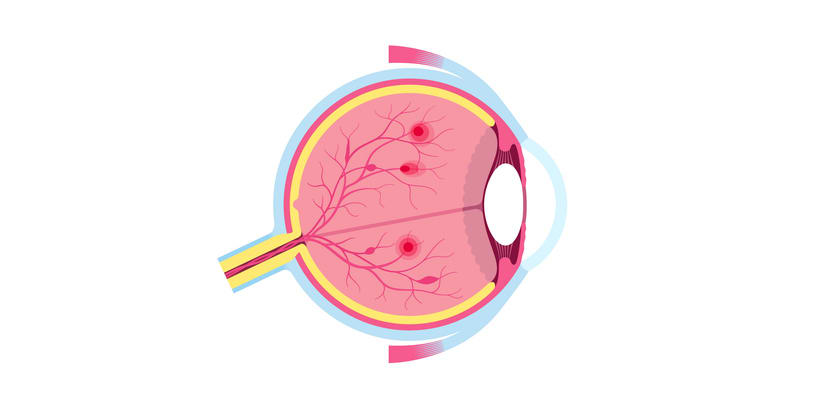
Link Between Glucose Metabolism Spectrum (Fasting Plasma Glucose/HbA1c) and Tear Film Stability and Secretion: Evidence from Ocular Surface Analysis in Non-Diabetic, Prediabetic, and Diabetic Individuals
-
By
-
Huan Xiang
-
Zengsheng Zhou
-
April 13, 2026
Clinical Scorecard: Link Between Glucose Metabolism Spectrum (Fasting Plasma Glucose/HbA1c) and Tear Film Stability and Secretion: Evidence from Ocular Surface Analysis in Non-Diabetic, Prediabetic, and Diabetic Individuals
At a Glance
| Category | Detail |
|---|---|
| Condition | Dry Eye Disease (DED) associated with glycemic status |
| Key Mechanisms | Hyperglycemia-related tear-film instability, reduced aqueous secretion, ocular surface inflammation, tear hyperosmolarity, and meibomian gland dysfunction |
| Target Population | Adults across glycemic spectrum: non-diabetic, prediabetic, and diabetic individuals |
| Care Setting | Ophthalmology and diabetes/metabolic clinics |
Key Highlights
- Higher glycemic status, including prediabetes, is associated with shorter non-invasive tear break-up time (NIBUT) and lower Schirmer I test values.
- Odds of dry eye disease increase progressively from non-diabetes to prediabetes to diabetes, with inflammatory markers (MMP-9) and tear osmolarity abnormalities rising accordingly.
- Dose-response relationship observed per 1% increase in HbA1c: NIBUT decreased by 0.72 seconds, Schirmer by 1.15 mm, and dry eye disease odds increased by 31%.
Guideline-Based Recommendations
Diagnosis
- Use Ocular Surface Disease Index (OSDI) ≥13 plus at least one sign (NIBUT <10 s, tear osmolarity ≥308 mOsm/L or intereye difference ≥8 mOsm/L, or NEI staining score ≥2) to define dry eye disease.
- Assess tear-film stability via non-invasive tear break-up time (NIBUT) and fluorescein tear break-up time (TBUT).
- Measure aqueous tear secretion using Schirmer I test without anesthesia.
- Evaluate ocular surface inflammation with matrix metalloproteinase-9 (MMP-9) testing.
Management
- Consider glycemic control as a factor influencing tear-film homeostasis and dry eye disease risk.
- Address ocular surface inflammation and tear-film instability in patients with elevated glycemic markers, including prediabetes.
Monitoring & Follow-up
- Monitor tear-film stability (NIBUT), tear volume (Schirmer I), and inflammatory markers (MMP-9) in patients with dysglycemia.
- Regularly assess dry eye symptoms using validated questionnaires such as OSDI.
Risks
- Increased risk of dry eye disease and ocular surface inflammation with worsening glycemic status.
- Potential for reduced tear secretion and tear-film instability contributing to ocular surface damage.
Patient & Prescribing Data
Adults with non-diabetes, prediabetes, and diabetes attending ophthalmology or metabolic clinics
Higher HbA1c and fasting plasma glucose levels correlate with increased dry eye disease risk and ocular surface inflammation, suggesting the importance of metabolic control in ocular surface health.
Clinical Best Practices
- Incorporate glycemic status assessment when evaluating patients for dry eye disease.
- Use standardized, non-invasive tear-film stability and secretion tests (NIBUT, Schirmer I) alongside symptom questionnaires for comprehensive evaluation.
- Consider inflammatory biomarker testing (MMP-9) to identify ocular surface inflammation in patients with dysglycemia.
- Recognize prediabetes as a relevant risk state for dry eye disease, not only overt diabetes.
- Advocate for longitudinal monitoring to understand temporal relationships and guide interventions.
Related Resources & Content
- TFOS DEWS II Diagnostic Methodology Report
- Ocular Surface Disease Index (OSDI) Validation
- Matrix Metalloproteinase-9 in Dry Eye Disease
Based on findings from:
Association of the glucose metabolism continuum (fasting plasma glucose/HbA1c) with tear-film stability and secretion: ocular surface evidence across non-diabetes, prediabetes, and diabetes
Huan Xiang, Zengsheng Zhou. Frontiers In Endocrinology, 2026.
https://www.frontiersin.org/journals/endocrinology/articles/10.3389/fendo.2026.1788051/full
This content is an AI-generated, fully rewritten summary based on a published scholarly article. It does not reproduce the original text and is not a substitute for the original publication. Readers are encouraged to consult the source for full context, data, and methodology.