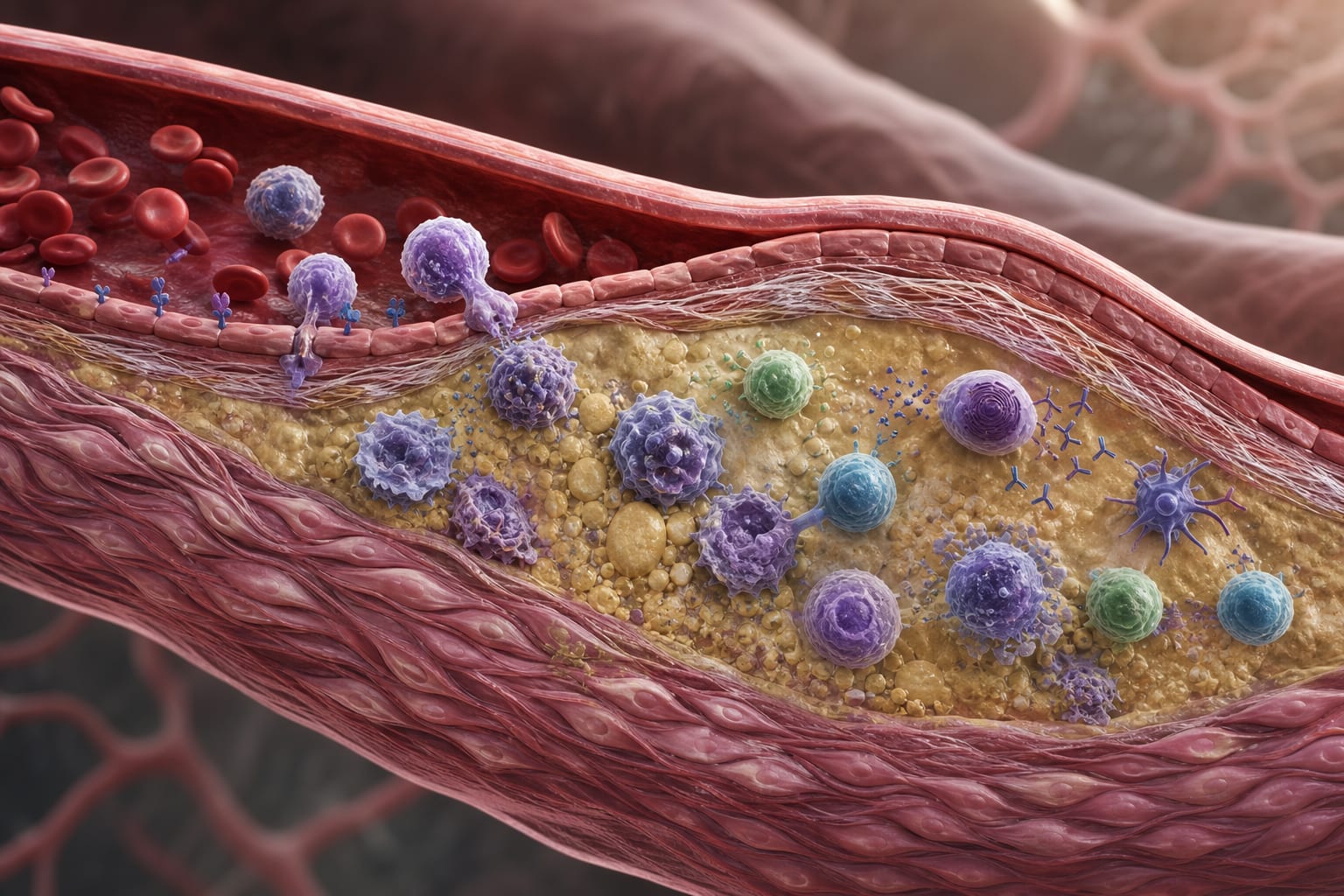
New Perspectives on Immune Cell Mechanisms in Inflammation-Induced Atherosclerosis
By
Abdullahi Osman Mohamud
Zhiyin Dai
July 2, 2026
Clinical Scorecard: New Perspectives on Immune Cell Mechanisms in Inflammation-Induced Atherosclerosis
At a Glance
Category Detail
Condition Atherosclerosis Key Mechanisms Chronic inflammatory disease involving endothelial activation, immune cell recruitment, and plaque development. Target Population Individuals at risk for cardiovascular disease, including those with hypertension, diabetes, obesity, and smoking history. Care Setting Clinical settings focusing on cardiovascular health and management of chronic inflammatory diseases.
Key Highlights
Atherosclerosis is recognized as an immune-mediated disease with both innate and adaptive immune responses. Single-cell technologies reveal heterogeneity among immune cells in atherosclerotic plaques. Clonal haematopoiesis links age-related mutations to increased vascular inflammation and cardiovascular risk. Endothelial dysfunction is a critical factor in the progression of atherosclerosis. Systemic factors like gut microbiota and epigenetic changes contribute to chronic vascular inflammation. Guideline-Based Recommendations
Diagnosis
Utilize advanced imaging and profiling technologies to assess plaque characteristics. Management
Focus on controlling major cardiovascular risk factors such as hypertension, diabetes, and dyslipidaemia. Monitoring & Follow-up
Regular assessment of inflammatory markers and cardiovascular risk factors. Risks
Increased risk of myocardial infarction and stroke due to plaque rupture or erosion. Patient & Prescribing Data
Patients with established cardiovascular disease or at high risk for atherosclerosis.
Emerging therapies targeting inflammatory pathways may provide new treatment options.
Clinical Best Practices
Implement lifestyle modifications to address obesity, smoking, and metabolic syndrome. Monitor endothelial function and inflammatory markers in at-risk populations. Consider the role of gut microbiota and systemic factors in managing atherosclerosis. Related Resources & Content