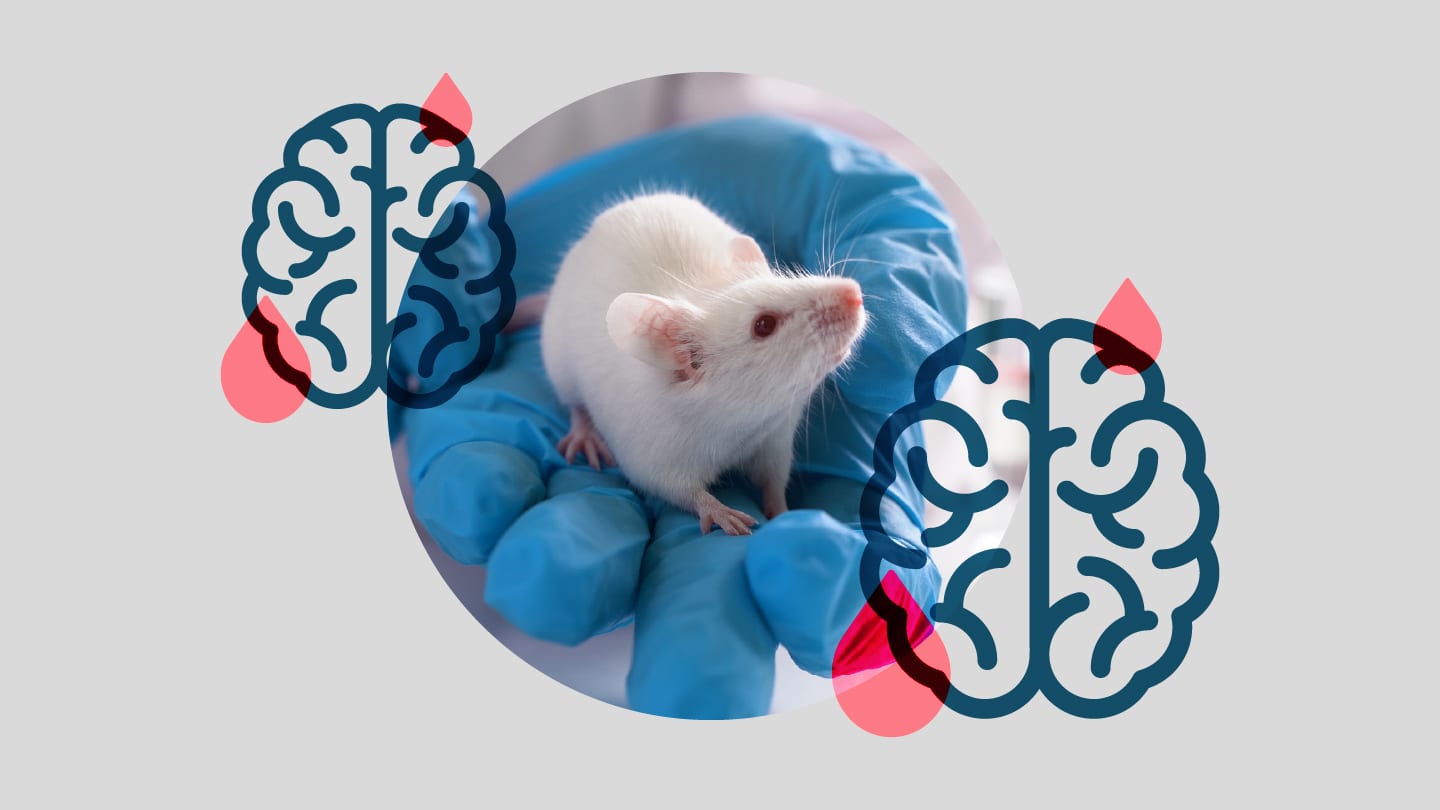
Young Blood Slows Alzheimer’s in Mice
Proteomics connects exposure to blood from older donors and synaptic dysfunction in the brain
Clinical Scorecard: Young Blood Slows Alzheimer’s in Mice
At a Glance
| Category | Detail |
|---|
| Condition | Alzheimer’s Disease |
| Key Mechanisms | Influence of circulating factors from blood on Alzheimer’s pathology and cognitive function. |
| Target Population | Transgenic mice (Tg2576) overexpressing human amyloid precursor protein. |
| Care Setting | Research laboratory |
Key Highlights
- Young blood infusions improved cognitive performance in mice compared to older blood.
- Increased amyloid-β deposition observed in mice receiving aged blood.
- Proteomic analysis identified differential expression of 256 proteins linked to synaptic signaling.
- The α2δ2 subunit of voltage-gated calcium channels was upregulated in aged blood recipients.
- Study suggests systemic influences on neurodegeneration and potential therapeutic targets.
Guideline-Based Recommendations
Diagnosis
- Utilize cognitive performance tests such as the Barnes maze for assessment.
Management
- Explore therapeutic interventions targeting the blood-brain axis.
Monitoring & Follow-up
- Conduct histological analysis to assess amyloid-β deposition.
Risks
- Further research needed to identify specific circulating factors and their effects.
Patient & Prescribing Data
Not applicable; study conducted in mice.
Young blood may offer protective effects against Alzheimer’s pathology.
Clinical Best Practices
- Consider systemic factors in neurodegenerative disease research.
- Employ proteomic analysis for understanding molecular changes in Alzheimer's.
References