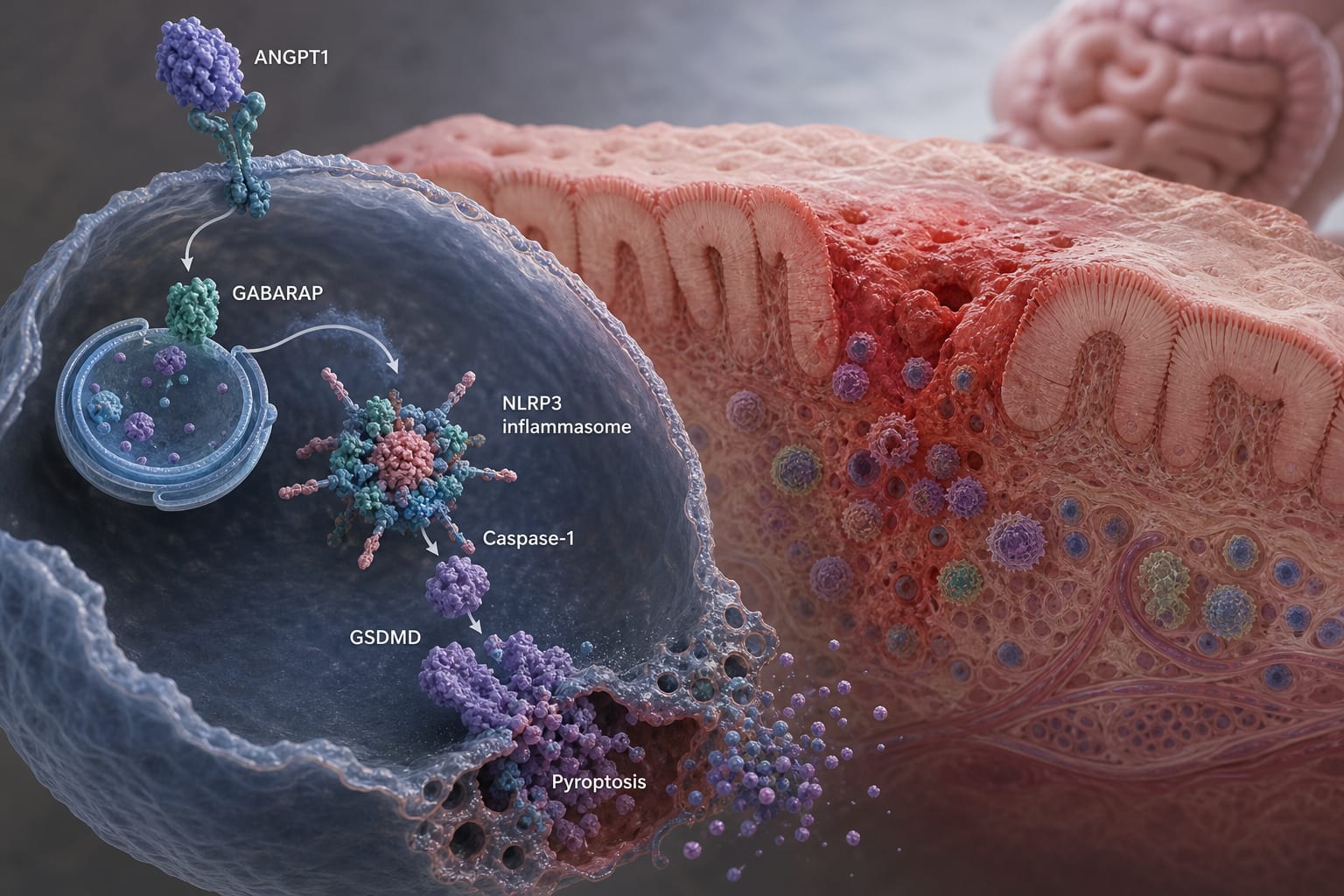
ANGPT1–GABARAP axis modulates NLRP3 inflammasome–mediated pyroptosis in Crohn’s disease
-
By
-
Yanchen Li
-
Junyan He
-
Ping Gao
-
Zeyang Fu
-
Yahui Guo
-
He Gao
-
Chenyang Li
-
Xiaolan Zhang
-
June 10, 2026
-
Clinical Scorecard: The Role of the ANGPT1–GABARAP Pathway in Regulating NLRP3 Inflammasome-Induced Pyroptosis in Crohn’s Disease
At a Glance
| Category | Detail |
|---|
| Condition | |
| Key Mechanisms | NLRP3 inflammasome activation, pyroptosis, ANGPT1–GABARAP signaling (ensure clarity on ANGPT1's role) |
| Target Population | |
| Care Setting | |
Key Highlights
- GABARAP is genetically associated with decreased risk of Crohn's Disease (clarify causation).
- ANGPT1 may regulate GABARAP and influence pyroptotic signaling.
- DSS-induced colitis shows reduced ANGPT1 and GABARAP expression.
- Silencing GABARAP or ANGPT1 enhances pyroptotic signaling.
- rhANGPT1 treatment partially restores GABARAP expression and attenuates pyroptosis.
Guideline-Based Recommendations
Diagnosis
Management
Monitoring & Follow-up
- Monitor levels of GABARAP and ANGPT1 in patients with Crohn's Disease using ELISA or qRT-PCR.
Risks
Patient & Prescribing Data
Patients diagnosed with Crohn's Disease.
Potential for ANGPT1 supplementation to modulate inflammatory responses.
Clinical Best Practices
- Integrate genetic data with clinical assessments for Crohn's Disease management, such as risk stratification and personalized treatment plans.
- Investigate the role of pyroptosis in the pathophysiology of inflammatory bowel diseases.
Related Resources & Content