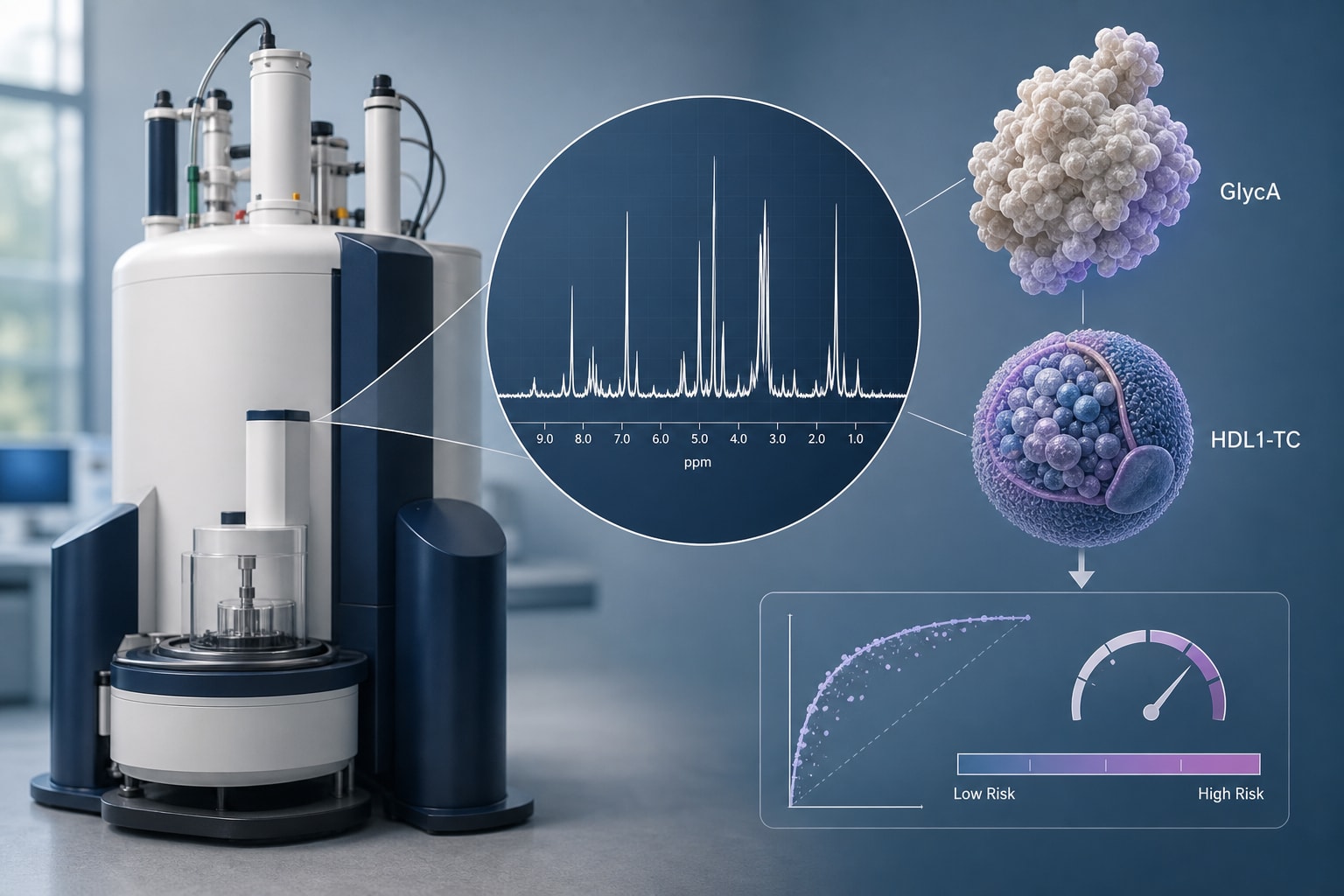
Study on the construction of a risk assessment model for type 2 diabetes complications based on GlycA and HDL1-TC
-
By
-
Jinxin Kou
-
Jingjing Tie
-
Minjie Li
-
Qing Tang
-
Hui Sun
-
Zhen Wei
-
Yang Zhao
-
Ying Liu
-
Xianfei Zeng
-
June 8, 2026
-
Clinical Scorecard: Development of a Risk Assessment Model for Complications in Type 2 Diabetes Utilizing GlycA and HDL1-TC
At a Glance
| Category | Detail |
|---|
| Condition | Type 2 Diabetes Mellitus (T2DM) |
| Key Mechanisms | Chronic low-level inflammation and lipid metabolism disorders |
| Target Population | Adults with Type 2 Diabetes Mellitus |
| Care Setting | Hospital-based, retrospective cross-sectional study |
Key Highlights
- Study evaluated NMR-derived GlycA and lipoprotein subfractions for T2DM complication risk stratification.
- Model retained age, diabetes duration, fasting plasma glucose, GlycA, and HDL1-TC.
- Model showed good fit (χ² = 7.141, P = 0.521) and discrimination (AUC = 0.82).
- Higher net benefit than traditional markers like HbA1c and hs-CRP.
Guideline-Based Recommendations
Diagnosis
- Utilize GlycA and HDL1-TC alongside traditional clinical variables for risk assessment.
Management
- Focus on early risk stratification to prevent complications in T2DM.
Monitoring & Follow-up
- Regular assessment of GlycA and HDL1-TC levels in patients with T2DM.
Risks
- Complications include macrovascular and microvascular diseases.
Patient & Prescribing Data
228 adults with T2DM from two hospitals.
Incorporate NMR-derived markers for comprehensive risk assessment.
Clinical Best Practices
- Integrate new inflammatory indicators with traditional clinical variables.
- Utilize a predictive tool for early intervention in T2DM complications.
Related Resources & Content