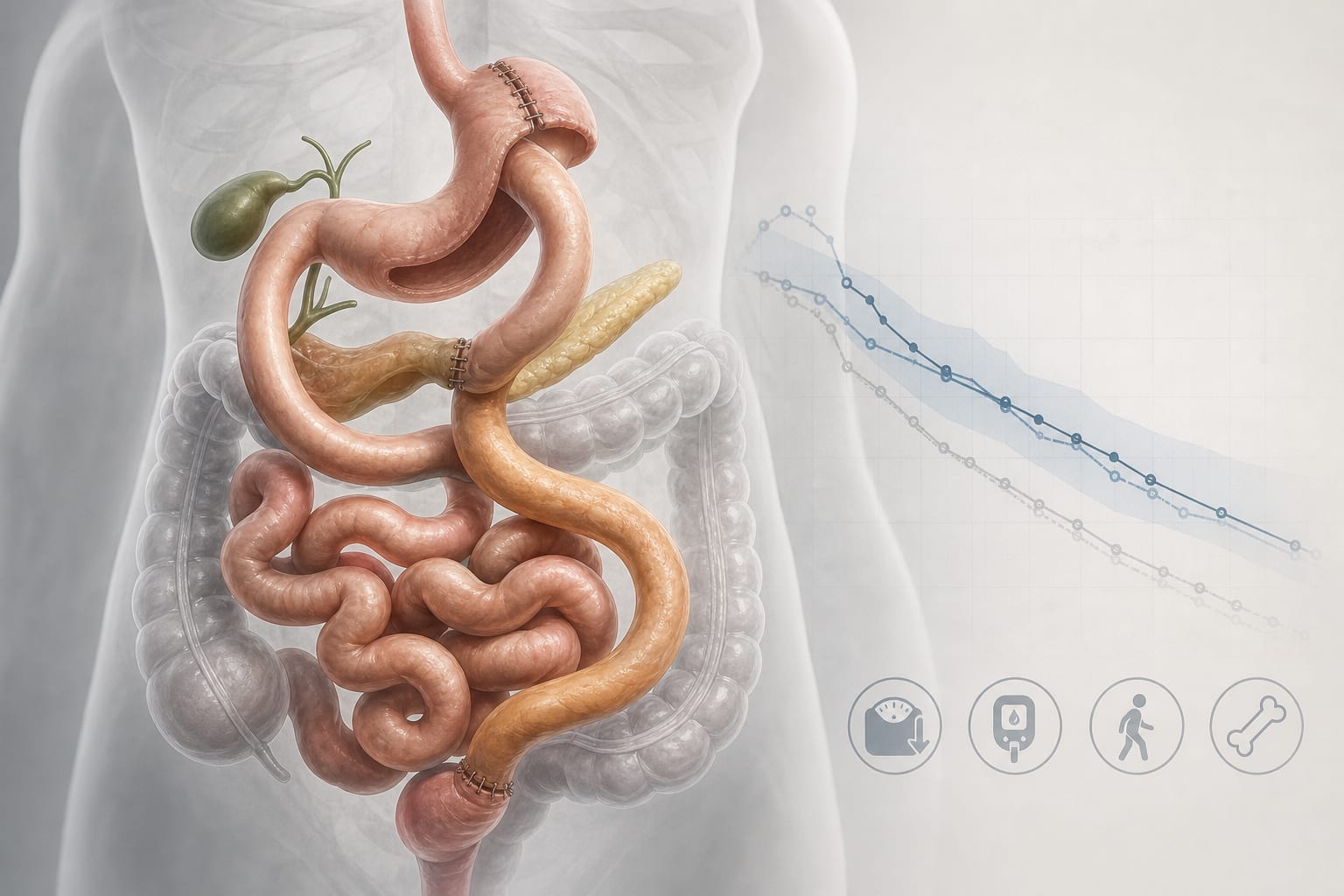
Impact of Bariatric and Metabolic Surgery on Sarcopenia-Related Parameters According to the EWGSOP2 Consensus Criteria in Persons Living with Obesity - Scorecard - MDSpire
Advertisement
Impact of Bariatric and Metabolic Surgery on Sarcopenia-Related Parameters According to the EWGSOP2 Consensus Criteria in Persons Living with Obesity
Clinical Scorecard: Effects of Bariatric and Metabolic Surgery on Sarcopenia-Related Factors Based on EWGSOP2 Consensus Guidelines in Individuals with Obesity
At a Glance
Category
Detail
Condition
Sarcopenia and sarcopenic obesity in individuals with obesity undergoing bariatric and metabolic surgery
Key Mechanisms
Bariatric surgery induces weight loss causing loss of fat and muscle mass; potential macronutrient and micronutrient deficiencies post-surgery may exacerbate muscle loss and sarcopenia
Target Population
Individuals with obesity undergoing bariatric and metabolic surgery
Care Setting
Clinical settings managing obesity and post-bariatric surgery follow-up
Key Highlights
Bariatric surgery is the most effective treatment for sustainable weight loss but may increase risk of sarcopenia due to muscle mass loss and nutrient deficiencies.
Sarcopenia diagnosis is best guided by EWGSOP2 criteria emphasizing muscle strength, muscle quantity/quality, and physical performance.
There is no universal consensus on sarcopenic obesity definitions; EASO/ESPEN recommend considering BMI/waist circumference, low muscle mass, and low muscle function.
Guideline-Based Recommendations
Diagnosis
Use EWGSOP2 consensus criteria focusing on muscle strength as primary parameter, followed by muscle quantity/quality and physical performance.
Consider sarcopenic obesity diagnosis by assessing elevated BMI or waist circumference combined with low muscle mass and function per EASO/ESPEN guidelines.
Employ comprehensive evaluation including physical performance, muscle mass, and strength for accurate sarcopenia diagnosis.
Management
Monitor and address macronutrient (protein) and micronutrient (vitamin D, magnesium) deficiencies post-bariatric surgery to prevent muscle loss.
Implement multidisciplinary care to mitigate risk of sarcopenia and associated complications after bariatric surgery.
Monitoring & Follow-up
Longitudinal assessment of body composition, muscle strength, and physical performance before and after bariatric surgery.
Regular screening for sarcopenia-related parameters especially within the first months post-surgery when muscle loss risk is highest.
Risks
Increased risk of sarcopenia or worsening sarcopenic obesity due to accelerated muscle mass and function loss after bariatric surgery.
Potential development or aggravation of osteoporosis, anemia, and physical disability linked to nutrient deficiencies and muscle loss.
Patient & Prescribing Data
Individuals with obesity undergoing bariatric and metabolic surgery
Bariatric surgery leads to significant fat and muscle mass loss; careful nutritional and functional monitoring is essential to prevent sarcopenia and related adverse outcomes.
Clinical Best Practices
Adopt EWGSOP2 criteria for sarcopenia diagnosis emphasizing muscle strength and physical performance alongside muscle mass.
Ensure comprehensive pre- and post-operative evaluation of muscle mass, strength, and physical function in bariatric surgery patients.
Address nutritional deficiencies proactively to reduce risk of sarcopenia and associated complications.
Use multidisciplinary approaches integrating nutrition, physical therapy, and medical management for optimal patient outcomes.