Brain alteration of PCOS: neuroimaging and function - Scorecard - MDSpire

Brain alteration of PCOS: neuroimaging and function

  • By

  • Ningxiao Jiang

  • Jie Deng

  • Changjin Bao

  • Hongmei Yin

  • Xianghui Zhang

  • Yanxia Ding

  • Shinan Zhang

  • Yingjiang Xu

  • Xinghua Diao

  • Kexin Lu

  • Jun Liu

  • Lei Han

  • June 11, 2026

  • 0 min

Share

Clinical Scorecard: Neuroimaging and Functional Changes in the Brain Associated with Polycystic Ovary Syndrome

At a Glance

CategoryDetail
ConditionPolycystic Ovary Syndrome (PCOS)
Key MechanismsNeuroendocrine dysregulation involving the cerebral cortex and the hypothalamic-pituitary-ovarian axis.
Target PopulationWomen of reproductive age diagnosed with PCOS.
Care SettingClinical and research settings focusing on endocrine and neuroimaging studies.

Key Highlights

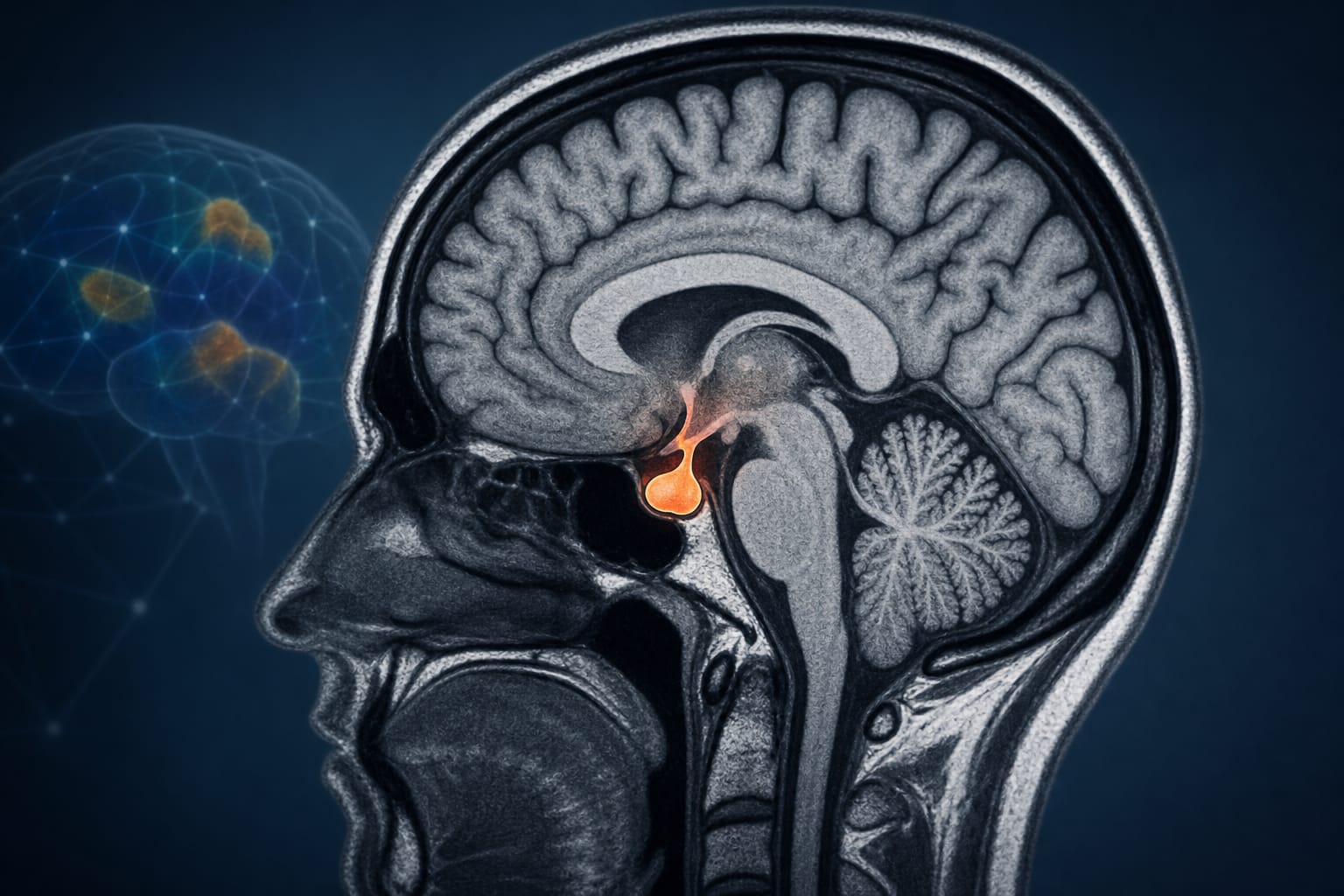
  • Enlargement of the pituitary gland and reduction in gray matter volume observed in PCOS patients.
  • Altered activity in the right orbitofrontal cortex linked to sympathetic activation.
  • Elevated μ-opioid receptor binding in emotion-related brain regions.
  • Structural and functional brain changes associated with abnormal glucose metabolism and cognitive/emotional alterations.
  • Dysfunction of limbic system circuitry may underlie affective and cognitive symptoms in PCOS.

Guideline-Based Recommendations

Diagnosis

  • Diagnosis based on Rotterdam criteria, NIH criteria, or Androgen Excess Society criteria.

Management

  • Further investigations warranted to address unresolved mechanistic questions.

Monitoring & Follow-up

  • Monitor endocrine-metabolic profiles and behavioral patterns in PCOS patients.

Risks

  • Potential for cognitive and emotional changes linked to neuroimaging alterations.

Patient & Prescribing Data

Women diagnosed with PCOS.

Current investigations are limited; further research needed for targeted therapeutic strategies.

Clinical Best Practices

  • Utilize neuroimaging to assess structural and functional brain changes in PCOS.
  • Consider the interplay of neuroendocrine and metabolic factors in managing PCOS.

Related Resources & Content

    Original Source(s)

    Related Content