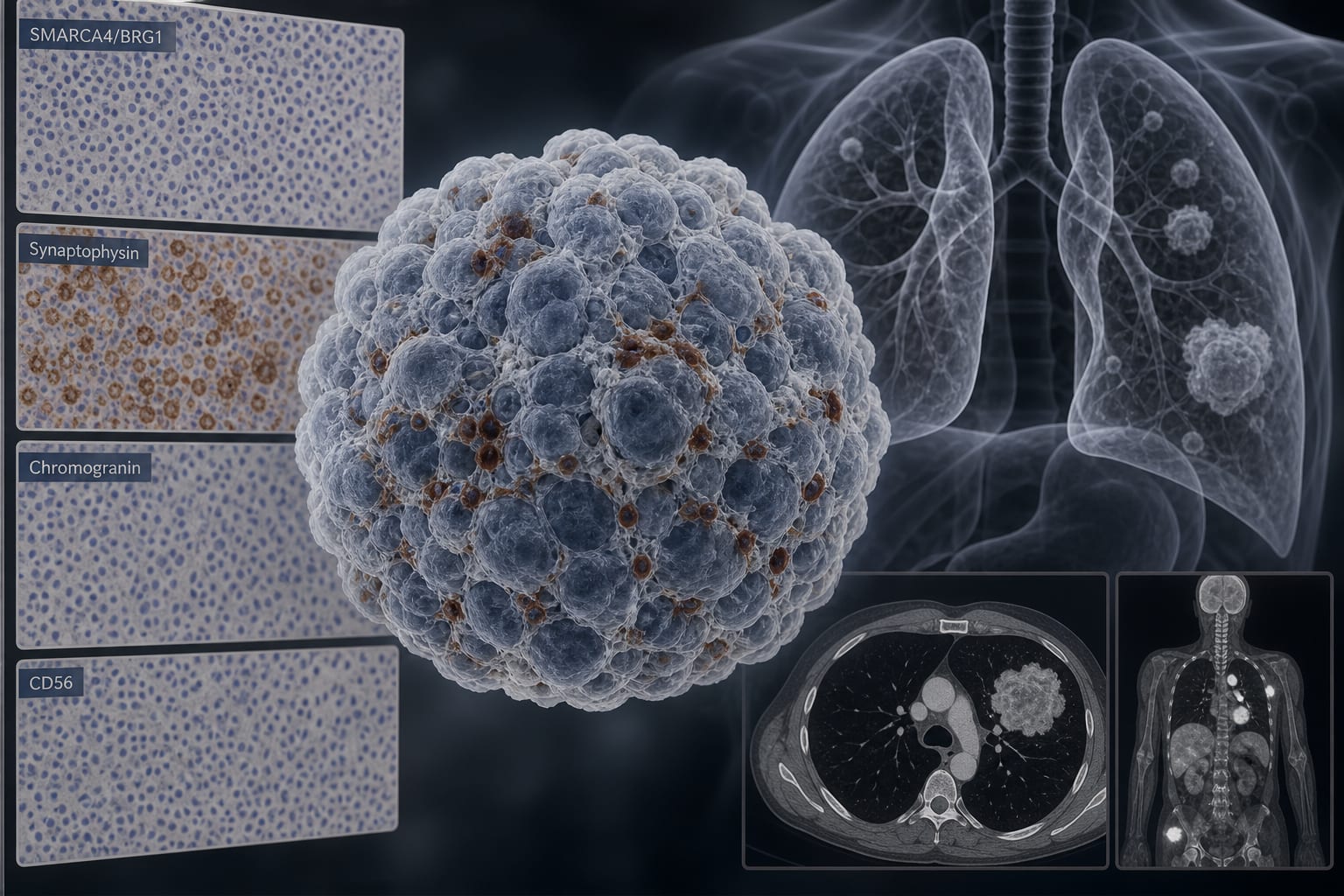
Case Report: Synaptophysin-positive SMARCA4-deficient undifferentiated thoracic tumour: a diagnostic pitfall with therapeutic implications
-
By
-
Chang-Sen Bai
-
Xiong-Wen He
-
Shu Lin
-
Bai-Cheng Xu
-
Qi-Xing Yan
-
Ming-Fa Wang
-
Yue-Can Zeng
-
Jing-Ru Luo
-
Wen-Jun Tang
-
June 5, 2026
-
Clinical Scorecard: Case Study: Undifferentiated Thoracic Tumor Lacking SMARCA4 with Synaptophysin Expression: Diagnostic Challenges and Treatment Considerations
At a Glance
| Category | Detail |
|---|
| Condition | SMARCA4-deficient undifferentiated thoracic tumour (SMARCA4-UT) |
| Key Mechanisms | Characterized by complete loss of SMARCA4/BRG1, high Ki-67 index, and isolated synaptophysin positivity. |
| Target Population | Predominantly male smokers with advanced or metastatic disease. |
| Care Setting | Oncology, specifically for rare thoracic malignancies. |
Key Highlights
- SMARCA4-UT is a rare and aggressive malignancy with a poor prognosis.
- Isolated synaptophysin expression complicates differential diagnosis.
- The patient achieved a durable partial response after platinum-based chemoimmunotherapy.
- Median overall survival reported as approximately 4.8 to 7.3 months.
- No established standard therapy currently exists for SMARCA4-UT.
Guideline-Based Recommendations
Diagnosis
- Diagnosis established through histological examination and immunohistochemical profiling.
Management
- Combination therapy with immune checkpoint inhibitors and chemotherapy may achieve durable remission.
Monitoring & Follow-up
- Monitor for treatment response through imaging and clinical assessment.
Risks
- Limited benefit from traditional chemotherapy; potential for adverse events from immunotherapy.
Patient & Prescribing Data
43-year-old male with a history of heavy smoking and chronic hepatitis C.
Achieved partial response after treatment with nab-paclitaxel, carboplatin, and sintilimab.
Clinical Best Practices
- Consider the clinicopathologic relevance of isolated synaptophysin positivity in diagnosis.
- Utilize a multidisciplinary approach for management of SMARCA4-UT.
Related Resources & Content