Describing digital nursing work in a remote patient monitoring application: Novel convergent mixed methods secondary analysis of feasibility trial data - Scorecard - MDSpire
Advertisement
Describing digital nursing work in a remote patient monitoring application: Novel convergent mixed methods secondary analysis of feasibility trial data
Clinical Scorecard: Analyzing Nursing Roles in a Remote Patient Monitoring System: A Novel Convergent Mixed Methods Secondary Analysis of Feasibility Trial Data
At a Glance
Category
Detail
Condition
Remote Patient Monitoring
Key Mechanisms
Integration of digital health technologies for monitoring chronic illnesses.
Target Population
Patients with chronic illnesses such as heart failure and colorectal cancer.
Care Setting
Healthcare services utilizing digital health solutions.
Key Highlights
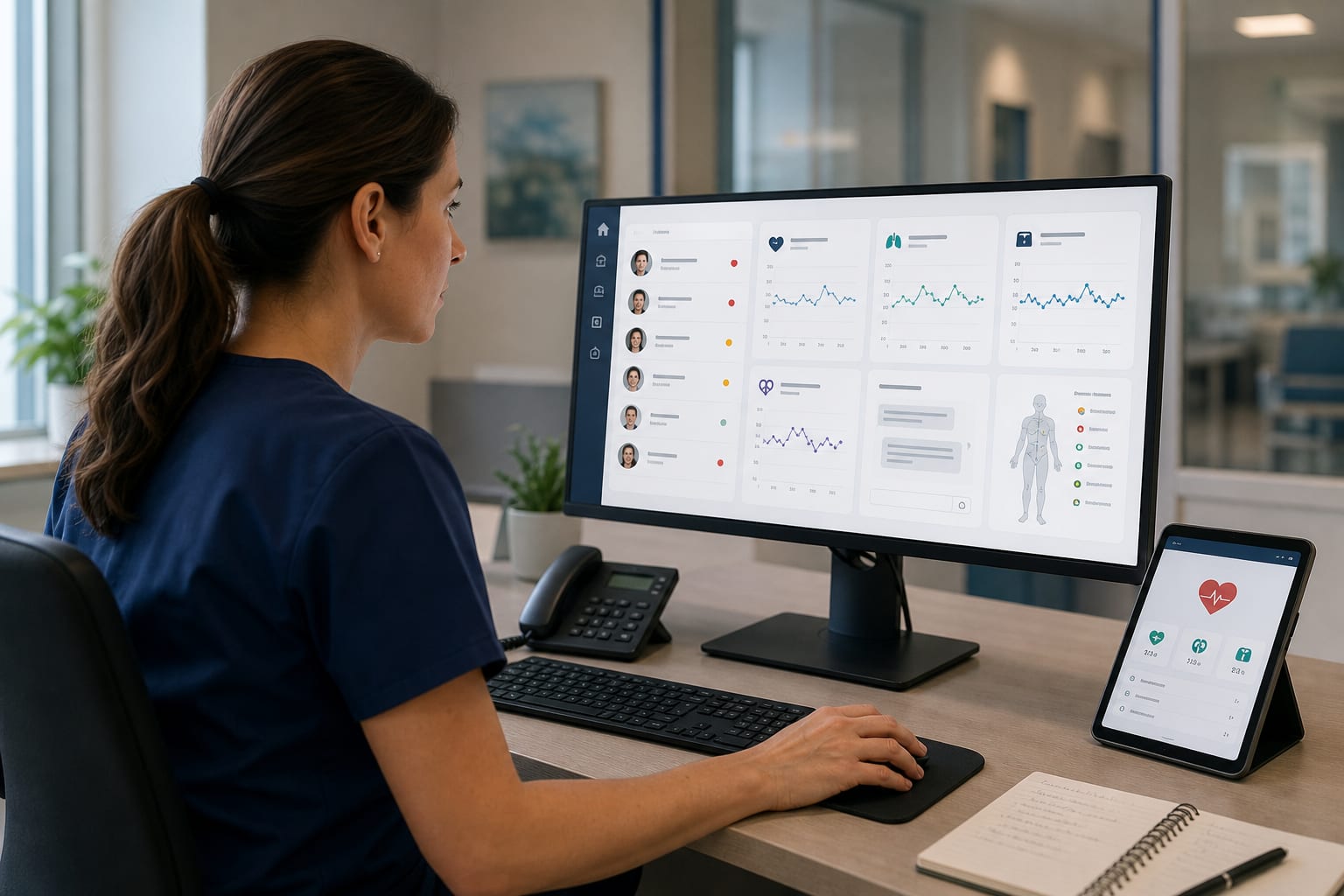
RPM applications include tracking clinical measurements and patient-reported symptoms.
User engagement is critical for effective communication between patients and nurses.
Nurses play a significant role in monitoring and responding to patient data.
The implementation of RPM in healthcare services faces barriers related to clinical workload.
The study aims to evaluate the digital work of nurses involved in RPM applications.
Guideline-Based Recommendations
Diagnosis
Management
Monitoring & Follow-up
Risks
Patient & Prescribing Data
Patients with chronic illnesses post-hospitalization.
RPM applications prescribed engagement tasks for patients to input clinical data.
Clinical Best Practices
Evaluate user engagement with RPM applications to improve healthcare delivery.
Monitor the impact of RPM on clinical workload for healthcare professionals.
Facilitate communication between patients and nurses through RPM platforms.
Surgeons from around the world came to the Baptist Health Education Center this week to learn from Baptist Health Heart & Vascular Care experts as part of the International Society for Minimally Invasive Cardiothoracic Surgery (ISMICS) annual meeting