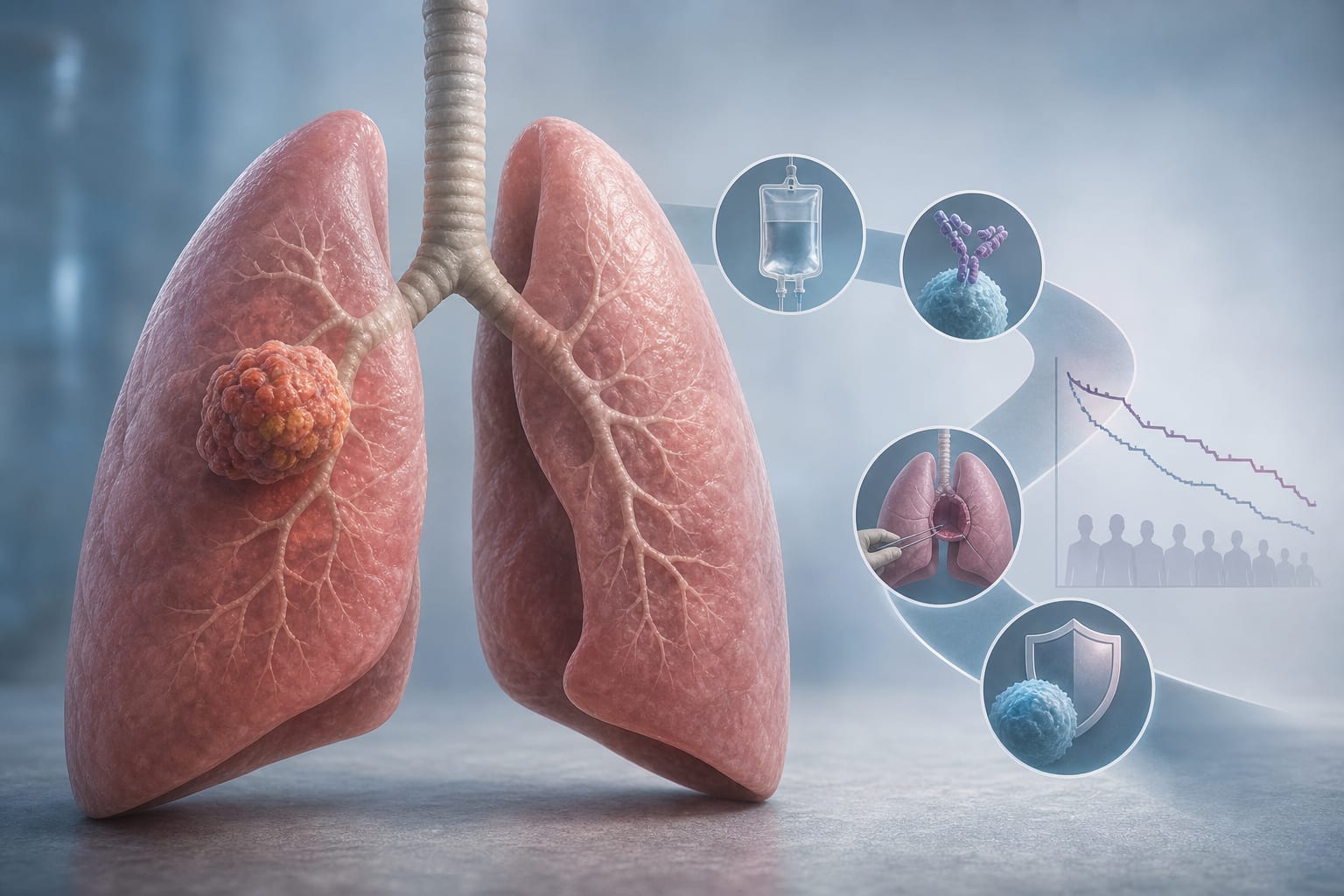
Clinical Scorecard: Advancing Patient-Focused Intelligent Planning in Radiation Therapy
At a Glance
Category
Detail
Condition
Cancer requiring radiation therapy
Key Mechanisms
Radiation therapy uses high-energy radiation to damage cancer cell DNA; treatment planning determines LINAC control parameters to deliver conformal radiation dose while sparing healthy tissue
Target Population
Cancer patients undergoing radiation therapy
Care Setting
Radiation oncology departments using Treatment Planning Systems and medical linear accelerators
Key Highlights
Radiation therapy benefits over two-thirds of cancer patients, either alone or combined with other treatments.
Current treatment planning is iterative, involving planners, physicians, and physicists, but suffers from suboptimal plan quality and low efficiency.
Artificial intelligence offers potential to improve treatment planning by streamlining processes and enhancing decision-making.
Guideline-Based Recommendations
Diagnosis
Use multimodal image fusion to extract clinical information for treatment planning.
Delineate targets and organs at risk accurately before planning.
Management
Define prescription dose objectives for targets and tolerance limits for organs at risk.
Iteratively optimize treatment plans balancing tumor coverage and normal tissue sparing.
Incorporate multidisciplinary feedback from physicians and medical physicists to refine plans.
Monitoring & Follow-up
Evaluate plan quality for alignment with clinical intent and technical feasibility before treatment delivery.
Monitor for anatomical changes during planning delays that may affect plan suitability.
Risks
Suboptimal plans can increase normal tissue complications and reduce survival rates.
Delays in treatment planning can worsen outcomes by increasing risk of death and reducing loco-regional control.
Human factors such as planner experience and communication impact plan quality.
Patient & Prescribing Data
Cancer patients receiving radiation therapy
Approximately 9.1% of patients may receive suboptimal plans increasing normal tissue complication risks; delays in planning can increase mortality risk by 2% per day in high-grade gliomas and reduce loco-regional control by up to 14% per week in head and neck cancer.
Clinical Best Practices
Engage multidisciplinary teams including planners, physicians, and medical physicists in iterative plan evaluation.
Utilize advanced RT techniques like intensity-modulated radiotherapy for precise dose delivery.
Adopt AI-based decision-making tools to improve plan quality and reduce planning time.
Prioritize minimizing delays between diagnosis and treatment initiation to improve outcomes.