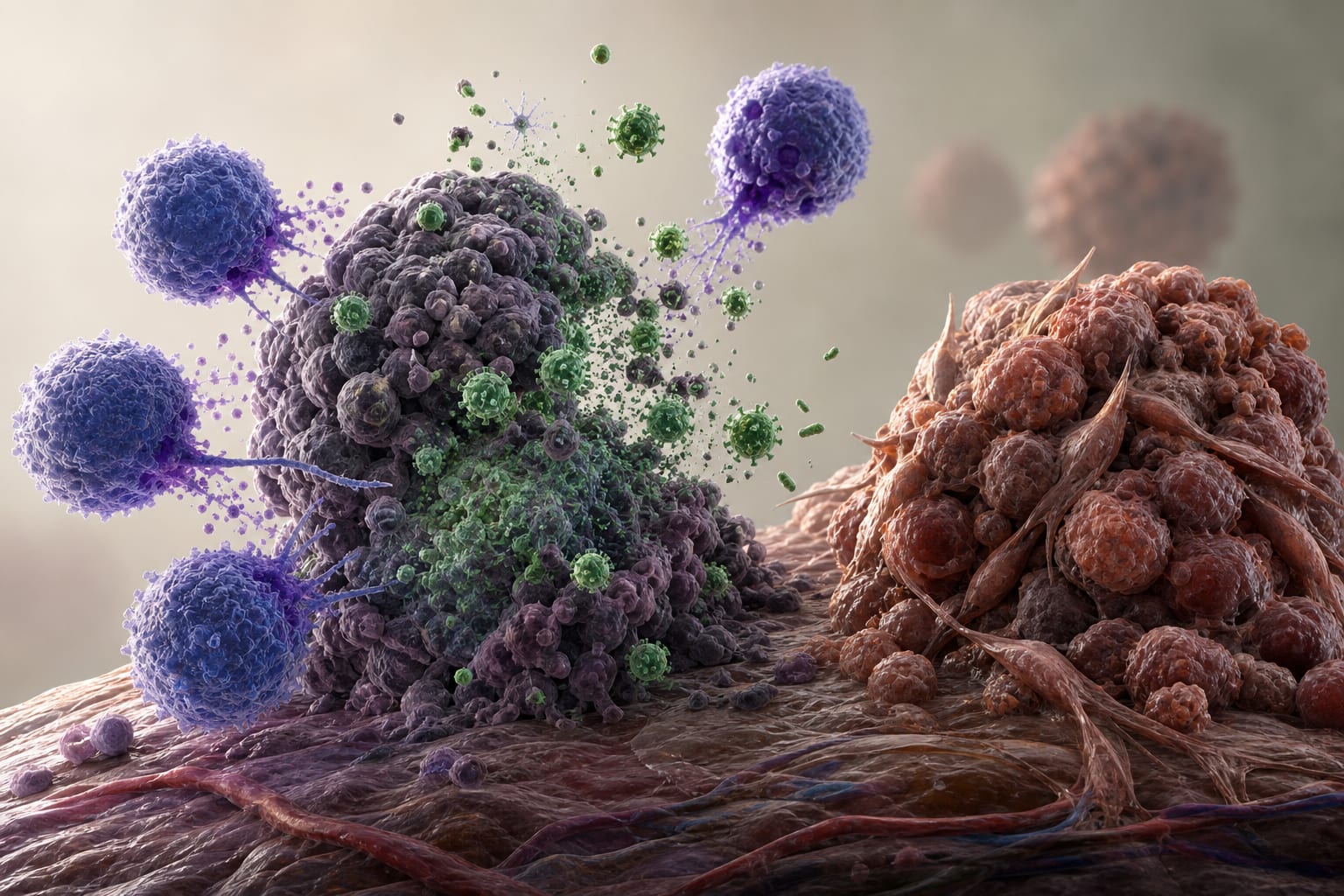
Oncolytic virotherapy counteracts the selection of IFN-unresponsive cancer cells post-immunotherapy but is limited by the emergence of dedifferentiated cancer cells - Scorecard - MDSpire
Conexiant’s news site is now MDSpire News. Learn more
Advertisement
Oncolytic Virotherapy Mitigates the Selection of IFN-Resistant Tumor Cells Following Immunotherapy, Yet Faces Challenges from the Rise of Dedifferentiated Tumor Cells
Clinical Scorecard: Oncolytic Virotherapy Mitigates the Selection of IFN-Resistant Tumor Cells Following Immunotherapy, Yet Faces Challenges from the Rise of Dedifferentiated Tumor Cells
At a Glance
Category
Detail
Condition
Melanoma
Key Mechanisms
Interferon (IFN) signaling disruption and oncolytic virus targeting
Target Population
Patients with melanoma undergoing immunotherapy
Care Setting
Cancer treatment and research
Key Highlights
Loss of IFN signaling allows tumor cells to evade immune surveillance.
Oncolytic virotherapy can selectively target IFN-unresponsive tumor cells.
Dedifferentiated tumor cells can emerge post-therapy, resisting treatment.
Natural Killer (NK) cells eliminate IFN-unresponsive subclones in vivo.
Combination strategies may enhance the efficacy of immunotherapy.
Guideline-Based Recommendations
Diagnosis
Monitor for genetic mutations affecting IFN signaling in melanoma.
Management
Consider sequential oncolytic virotherapy following immunotherapy.
Monitoring & Follow-up
Assess tumor cell response to treatment and emergence of resistant phenotypes.
Risks
Potential for dedifferentiated tumor cells to resist both immune and viral therapies.
Patient & Prescribing Data
Patients with melanoma exhibiting resistance to immune checkpoint inhibitors.
Sequential immuno-virotherapy may counteract IFN-resistant tumor cell emergence.
Clinical Best Practices
Utilize genetic screening to identify IFN signaling deficiencies.
Incorporate oncolytic virotherapy in treatment regimens for resistant tumors.
Monitor for dedifferentiation in tumor cells during treatment.
A first-in-human study reduces stem-cell collection and manufacturing times, Bristol Myers ends its Breyanzi agreement with Cellares, and two approaches strengthen CAR T-cell activity against solid tumors