Weight Loss, Comorbidity, and Complications After Single-anastomosis Sleeve Ileal Bypass (SASI): A Systematic Review and Meta-analysis - Scorecard - MDSpire
Advertisement
Weight Loss, Comorbidity, and Complications After Single-anastomosis Sleeve Ileal Bypass (SASI): A Systematic Review and Meta-analysis
Clinical Scorecard: Outcomes of Weight Reduction, Comorbid Conditions, and Complications Following Single-Anastomosis Sleeve Ileal Bypass: A Comprehensive Review and Meta-Analysis
At a Glance
Category
Detail
Condition
Obesity and related metabolic disorders
Key Mechanisms
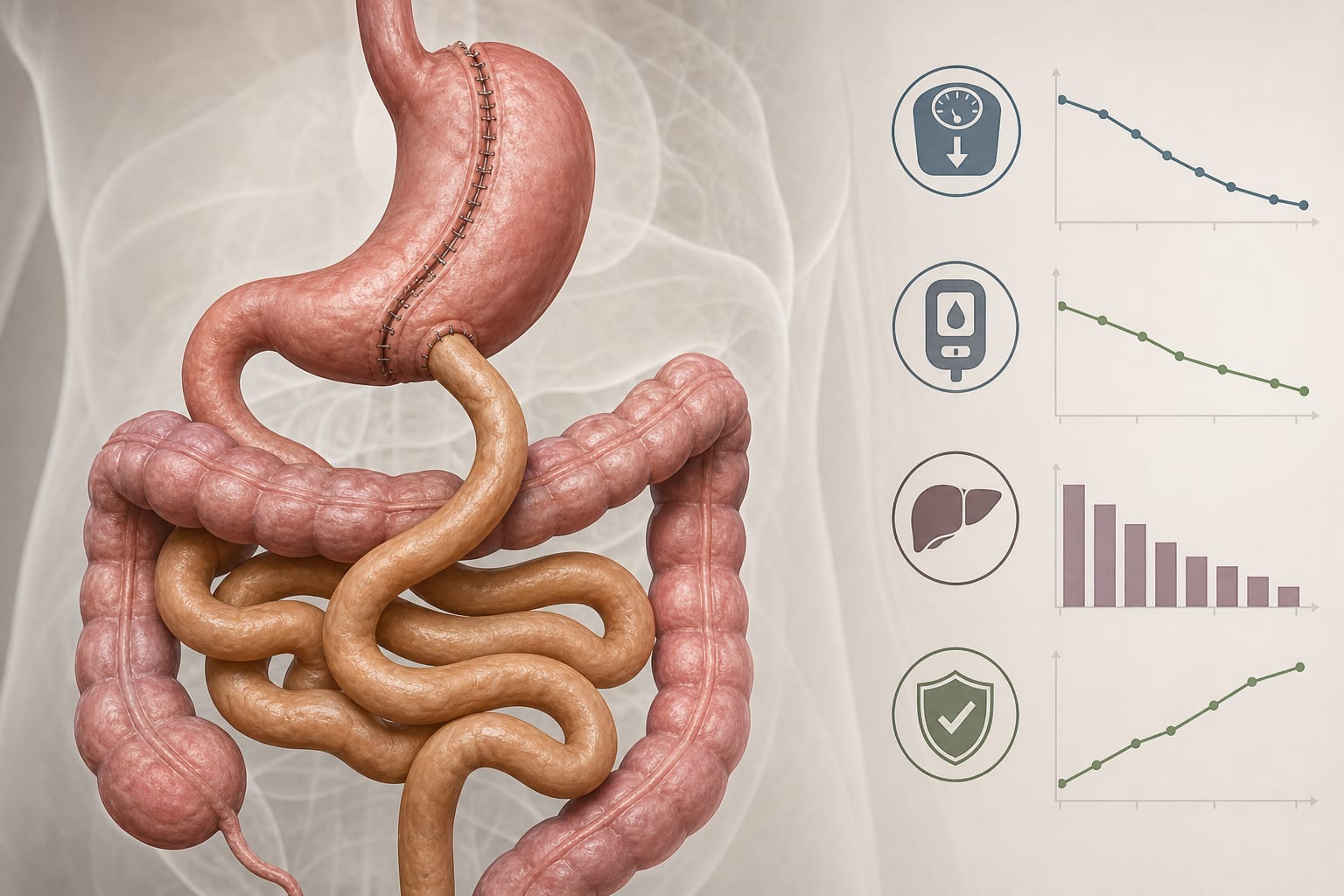
Single-anastomosis sleeve ileal bypass (SASI) technique aims to achieve weight loss while minimizing malabsorption risks.
Target Population
Adults with obesity grade II with serious obesity-related health problems or obesity grade III.
Care Setting
Metabolic bariatric surgery (MBS) procedures
Key Highlights
SASI shows potential for substantial weight loss and metabolic improvements.
Initial studies indicate outcomes comparable to established bariatric procedures.
Concerns exist regarding risks of protein-calorie malnutrition and long-term effects.
SASI allows for preservation of endoscopic access to the gastrointestinal tract.
Reversal of SASI to sleeve gastrectomy is relatively straightforward in adverse cases.
Guideline-Based Recommendations
Diagnosis
Evaluate obesity grade and related health problems for surgical intervention eligibility.
Management
Consider SASI as a surgical option for eligible patients with obesity.
Monitoring & Follow-up
Monitor nutritional status postoperatively, including levels of albumin, hemoglobin, ferritin, vitamin D, and vitamin B12.
Risks
Be aware of potential complications including nutritional deficiencies and malnutrition.
Patient & Prescribing Data
Adults with obesity grade II or III and related health issues.
SASI is an investigational procedure with emerging evidence on its effectiveness.
Clinical Best Practices
Adhere to eligibility criteria for surgical interventions.
Conduct long-term follow-up to assess outcomes and complications.
Utilize the GRADE approach to evaluate the quality of evidence in studies.