Serial lactate–procalcitonin interaction identifies a high-risk phenotype in 24-h conditional survivors of post-cardiac arrest syndrome: a CART-based analysis - Scorecard - MDSpire
Advertisement
Serial lactate–procalcitonin interaction identifies a high-risk phenotype in 24-h conditional survivors of post-cardiac arrest syndrome: a CART-based analysis
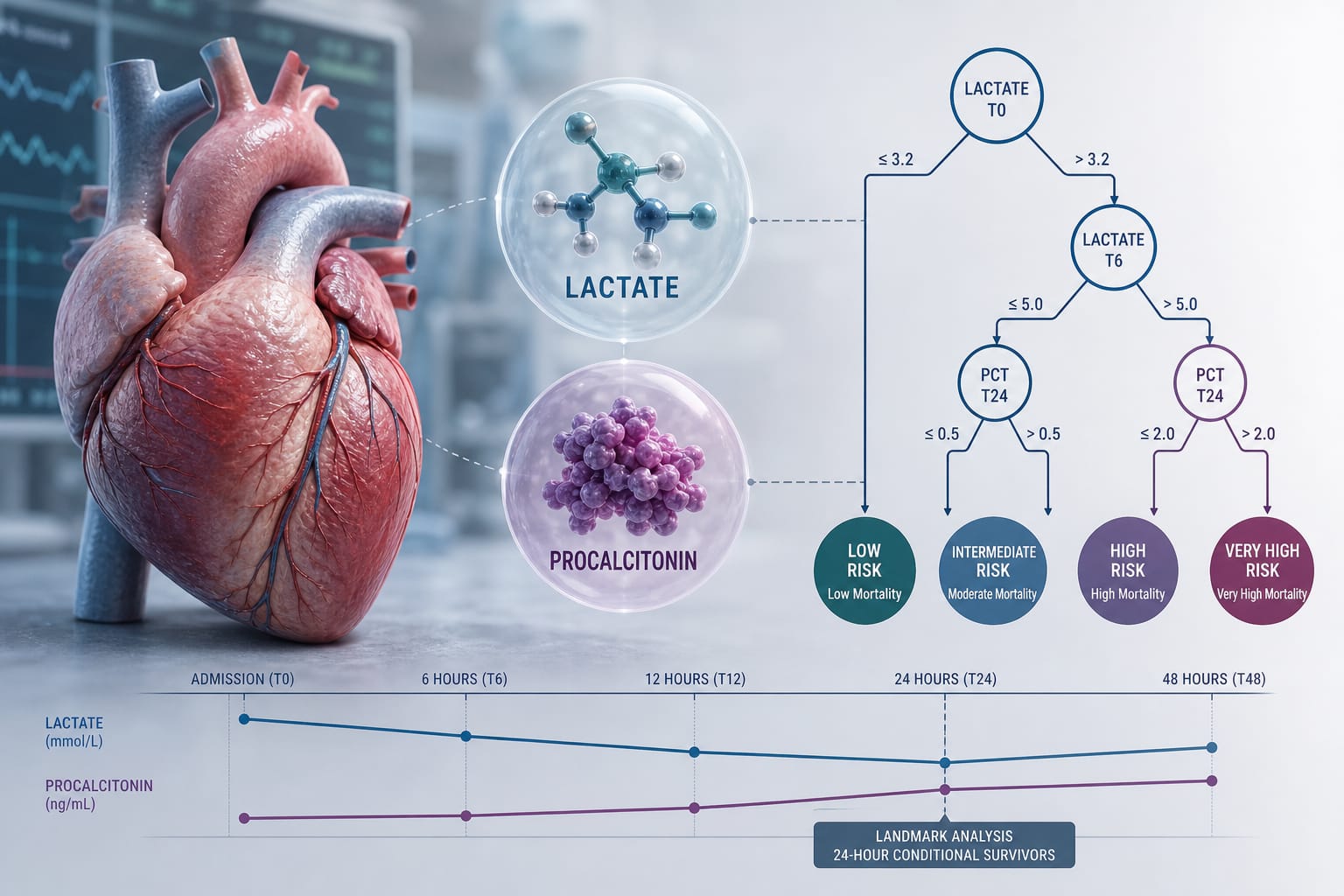
Clinical Scorecard: Identification of a High-Risk Phenotype in 24-Hour Conditional Survivors of Post-Cardiac Arrest Syndrome Through Serial Lactate and Procalcitonin Interactions: Insights from CART Analysis
At a Glance
Category
Detail
Condition
Post-Cardiac Arrest Syndrome (PCAS)
Key Mechanisms
Interactions between serial lactate and procalcitonin kinetics.
Target Population
24-hour conditional survivors of PCAS.
Care Setting
Intensive care unit (ICU)
Key Highlights
In-hospital mortality rate of 70.9% among the cohort.
Persistent hyperlactatemia at 48 hours is a significant predictor of mortality.
CART analysis identified a high-risk phenotype with 92% mortality risk.
Lactate burden demonstrated superior prognostic performance compared to baseline measurements.
CART model showed excellent calibration and comparable discrimination to logistic regression.
Guideline-Based Recommendations
Diagnosis
Monitor arterial lactate levels at admission and at 6, 12, 24, and 48 hours.
Record procalcitonin levels at admission and at 24 hours.
Management
Consider advanced circulatory support strategies for high-risk patients identified by CART analysis.
Monitoring & Follow-up
Utilize serial lactate and procalcitonin kinetics for ongoing risk assessment.
Risks
Higher rates of non-shockable rhythms and longer CPR durations are associated with non-survivors.
Patient & Prescribing Data
Adult patients aged 18 years and older admitted to ICU post-ROSC.
Integration of serial lactate and PCT kinetics may guide therapeutic decisions.
Clinical Best Practices
Implement serial monitoring of lactate and procalcitonin in post-cardiac arrest patients.
Utilize non-linear risk stratification tools like CART for early identification of high-risk phenotypes.