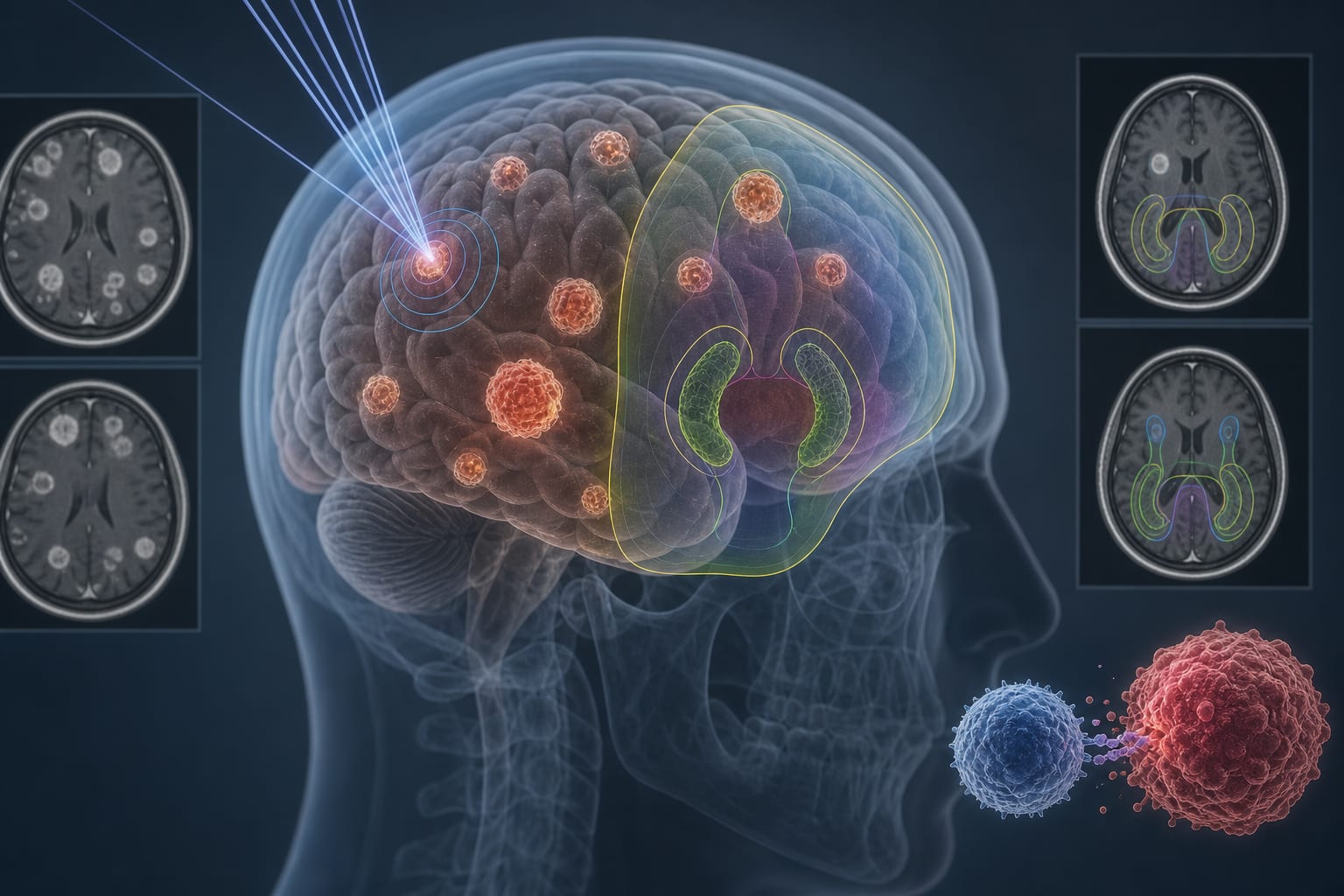
Single-cell profiling identifies KLF10-enriched macrophages driven by glioblastoma cells linked to tumor advancement
-
By
-
Xiaodong Zhang
-
Caiping Chen
-
Qianya Fan
-
Sheng Chen
-
Duanzheng Cao
-
Zhonglin Hu
-
Yejun Zhou
-
Jinfang Xu
-
Delin Wang
-
July 20, 2026
Clinical Scorecard: Single-cell profiling identifies KLF10-enriched macrophages driven by glioblastoma cells linked to tumor advancement
At a Glance
| Category | Detail |
|---|
| Condition | Glioblastoma (GBM) |
| Key Mechanisms | Tumor-associated macrophages (TAMs) and Krüppel-like factor 10 (KLF10) in tumor progression |
| Target Population | Adults with glioblastoma |
| Care Setting | Oncology and neurology |
Key Highlights
- KLF10 expression is associated with poor prognosis in glioblastoma.
- A five-gene prognostic signature was identified, including KLF10.
- KLF10-high macrophages promote GBM cell proliferation, migration, and invasion.
- TAMs exhibit significant heterogeneity and play critical roles in GBM recurrence.
- Recurrent glioblastoma differs in immune microenvironment compared to primary GBM.
Guideline-Based Recommendations
Diagnosis
- Utilize single-cell RNA-sequencing to assess TAM characteristics in glioblastoma.
Management
- Consider KLF10 expression levels in prognostic assessments for glioblastoma.
Monitoring & Follow-up
- Monitor KLF10 levels as a potential biomarker for tumor progression.
Risks
- High KLF10 expression may indicate increased tumor invasiveness and treatment resistance.
Patient & Prescribing Data
Patients diagnosed with glioblastoma, particularly those with recurrent disease.
KLF10 may serve as a target for therapeutic strategies aimed at modulating TAM function.
Clinical Best Practices
- Integrate molecular profiling in the management of glioblastoma.
- Evaluate the immune microenvironment to inform treatment decisions.
Related Resources & Content