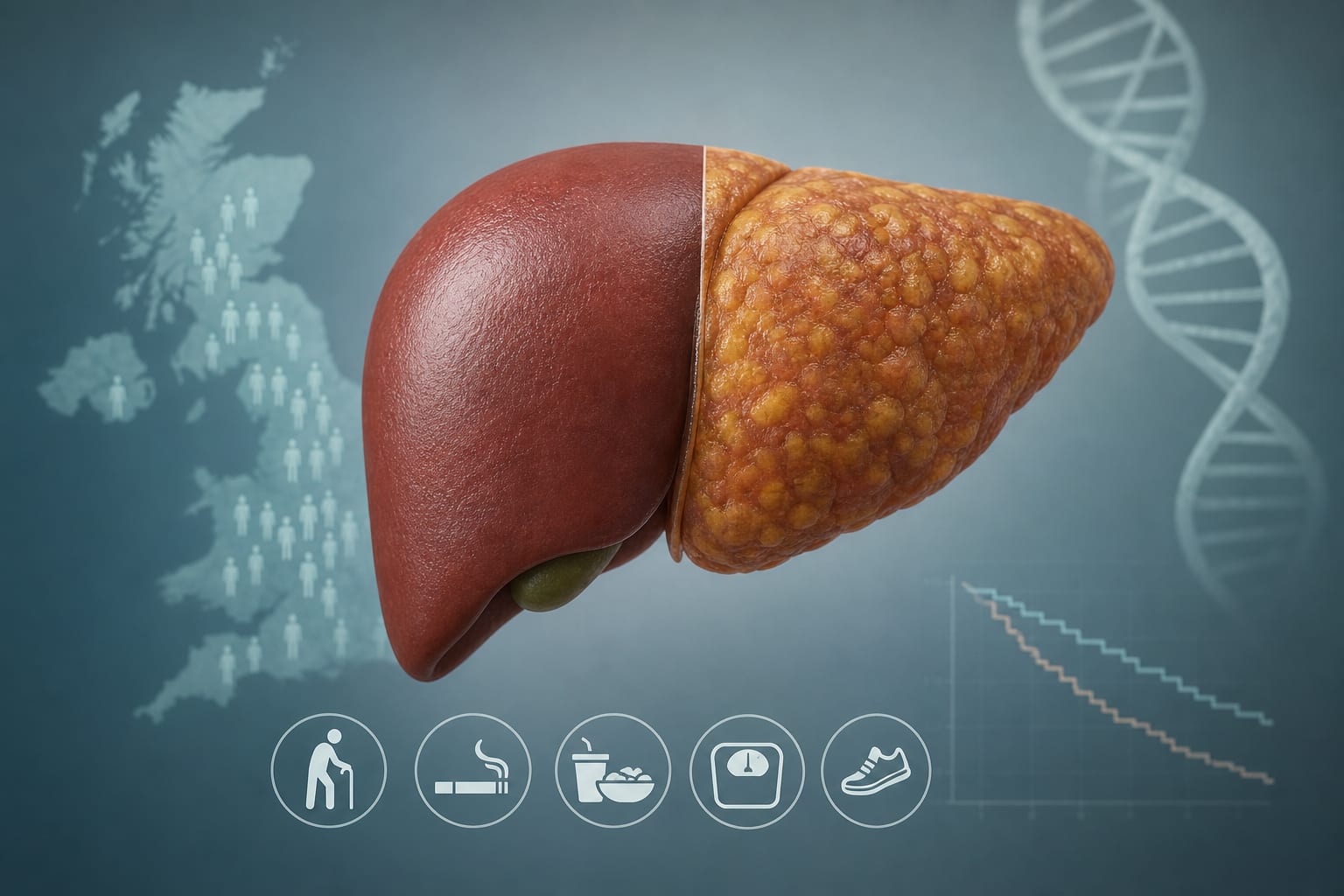
Prospective association between biological aging and risk of hospital-diagnosed MASLD: evidence from the UK Biobank
By
Xue Yang
Sicheng Li
Qingping Xue
Peijing Yan
Qian Li
Yi Gong
Xiayue Fan
Wenzhi Zhu
Shiyi Wu
Shanshan Zhang
Ko Willems van Dijk
Patrick C.N. Rensen
Ruifang Li-Gao
Yanan Wang
Ting Yao
June 17, 2026
Clinical Scorecard: Examining the Link Between Biological Aging and Hospital-Diagnosed MASLD: Insights from the UK Biobank Study
At a Glance
Category Detail
Condition Metabolic dysfunction-associated steatotic liver disease (MASLD) Key Mechanisms Association between biological aging and MASLD, with mediation effects from lifestyle factors. Target Population Adults aged 37–73 years from the UK Biobank study. Care Setting Hospital settings for diagnosis of MASLD.
Key Highlights
3,254 participants developed hospital-diagnosed MASLD during a median follow-up of 13.7 years. Accelerated biological aging significantly associated with MASLD (HR: 1.46 for PhenoAge, 1.35 for KDMAge). PhenoAge acceleration accounted for 11.4% to 25.5% of the association between unhealthy lifestyles and MASLD. Smoking showed the strongest mediation effect on the relationship with MASLD. KDMAge acceleration showed minimal mediation effects (≤2%). Guideline-Based Recommendations
Diagnosis
Hospital admission or death due to MASLD. Management
Focus on lifestyle modifications to mitigate MASLD risk. Monitoring & Follow-up
Regular assessment of biological aging markers in relation to MASLD. Risks
Increased all-cause and cardiovascular mortality associated with MASLD. Patient & Prescribing Data
Participants from the UK Biobank aged 37–73 years.
Lifestyle factors such as smoking, drinking, diet, and physical activity are critical in managing MASLD.
Clinical Best Practices
Incorporate biological aging assessments in routine evaluations for MASLD risk. Encourage lifestyle changes to reduce MASLD incidence. Related Resources & Content