A case analysis of Gitelman syndrome1 complicated with Sjögren’s disease
By
Yuqi Tang
Sen Tian
Cong Xia
Yan Zhang
Qiaoding Dai
June 19, 2026
Clinical Scorecard: Analysis of a Gitelman Syndrome Case Complicated by Sjögren’s Disease
At a Glance
Category Detail
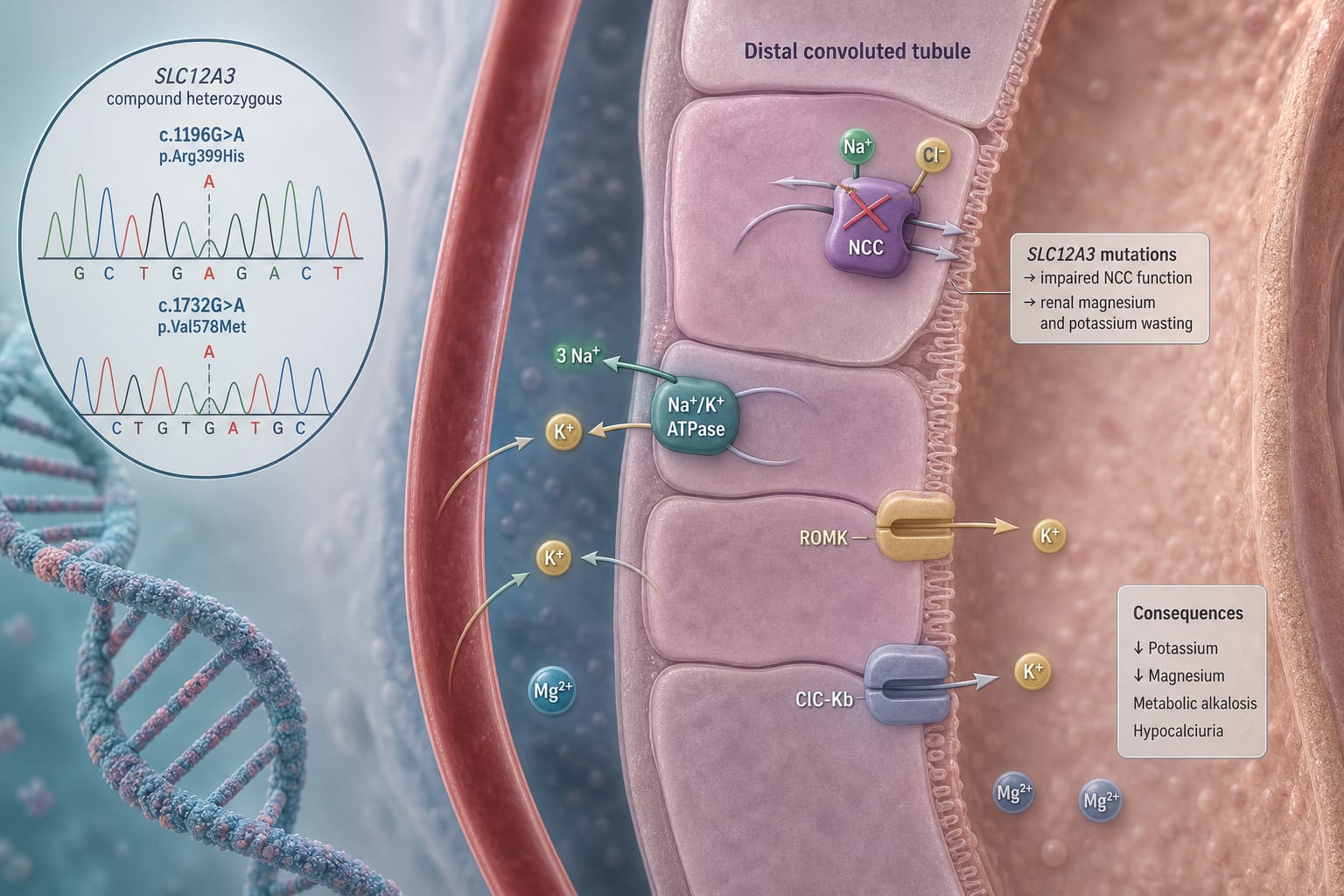
Condition Gitelman syndrome and Sjögren’s disease Key Mechanisms Autosomal recessive renal tubulopathy caused by SLC12A3 mutations leading to hypokalemia, and autoimmune exocrinopathy affecting exocrine glands. Target Population Middle-aged women with autoimmune disorders and electrolyte disturbances. Care Setting Clinical evaluation and genetic testing in a hospital setting.
Key Highlights
Sjögren’s disease can complicate the diagnosis of Gitelman syndrome due to overlapping symptoms. Genetic analysis confirmed Gitelman syndrome in a patient with refractory hypokalemia. Combined therapy with potassium supplementation and hydroxychloroquine was effective. Guideline-Based Recommendations
Diagnosis
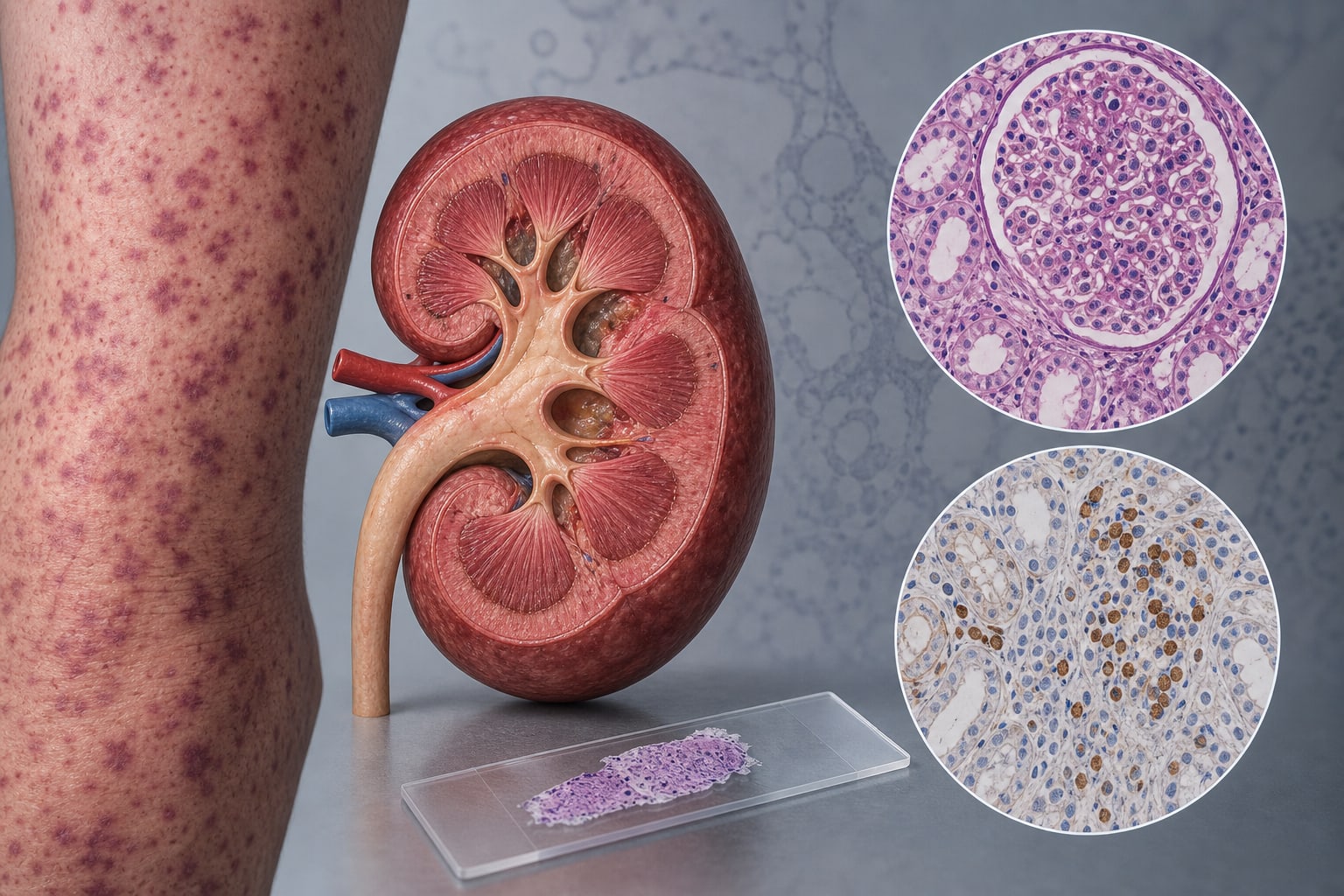
Immunological testing and labial gland biopsy are essential for diagnosing Sjögren’s disease. Genetic testing for SLC12A3 mutations is recommended in cases of refractory hypokalemia. Management
Potassium supplementation is crucial for managing hypokalemia. Hydroxychloroquine may be used to manage symptoms of Sjögren’s disease. Monitoring & Follow-up
Regular monitoring of serum potassium levels is necessary in patients with Gitelman syndrome. Risks
Patients with Sjögren’s disease and refractory hypokalemia may have underlying hereditary renal disorders. Patient & Prescribing Data
62-year-old female with Sjögren’s disease and Gitelman syndrome.
Long-term potassium supplementation and hydroxychloroquine were effective in symptom resolution.
Clinical Best Practices
Consider hereditary renal tubular disorders in patients with autoimmune diseases presenting with hypokalemia. Utilize a stepwise approach to investigate the cause of hypokalemia. Related Resources & Content