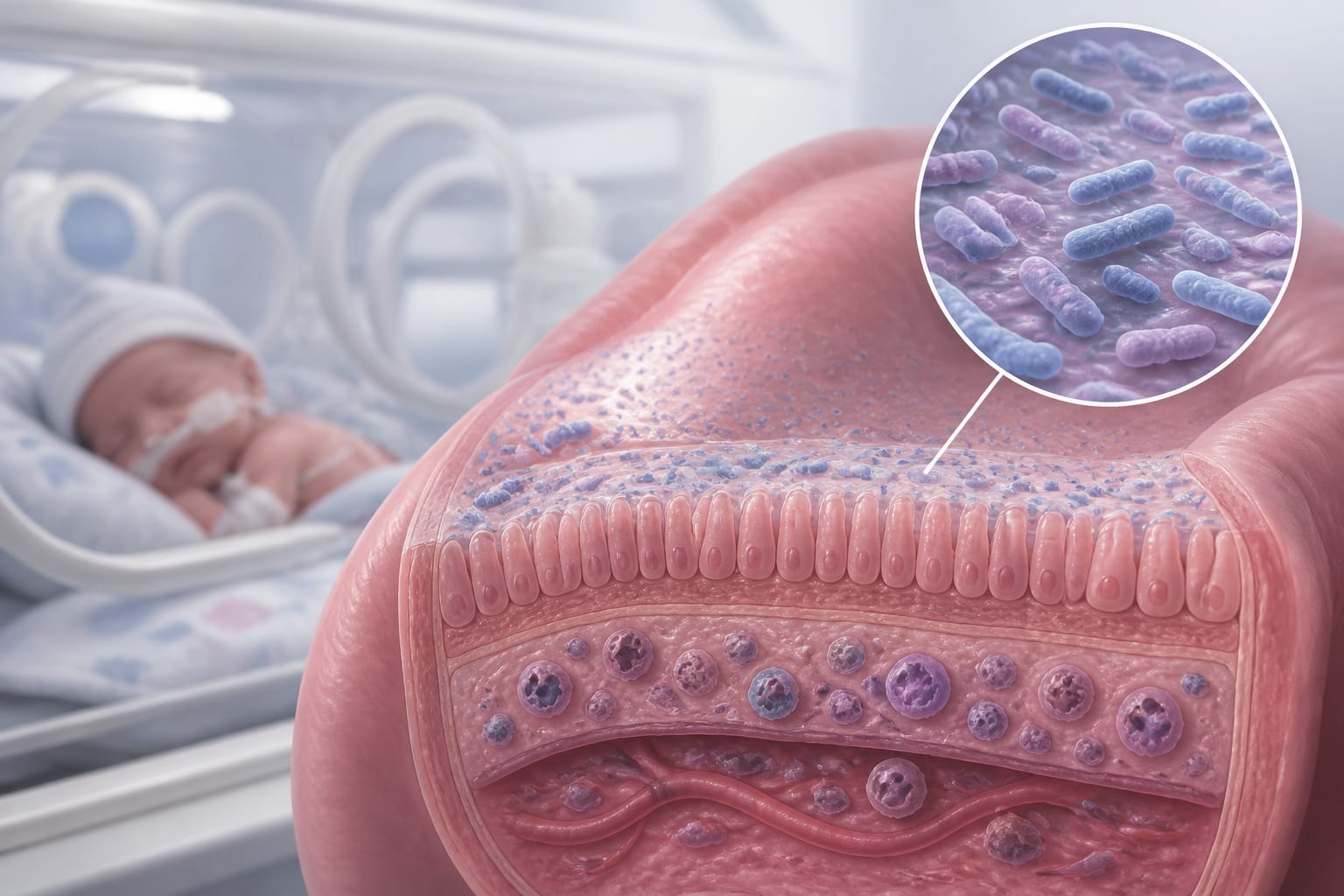
Use of Probiotics to Reduce the Risk of Necrotizing Enterocolitis in Extremely Preterm Neonates in a NICU Environment
-
By
-
Thomas Abrahamsson
-
August 31, 2026
Clinical Scorecard: Use of Probiotics to Reduce the Risk of Necrotizing Enterocolitis in Extremely Preterm Neonates in a NICU Environment
At a Glance
| Category | Detail |
|---|
| Condition | Necrotizing Enterocolitis (NEC) |
| Key Mechanisms | Excessive inflammatory reaction within the intestinal mucosa. |
| Target Population | Extremely preterm neonates (≤27 plus 6 weeks’ gestation) |
| Care Setting | Neonatal Intensive Care Units (NICUs) |
Key Highlights
- Probiotic supplementation associated with approximately 50% decrease in NEC incidence among infants delivered before 30 weeks’ gestation.
- NEC mortality rates reported between 15% to 30%.
- Probiotic formulation ProPrems shown efficacy in preventing NEC in infants weighing less than 1500 g.
- Quality control measures for probiotic products are essential.
- Surveillance for probiotic-associated sepsis is necessary in NICUs.
Guideline-Based Recommendations
Diagnosis
- NEC is diagnosed based on clinical signs such as feeding intolerance, abdominal distension, and hematochezia.
Management
- Routine probiotic supplementation should be considered for NEC prevention in high-risk neonates.
Monitoring & Follow-up
- Maintain surveillance for probiotic-associated sepsis.
Risks
- Potential for probiotic-associated sepsis, particularly with low bacterial burdens.
Patient & Prescribing Data
Preterm infants in NICU settings.
Probiotic strains must have established efficacy from rigorous clinical trials.
Clinical Best Practices
- Select probiotic formulations manufactured under good manufacturing practice standards.
- Ensure strain specificity when implementing probiotics in NICUs.
Related Resources & Content