Can Casting Match Surgery for Pediatric Fractures?
Randomized trial finds small early functional differences that resolve over time, with lower costs and fewer early complications.
-
By
-
Andrea Surnit
-
May 4, 2026
-
Clinical Scorecard: Can Casting Match Surgery for Pediatric Fractures?
At a Glance
| Category | Detail |
|---|
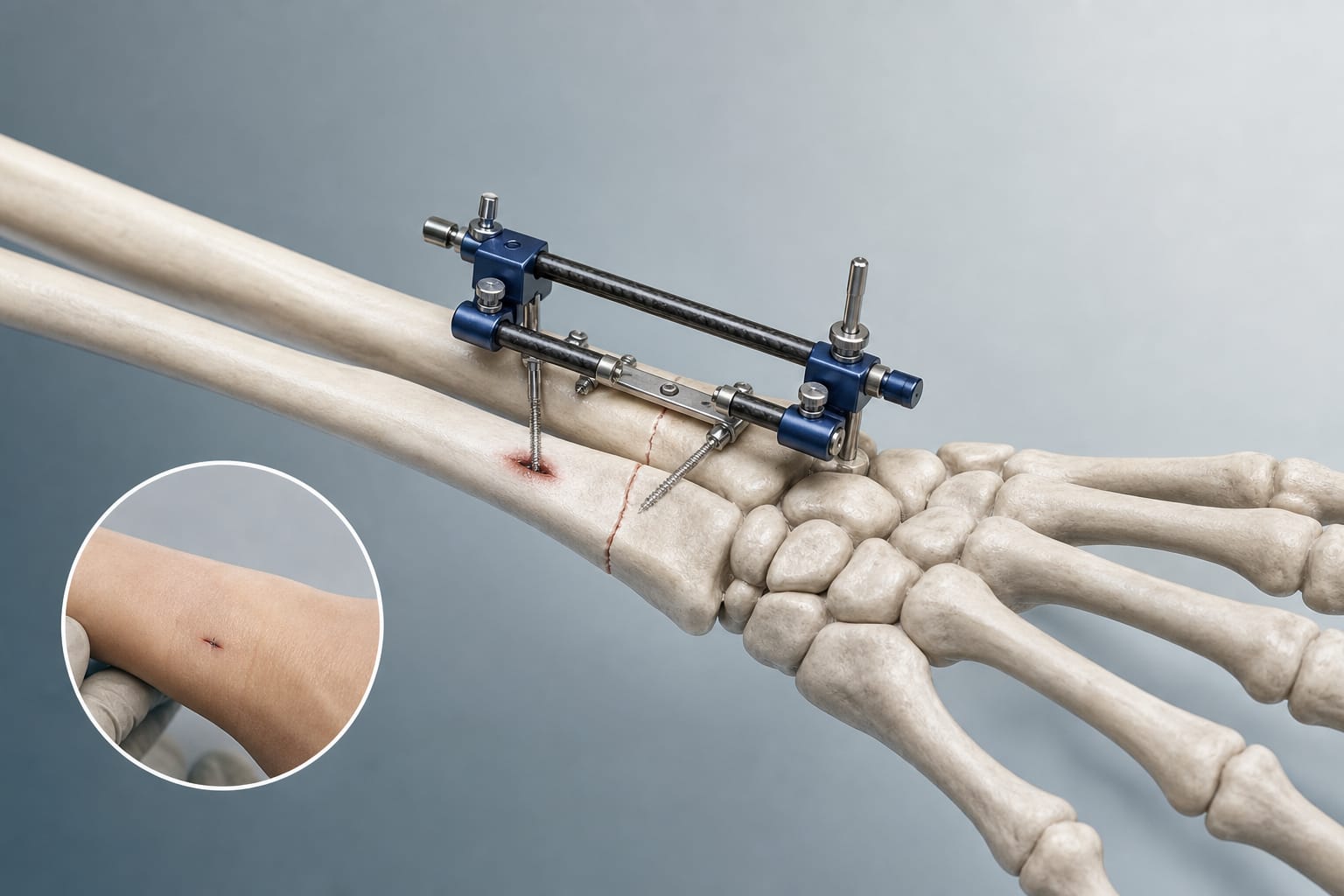
| Condition | Severely displaced distal radial fractures in pediatric patients |
| Key Mechanisms | Comparison of nonsurgical casting vs surgical reduction |
| Target Population | Patients aged 4 to 10 years |
| Care Setting | Multicenter, randomized, controlled trial across 49 UK hospitals |
Key Highlights
- Nonsurgical casting did not meet non-inferiority criteria compared to surgical reduction at 3 months.
- Mean function scores at 3 months favored surgical intervention (44.9 vs 46.6).
- Differences in function diminished over time, with no significant difference at 6 and 12 months.
- Surgical group had better cosmetic scores and quality-of-life measures early on.
- Nonsurgical casting was associated with lower costs and remained cost-effective.
Guideline-Based Recommendations
Diagnosis
- Assess for severely displaced distal radial fractures in pediatric patients.
Management
- Consider surgical reduction for better early functional outcomes, but weigh against casting's cost-effectiveness.
Monitoring & Follow-up
- Monitor function and complications in both treatment groups over time.
Risks
- Surgical group had higher rates of complications such as wound infections and nerve irritation.
Patient & Prescribing Data
Children aged 4 to 10 years with severely displaced distal radial fractures.
Nonsurgical casting may be a viable option, especially for certain fracture types.
Clinical Best Practices
- Evaluate the individual patient's needs and preferences when choosing treatment.
- Consider the potential for complications and costs associated with surgical intervention.
Related Resources & Content