Targeting solid tumors with TCR-T cells: mechanisms, progress, and challenges
-
By
-
Wenfang Hu
-
Zhongyu Zhang
-
Mengyao Pan
-
Weiye Wang
-
Zibing Wang
-
May 7, 2026
-
Clinical Scorecard: Harnessing TCR-T Cell Therapy for Solid Tumors: Mechanisms, Advances, and Obstacles
At a Glance
| Category | Detail |
|---|
| Condition | |
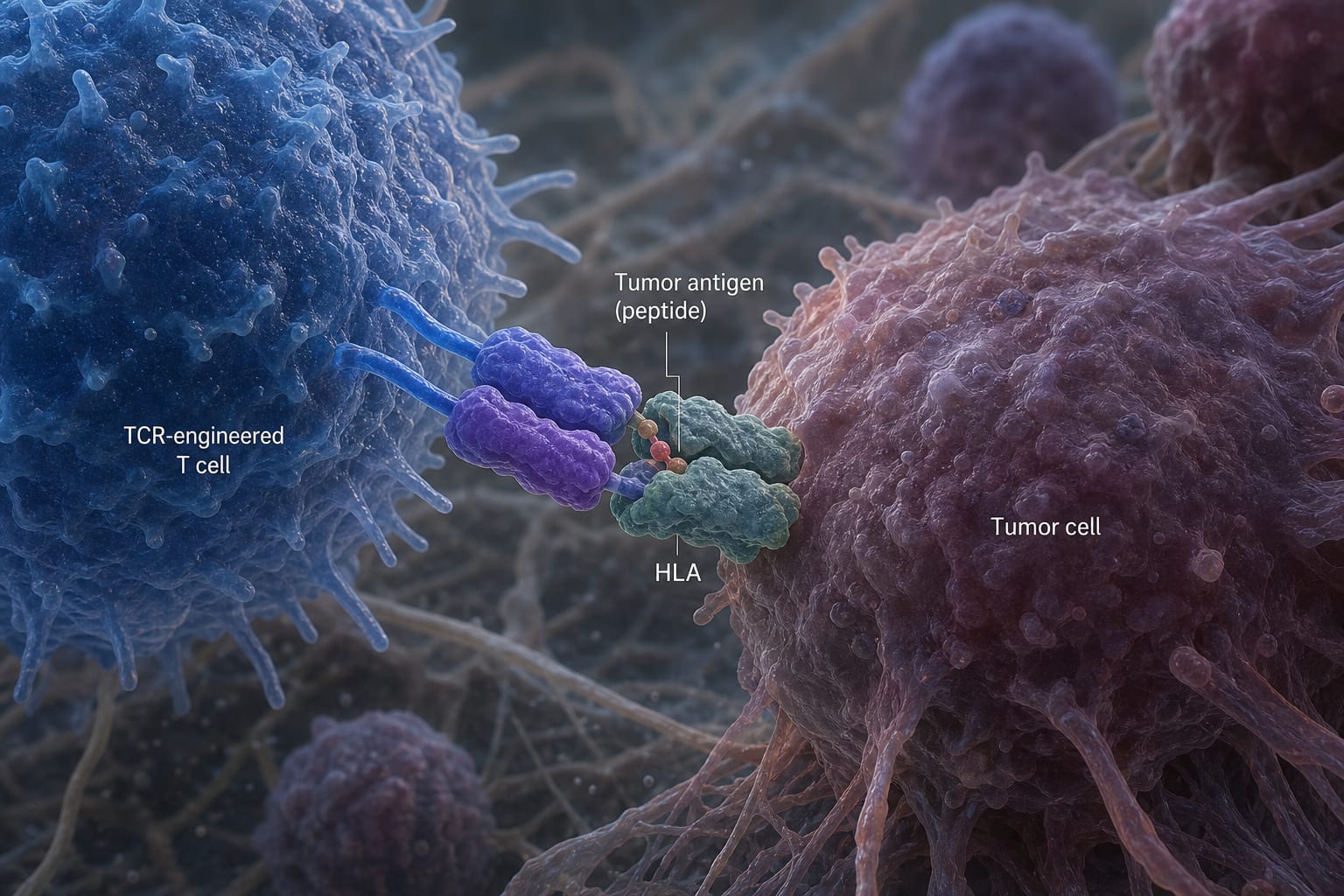
| Key Mechanisms | TCR-T therapy recognizes intracellular antigens presented by HLA molecules, extending targetability beyond surface proteins. |
| Target Population | |
| Care Setting | |
Key Highlights
- TCR-T therapy extends targetability beyond cell-surface proteins.
- Clinical activity is inconsistent due to HLA restriction and tumor microenvironment challenges.
- Emerging strategies aim to enhance therapeutic performance through precision receptor engineering.
- Durable tumor control requires sustained antigen presentation, T-cell fitness, and effective tumor trafficking.
- Current evidence shows limited efficacy in many epithelial cancers.
Guideline-Based Recommendations
Diagnosis
- Identify tumor-associated and tumor-specific antigens for TCR-T therapy.
- Personalize antigen selection based on individual tumor profiles.
Management
- Consider HLA restriction and antigen presentation stability in treatment planning.
Monitoring & Follow-up
- Assess T-cell fitness and tumor microenvironment factors during therapy.
Risks
- Monitor for on-target/off-tumor toxicity due to shared lineage antigens.
Patient & Prescribing Data
Patients with solid tumors expressing specific antigens, including TAAs and TSAs, particularly in melanoma and lung cancer.
Target selection should prioritize antigens with minimal normal tissue expression to reduce toxicity.
Clinical Best Practices
- Integrate advances in target selection and safety design for TCR-T therapy.
- Focus on optimizing manufacturing processes for TCR-T cells.
- Utilize multi-HLA target development to enhance treatment efficacy.
- Monitor the tumor microenvironment continuously during therapy.
Related Resources & Content