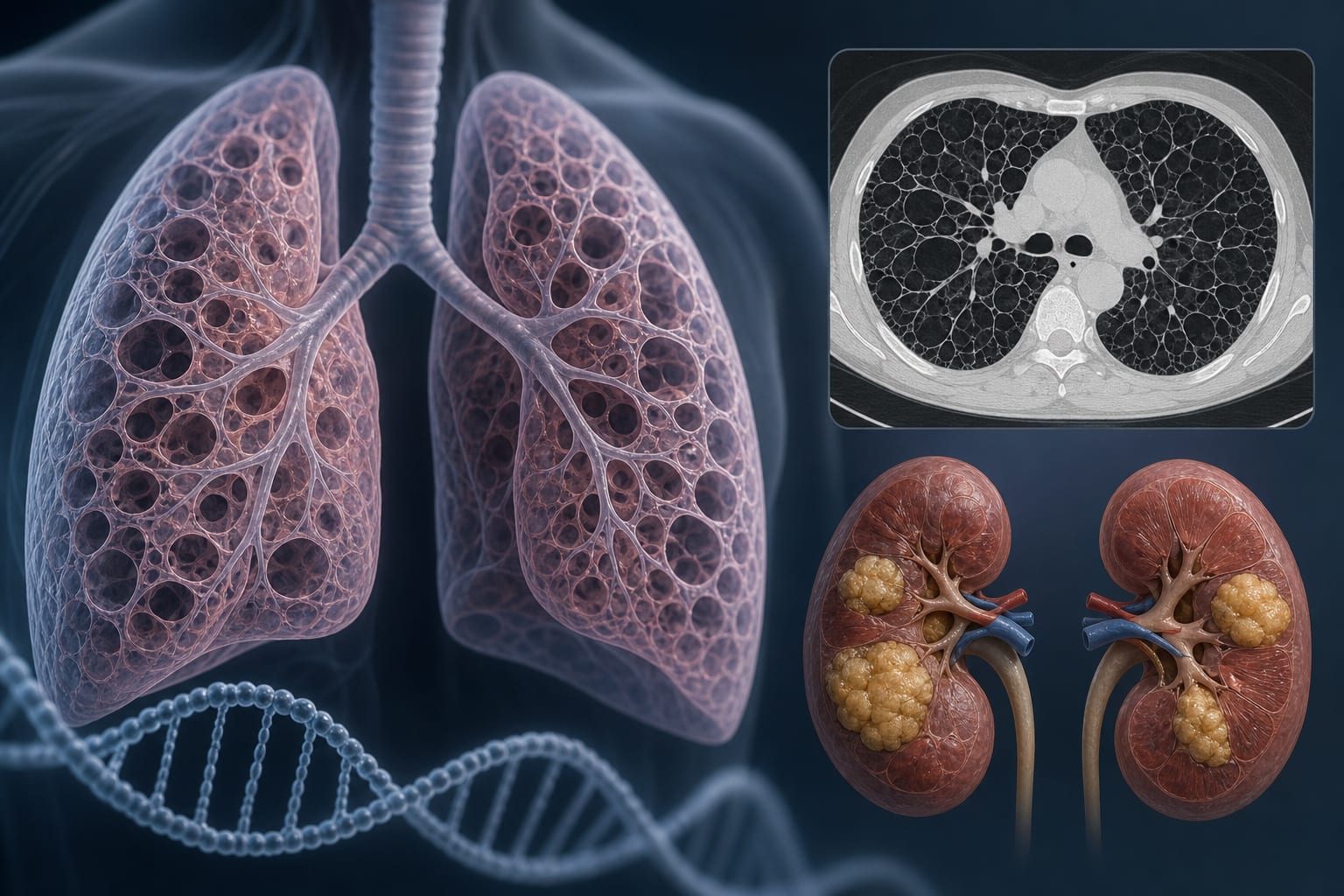
Identification of potential therapeutic targets for idiopathic pulmonary fibrosis: an integrated multiomics analysis
-
By
-
Xingxuan Chen
-
Shibin Chen
-
Shuai Zhao
-
Yupeng Li
-
Jingkun Chang
-
Si Shi
-
Dandan Xu
-
Lijuan Li
-
Hong Chen
-
June 5, 2026
-
Clinical Scorecard: Discovery of Novel Therapeutic Targets for Idiopathic Pulmonary Fibrosis Through Comprehensive Multiomics Analysis
At a Glance
| Category | Detail |
|---|
| Condition | |
| Key Mechanisms | Aberrant extracellular matrix remodeling. |
| Target Population | |
| Care Setting | Clinical settings involving respiratory care. |
Key Highlights
- Identification of twelve proteins associated with IPF risk.
- Four candidate proteins prioritized: SCARF2 (protective), FN1, PPID, and CDON (pro-fibrotic).
- Integration of multi-omics data.
- Current antifibrotic drugs can slow disease progression but cannot reverse fibrosis.
Guideline-Based Recommendations
Diagnosis
Management
- Consider antifibrotic agents such as pirfenidone and nintedanib as per clinical guidelines.
Monitoring & Follow-up
Risks
Patient & Prescribing Data
Patients with diagnosed Idiopathic Pulmonary Fibrosis.
Current treatments alleviate symptoms but do not cure the disease.
Clinical Best Practices
Related Resources & Content