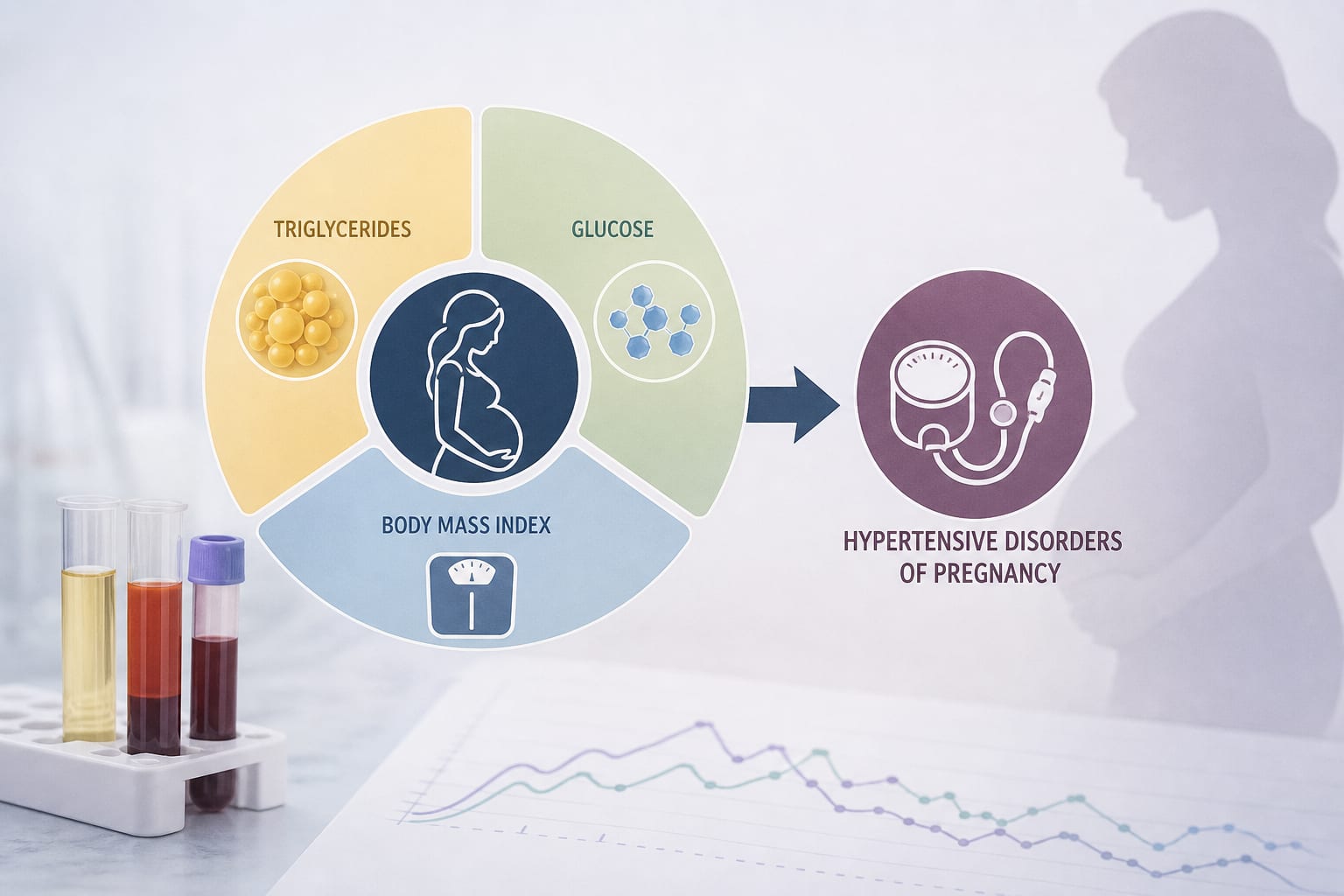
Association between triglyceride-glucose body mass index and risk of hypertensive disorders of pregnancy: a case-control study
-
By
-
Jun Liu
-
Haoran Ma
-
Xi Chen
-
Xueyun Chang
-
June 25, 2026
-
Clinical Scorecard: Link Between Triglyceride-Glucose Body Mass Index and Hypertensive Disorders in Pregnancy: A Case-Control Analysis
At a Glance
| Category | Detail |
|---|
| Condition | Hypertensive Disorders of Pregnancy (HDP) |
| Key Mechanisms | Insulin resistance and obesity are core metabolic dimensions in HDP pathogenesis. |
| Target Population | Pregnant women hospitalized for hypertensive disorders. |
| Care Setting | Department of Obstetrics at Fuyang Women and Children's Hospital |
Key Highlights
- TyG-BMI is significantly higher in HDP patients compared to controls.
- Each 10-unit increase in TyG-BMI is associated with a 30% increase in HDP risk.
- TyG-BMI shows superior discriminative performance for HDP compared to TyG index and BMI.
Guideline-Based Recommendations
Diagnosis
- Use TyG-BMI as a comprehensive indicator for identifying metabolic abnormalities in HDP.
Management
Monitoring & Follow-up
Risks
- HDP is associated with increased risks of maternal mortality, perinatal mortality, preterm birth, and long-term cardiovascular disease.
Patient & Prescribing Data
Pregnant women with hypertensive disorders.
Assessment of TyG-BMI can aid in identifying patients at risk for HDP.
Clinical Best Practices
- Consider TyG-BMI for risk assessment in pregnant women.
- Monitor metabolic parameters in patients with HDP.
Related Resources & Content