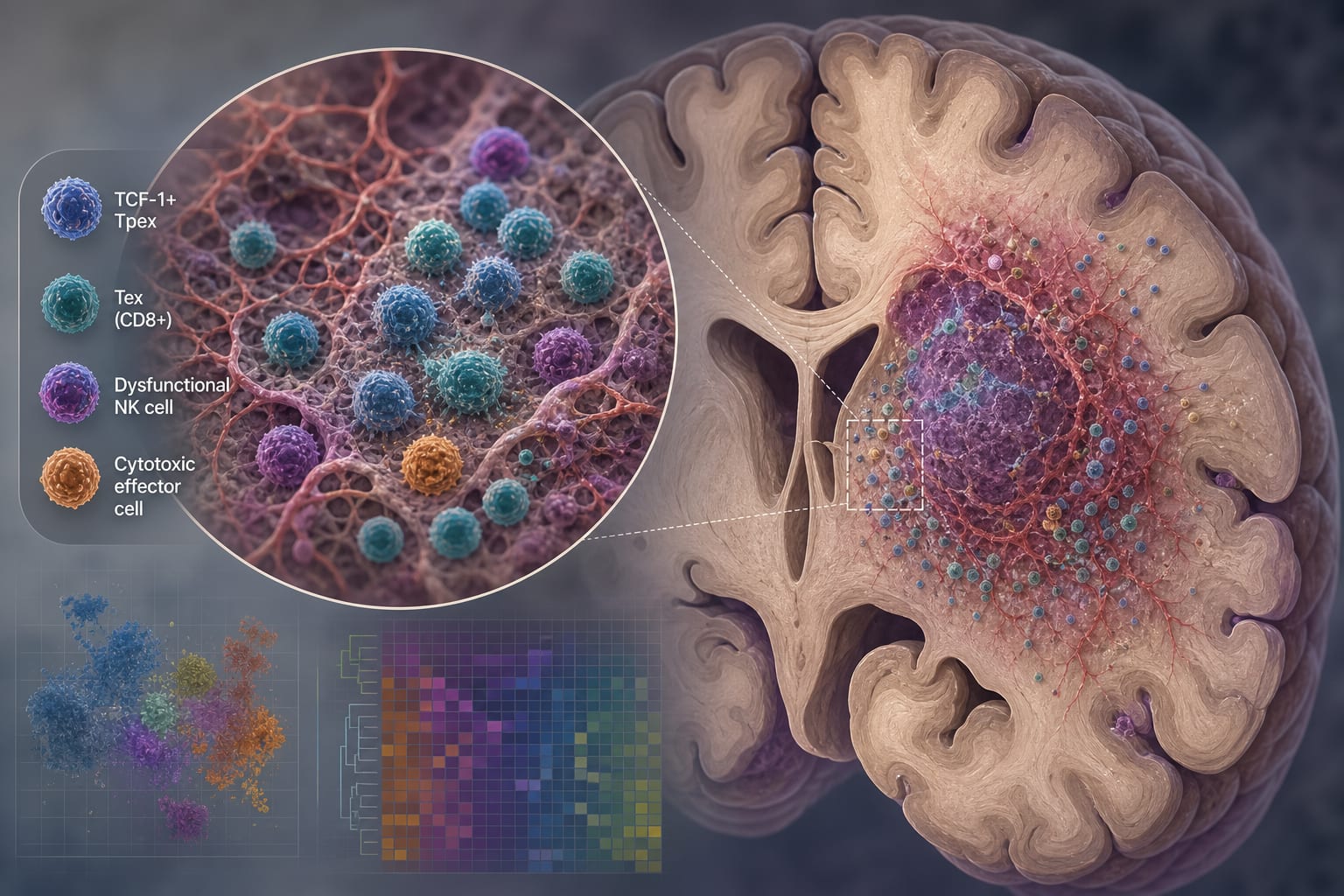
Cytotoxic lymphocyte heterogeneity in glioblastoma: insights from single-cell and spatial multiomics toward precision immunotherapeutic reprogramming
By
Wentao Dong
Yang Li
Zhuolin Wu
Quanlin Fu
Jinshuang Zhao
Bangyue Wang
Jia Yao
Chenglu Lu
Minfeng Tong
June 10, 2026
Clinical Scorecard: Heterogeneity of Cytotoxic Lymphocytes in Glioblastoma: Insights from Single-Cell and Spatial Multiomics for Tailoring Immunotherapeutic Approaches
At a Glance
Category Detail
Condition Glioblastoma (GBM) Key Mechanisms Immunosuppressive tumor microenvironment, cytotoxic lymphocyte exhaustion, spatial organization of immune niches. Target Population Adults with glioblastoma (WHO Grade 4) Care Setting Neurosurgical and oncology settings
Key Highlights
GBM characterized by profound immunosuppressive tumor microenvironment. Cytotoxic lymphocyte subpopulations identified via single-cell RNA sequencing. Distinct immune niches for CD8+ T cells and NK cells within GBM. Mechanisms of exhaustion differ between CD8+ T cells and NK cells. Potential for tailored immunotherapeutic strategies based on multiomics insights. Guideline-Based Recommendations
Diagnosis
Utilize single-cell RNA sequencing and spatial multiomics for profiling cytotoxic lymphocytes. Management
Consider intraoperative tumor profiling and progenitor T cell expansion via epigenetic priming. Monitoring & Follow-up
Assess the spatial organization of immune cell populations and their functional states. Risks
Immunosuppressive effects of the CNS microenvironment on cytotoxic lymphocyte function. Patient & Prescribing Data
Adults diagnosed with glioblastoma.
Focus on dual blockade strategies (NKG2A/TIGIT) and intracavitary delivery of engineered NK cells.
Clinical Best Practices
Integrate single-cell and spatial multiomics into clinical research for GBM. Tailor immunotherapy approaches to the unique immunobiology of the CNS tumor microenvironment. Related Resources & Content